
Vandaag of morgen in huis

Kwaliteit gegarandeerd

Welkomstaanbiedingen ontgrendelen: GRATIS bezorging | Tot 80% korting | Gratis 30 dagen JoyPlus-proefperiode
Download de app
Do you regularly work on the train, at a hot desk, in a café or at an airport? Someone sitting next to you could easily see your emails, passwords or customer details. A privacy screen protector limits visibility from the sides, but not every model fits every device. So the right choice starts not with the brand or a bold marketing claim, but with the size, viewing angle and attachment method.
A 14-inch laptop filter won’t automatically fit every 14-inch laptop. The aspect ratio matters too. A 14-inch screen with a 16:9 aspect ratio has different dimensions from a 14-inch 16:10 screen. So check:
The same applies to a phone privacy film. The iPhone 16, iPhone 16 Pro and iPhone 16 Pro Max don’t have the same fit. Always check the exact model before ordering.
Many privacy filters limit visibility beyond a certain angle. For example, product information for various Kensington filters states a viewing angle of around 30 degrees. This doesn’t mean the screen is completely invisible from every position to the side. The level of privacy also depends on screen brightness, ambient light and viewing position.
An anti-spy screen protector for a smartphone is sometimes described as offering a “360° privacy angle”. Check exactly what the manufacturer means by this. According to VoxorAI’s product description, the screen appears darker from the sides and is easiest to read from the front. This is a product claim by the brand, not a guarantee that your information will be completely hidden in every situation.
A blue-light filter, anti-glare screen filter or antibacterial coating may sound appealing, but check exactly what’s specified. According to Kensington’s own product information, certain filters can reduce blue light by a stated percentage. Don’t treat this as a medical claim: the effect on comfort varies from person to person and from one situation to another.
Remember to consider practical details too. A filter that’s difficult to remove may be inconvenient if you regularly share your screen with colleagues. A magnetic model works differently from a filter with mounting tabs or adhesive strips.
For a laptop privacy filter, size and aspect ratio are the first things to check. If you’re looking for a 14-inch laptop privacy filter, for example, check whether it’s designed for a 16:9 or 16:10 screen. Filters are also available for smaller screens, including 13.3-inch models. A 15.6-inch privacy filter is a separate category.
The same applies to monitors. A 32-inch 16:9 monitor privacy filter won’t necessarily fit an ultrawide screen. A Surface privacy filter must also be compatible with your specific Surface model and its bezel design.
A filter with a restricted viewing angle helps prevent people looking over your shoulder in public spaces. A matte side can reduce reflections and visible fingerprints; according to the product description, a glossy side can give you a brighter image. The matte side may be more practical in ambient light on the train or in the office. The glossy side may look better for photo and video editing.
Bear in mind that a privacy layer can also make the screen look slightly darker to you. You may need to adjust the screen brightness.
A filter with mounting tabs can usually be removed and repositioned. Magnetic models, such as the Kensington MagPro, are designed to attach without adhesive strips. Check that the filter won’t stop your laptop from closing and that the webcam and sensors remain uncovered.
If you use a touchscreen or stylus, check that the product description specifically mentions support for these features. Clean your privacy screen filter with a soft microfibre cloth and follow the care instructions. Don’t use harsh cleaning products if the manufacturer advises against them.
A tempered glass screen protector for a phone also provides a physical layer to help protect against everyday scratches. A rating such as 9H refers to the material’s hardness classification; it doesn’t guarantee protection against every drop or type of damage.
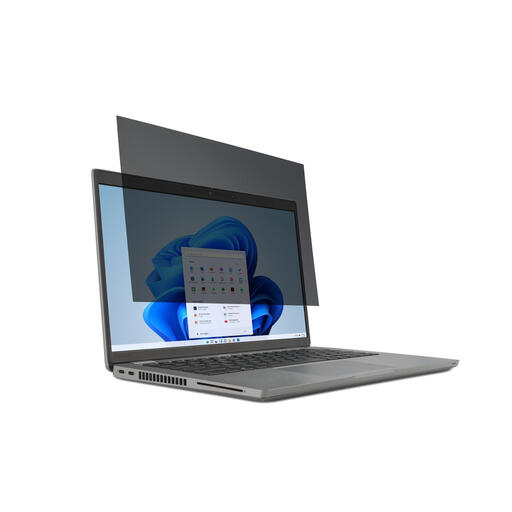
Why it suits this profile: This model is a practical choice for students and commuters with a 14-inch 16:9 laptop. It’s removable and suitable for touchscreen laptops.
The aspect ratio and screen size are clearly stated. The mounting tabs let you remove the filter without leaving a permanent adhesive layer.
According to the product description: a viewing angle limited to 30 degrees, reversible matte and glossy sides, and support for touchscreen use.
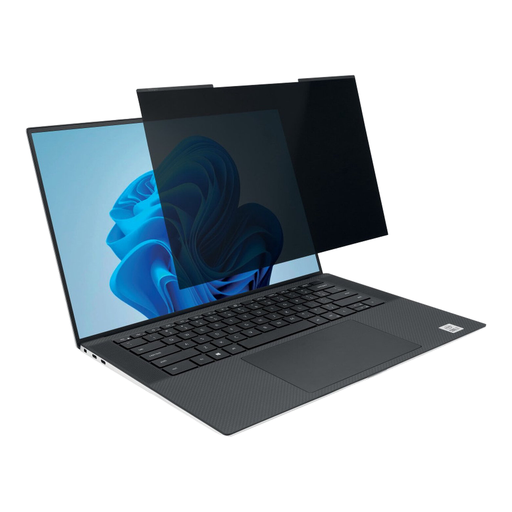
Why it suits this profile: This is a good fit for professionals who regularly move between meeting rooms, working from home and travelling, and value quick attachment.
The magnetic attachment saves you the hassle of adhesive strips. Check first, though, that your screen really is 16:10 and has narrow bezels.
Magnetic attachment, a webcam cut-out, matte and glossy sides, and a viewing angle limited to around 30 degrees according to the product information.
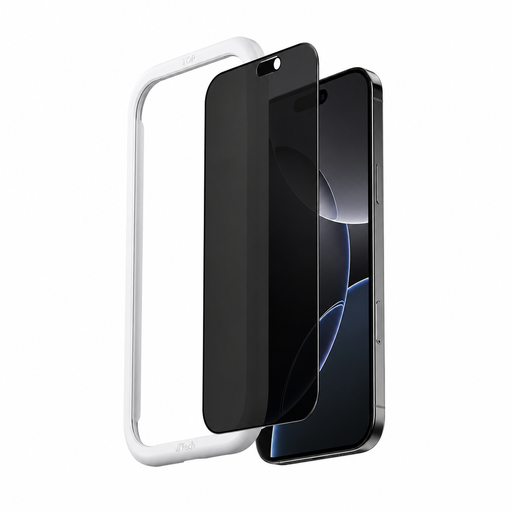
Why it suits this profile: A suitable choice for commuters and business users who mainly want to keep their smartphone screen private on the train, bus or in the office.
The product page names the exact iPhone 16 model and specifies 9H tempered glass and an applicator. This lets you check the fit before ordering.
According to the product description: automatic adsorption, 9H tempered glass, an anti-fingerprint coating and a privacy layer that darkens the screen when viewed from the side.
We’ve put together a complete, up-to-date list of products that meet these strict selection criteria and the applicable European safety regulations.
Yes. Privacy screen protectors are designed for situations where people may be sitting next to you, such as on public transport, in waiting rooms and in shared offices. The privacy isn’t unlimited: bright light, the viewing angle and screen brightness all affect the result.
First, remove dust and grease from the screen with a soft cloth. Position a phone protector carefully around the edges and camera cut-outs. If it comes with an applicator, this can help prevent misalignment and air bubbles. A laptop filter with mounting tabs or magnetic strips should be aligned straight in front of the webcam and sensors.
Its lifespan depends on how you use, clean and store it. A filter that’s bent frequently may become damaged. Store a removable model flat or in the holder supplied. On a phone, repeatedly removing the protector may affect the original oleophobic coating. Replace it if it’s cracked, badly scratched or causing optical distortion.
