Who is this choice for?

If you mainly print parts

You mainly print black-and-white sheet music and want notes, accidentals and annotations to remain legible at the paper size you choose. Check the page settings and assess a printout of your own file; the MuseScore Studio Handbook explains how paper size, margins and score layout work together.

If you share a printer

Several people use the same device. Network connectivity, enough paper capacity and practical scanning and copying features may then matter more than the stated print speed alone. Brother and HP model specifications show that connections and input capacity vary by model.

If you’re weighing up colour and running costs

You may sometimes want to print coloured annotations or other colour materials, so you’re comparing cartridges with refillable ink tanks. Consider your expected use and the cost of replacement ink; the Consumers’ Association points out that consumables and printing infrequently can both affect the decision.

What should you look for when buying?

Mono laser

Best for: a studio that mainly prints black-and-white parts and wants to share network and scanning features.

Consider: this option doesn’t print in colour; compare the cost of toner and the drum. The Consumers’ Association notes that laser printers don’t have ink that can dry out when used infrequently.

Colour printer with an ink tank

Best for: a studio that regularly prints colour materials and factors expected use into its choice of refillable ink.

Consider: manufacturers’ yield and savings figures are based on their own conditions and don’t automatically predict your studio’s costs.

Colour printer with cartridges

Best for: anyone comparing colour and scanning features with a cartridge system that suits their own print volume.

Consider: include replacement cartridges in your cost comparison; an inkjet printer may also use ink for cleaning when you print infrequently.

What to consider What should you look for? Who should consider this?
Legible notation Check the paper size you need and print a representative part using your intended page settings. If I want my own parts to remain easy to read, I’ll consider paper size, margins and stave size. Around 33% of consumers put readability first.
Shared use Check that Wi-Fi or Ethernet suits the studio network and devices; also look at the paper tray and automatic double-sided printing. If several studio users want to print from their own devices, suitable connections and paper handling are important. Around 27% of consumers give shared use top priority.
Running costs Compare black-and-white and colour use over the same period, including replacement ink, toner and, where applicable, a drum. If I want to weigh up printer costs based on my expected use, I’ll look beyond the purchase price and compare consumables. Around 20% of consumers put running costs first.
Scanning and copying Check whether the model has a flatbed scanner and an automatic document feeder (ADF), and whether the ADF capacity suits your stacks of paper. If you regularly scan or copy existing parts, you may particularly value the document feeder and scanning options. Around 20% of consumers make digitisation their top priority.

Common buying mistakes

  • Assuming a high dpi figure guarantees legible sheet music

    The printed size of notes and other symbols also depends on the paper size, margins and stave size in the layout. A high stated printer resolution won’t automatically make a part that’s been laid out too small any bigger.

    Check the settings in your notation software and print a sample on the paper size you intend to use.

    A test print uses extra paper and time, but shows how your own part will look on paper.

  • Comparing only the purchase price

    Ink, toner and sometimes a separate drum all affect running costs. An inkjet printer may also use ink for cleaning if you print infrequently.

    Compare models using the same expected number of black-and-white and colour pages over the same period. Treat stated page yields as claims based on the manufacturer’s conditions.

  • Confusing an ADF with automatic double-sided scanning

    An automatic document feeder helps feed loose originals, but that alone doesn’t mean both sides will be scanned automatically.

    Check the scanning features of the exact model if you want to digitise double-sided originals in one pass.

Brands to consider

Brother

The MFC-L2800DW is an A4 mono multifunction laser printer to consider if your studio mainly prints parts.

  • Brother lists Ethernet, Wi-Fi, automatic double-sided printing, a 250-sheet paper tray and a 50-sheet ADF for this model.
  • This model doesn’t print in colour; include toner and the separate drum in your cost comparison. These features apply to this model, not all Brother printers.

HP

The Smart Tank 7305 is a colour multifunction printer with refillable ink tanks, for anyone considering colour materials and multi-page scans too.

  • HP specifies automatic double-sided printing and a 35-sheet ADF for this model.
  • Compare running costs based on your own printing habits; the manufacturer’s yield figures don’t guarantee what your studio will spend.

Canon

The PIXMA TR4755i is a colour multifunction printer with cartridges, an ADF and automatic double-sided printing on plain A4 paper.

  • Canon lists Wi-Fi, a flatbed scanner and a 20-sheet ADF for this model.
  • Black and colour cartridges are consumables; compare the cartridges and replacement costs that suit your needs.

Epson

The EcoTank ET-2950 is an A4 colour multifunction model with refillable ink tanks and double-sided printing.

  • Epson lists refillable ink and double-sided printing for this model.
  • Compare savings and ink yield claims with the manufacturer’s conditions and your expected use.

Printers at Joybuy

This selection includes multifunction models for printing, scanning and copying, as well as printers described as print-only. Check the features and connections of each model to see whether they suit your shared studio.

Brother MFC-J6760DW A3 multifunction inkjet printer

Brother MFC-J6760DW A3 inkjet printer

A multifunction model to compare if your studio also needs to scan and copy, and several users share the printer.

Print, scan and copy; A3; 50-sheet ADF; 250-sheet paper tray; Wi-Fi, Wi-Fi Direct and Gigabit Ethernet; automatic double-sided printing.

The product name states 1200 × 4800 dpi and 31 ppm.

Joybuy

HP Smart Tank 7305 wireless colour printer with ink tanks

HP Smart Tank 7305

A colour multifunction printer to compare if your studio also prints colour materials and scans or copies multi-page originals.

Colour printer; print, scan and copy; refillable ink bottles; Wi-Fi; automatic double-sided printing; 35-sheet ADF.

Ink yield claims depend on the manufacturer’s conditions and don’t provide a fixed estimate of your studio’s costs.

Joybuy

Canon PIXMA MG2556S A4 inkjet printer

Canon PIXMA MG2556S

An A4 multifunction model to compare if your studio prints, scans and copies, and a USB connection to a computer suits the way you work.

Print, scan and copy; supports up to A4; 60-sheet paper capacity; USB 2.0; option to use XL cartridges.

The product name states 4800 × 600 dpi.

Joybuy

Epson WorkForce Pro WF-C5390DW A4 colour inkjet printer

Epson WorkForce Pro WF-C5390DW

An A4 colour inkjet printer to compare if your studio needs colour and automatic double-sided printing.

A4; colour; automatic double-sided printing; Wi-Fi and Ethernet; the product information says it is suitable for small workgroups.

According to the product information, the model weighs more than 15 kg; two-person lifting is recommended.

The product information describes printing features; check separately whether the model offers the scanning or copying features your studio needs.

Joybuy
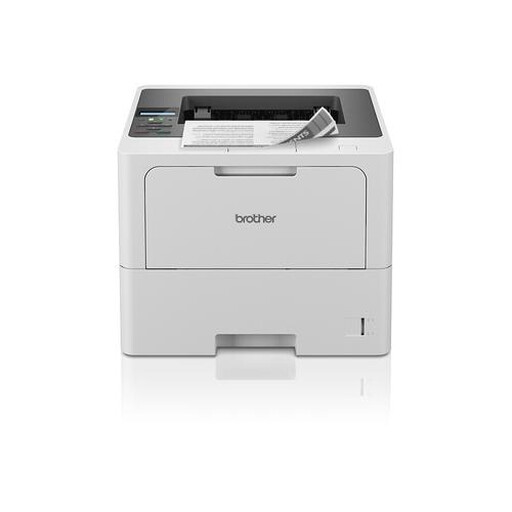
Brother HL-L6210DW A4 laser printer with Wi-Fi

Brother HL-L6210DW A4 laser printer

An A4 laser printer to compare if your studio wants to print wirelessly; the available product information describes a printer, not scanning or copying features.

A4; Wi-Fi; laser printer. The product name states 1200 × 1200 dpi.

Joybuy

Frequently asked questions

How can you stop staves from printing too small?

Check the paper size, margins and stave size in your notation software, then print a sample of the part. The MuseScore Studio Handbook explains these settings; a high stated printer resolution won’t automatically correct a part that’s been laid out too small.

What should you look for when several people use the same printer?

Check that the exact model’s connection options suit the studio network and users’ devices. Brother says the Brother MFC-L2800DW has Ethernet and Wi-Fi; connection options vary by model.

Is an ADF useful for multi-page parts?

An automatic document feeder is useful if you regularly scan or copy stacks of loose originals. The stated ADF capacity varies by model: the Brother MFC-L2800DW has a 50-sheet feeder, the HP Smart Tank 7305 a 35-sheet feeder and the Canon PIXMA TR4755i a 20-sheet feeder. These figures describe the feeder, not print quality.

What warranty applies in the Netherlands if a printer turns out to be faulty?

For a consumer purchase, the Dutch Government says you’re entitled to a product that works properly; if there’s a fault, you should contact the seller. The Netherlands has no fixed statutory warranty period of two years, and a manufacturer’s warranty is in addition to your statutory rights. This explanation doesn’t necessarily determine the terms of a purchase made on behalf of a business or studio.

Where can I take a printer I’m throwing away?

For equipment owned by individuals, the Dutch Government lists options including handing it in when buying a similar new device and taking it to a municipal recycling centre. The take-back scheme described doesn’t apply to business equipment, so first establish whether the studio is disposing of it as an individual or a business.
