Start by deciding how you want your raffle tickets to look and which paper you want to use. A printer won’t automatically create unique numbers, perforations or ticket booklets. For mainly black text, a monochrome laser printer may be suitable, while a colour printer with refillable tanks could work well for regular colour print runs. Check each model’s paper feed, and factor in consumables and any finishing work when making your choice.
Who is this advice for?
Making numbered raffle tickets
You want the number on the ticket to match the one on the counterfoil. Decide in advance whether you’ll cut and finish the tickets yourself or have them perforated and made into booklets; PIM Print describes these finishing options.
Organising a text-only raffle
You mainly print black text and numbers, so you’ll want to consider the paper feed and ongoing costs for toner and drum units. The Brother HL-L2445DW uses separate toner and drum consumables, according to Brother Nederland.
Making colour raffle tickets
You want a colourful design and are comparing printers with refillable ink tanks, paper handling and the regularity of your printing.
What should you look for when buying?
Start with numbering and finishing, then decide whether you need colour. Finally, check that your chosen paper is compatible with the printer’s feed.
| What to consider |
What should you check? |
Who is this important for? |
| Numbering and finishing |
Print a test sheet to check that the numbers are unique and appear on the right sections; also decide whether you need perforations or booklets. |
If I want numbered tickets and counterfoils, I need to be able to check the number sequence and finishing myself. Numbering and finishing are the top priority for around 33% of consumers. |
| Black text and occasional use |
Compare a test print of the smallest numbers, and factor in toner and, where applicable, a separate drum unit. |
If I mainly print text-only raffle tickets and don’t need colour, I’ll focus on legibility and consumables. This is the main priority for around 27% of consumers. |
| Colour and design |
Test your design on your chosen paper and check whether double-sided printing is automatic or requires you to turn the paper over manually. |
If colour is part of my ticket design, I want to know what the finished result will look like and how often I’ll use the printer. Colour is the top priority for around 20% of consumers. |
| Paper for larger print runs |
Compare the paper size and weight with the specifications for the relevant paper feed, and test the paper before printing the full run. |
For a larger print run, I want to spend less time loading paper, but the paper still needs to feed properly through the chosen feed. Paper loading and handling are the main priority for around 20% of consumers. |
Common buying mistakes
-
Expecting the printer to finish raffle ticket booklets
Unique numbering, perforation and binding are design or finishing steps; they don’t happen automatically when you print.
Prepare your design first, then decide whether you’ll cut and finish the tickets yourself or have them professionally printed. PIM Print describes options such as duplicate numbering and perforation.
Finishing the tickets yourself takes extra time for cutting, perforating or binding; outsourcing adds a separate step to the process.
-
Assuming the paper limit for one feed applies to the standard tray
A stated paper weight for manual feeding doesn’t mean the same paper is suitable for the standard tray. The Brother HL-L2445DW’s manual feed handles one sheet at a time.
Check the size and weight of your chosen paper, as well as the feed you plan to use. Brother’s specifications list 60–230 g/m² for manual feeding on this model.
Feeding paper one sheet at a time can take extra time for a larger print run.
-
Comparing only the purchase price
The cost of consumables and paper varies depending on the printer you choose. If you don’t use an inkjet printer often, cleaning can also use up ink.
Compare your expected print run and how often you’ll print. Factor in paper, ink or toner, and any finishing work; the Brother HL-L2445DW has separately replaceable toner and drum units.
Brands to compare
Brother
The HL-L2445DW is a monochrome laser printer for text-only raffle tickets, with a standard tray and manual feed.
- Brother lists a tray that holds up to 250 sheets at 80 g/m², with separate toner and drum units.
- The manual feed handles one sheet at a time, and this model doesn’t print in colour. Check which paper is suitable for the feed you plan to use.
Epson
The EcoTank ET-2950 combines colour printing, refillable ink tanks and double-sided printing for anyone who regularly makes colour raffle tickets.
- Refillable tanks and printing features are listed in Epson’s product specifications.
- Epson’s savings claims aren’t an independent calculation of the cost per ticket. Compare your expected print run and paper use for your needs.
Canon
The PIXMA G3570 is a colour printer with refillable tanks and a rear paper tray.
- Canon lists support for sizes including A4 and A6, and a rear tray that holds up to 100 sheets of plain paper.
- Double-sided printing requires you to turn the paper over manually. The plain-paper capacity doesn’t tell you whether your chosen raffle ticket card is suitable.
HP
The LaserJet M209dw is a black-and-white laser printer with automatic double-sided printing.
- HP lists a print speed of up to 29 pages per minute for this model.
- HP says that dynamic cartridge protection may block cartridges without an HP chip. Bear this limitation in mind when choosing replacement cartridges.
Printers at Joybuy
These Joybuy printers are suited to printing documents from a mobile device, A4 inkjet printing and regular colour printing. Before choosing, check that your ticket size and paper are compatible with the printer’s feed.
 No image available
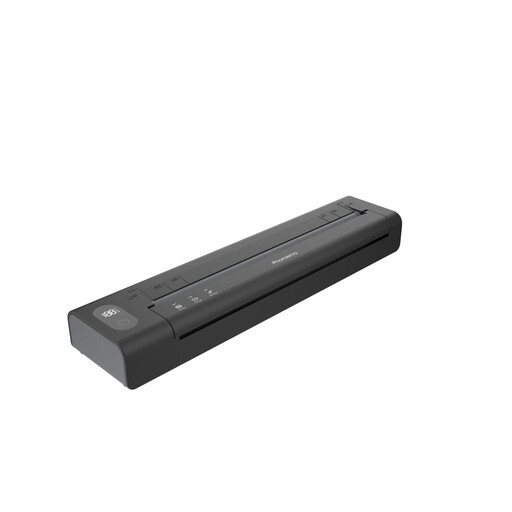
Phomemo A282U Portable Wireless Printer, Black, 1pcs
Could be a good fit if you want to print raffle tickets from a mobile device; first check that your chosen ticket size and paper are supported.
The product information lists inkless printing technology, Bluetooth via the Phomemo app and a rechargeable battery.
You’ll need to prepare unique raffle ticket numbers in a data list and print job; perforations and booklets are separate finishing options.
View at Joybuy
 No image available
Canon PIXMA MG2556S Inkjet A4, 4800 x 600 DPI
An A4 inkjet printer to consider if you want to print raffle tickets on A4 paper; check that your chosen paper is compatible with the printer.
The product information lists a 60-sheet input tray and a USB 2.0 connection. Printing, scanning and copying are also listed.
The printer won’t create unique raffle ticket numbers automatically; prepare the number sequence in a data list and print job. Perforations or booklets require separate finishing.
View at Joybuy
 No image available
HP Smart Tank 7005 Wireless All-in-One Color Printer
A good fit for raffle tickets with a colour design and regular print runs; compare the features with your own print volume and paper choice.
The product information lists colour printing, a refill system, automatic double-sided printing and a 250-sheet paper feed. Scanning and copying are also mentioned.
You’ll need to prepare unique raffle ticket numbers yourself; perforations and booklets are separate finishing options.
View at Joybuy
Frequently asked questions
How do I give each raffle ticket its own number?
Prepare a data list with the numbers you want, then add them to your design using mail merge fields. Microsoft Support describes this process using an Excel worksheet. Check the number sequence and look for any duplicates on a test sheet; the printer won’t assign raffle ticket numbers automatically.
Can I feed thick paper through the Brother HL-L2445DW for automatic double-sided printing?
Don’t assume that thick paper can be printed double-sided automatically through every feed. Brother lists a standard tray range of 60–163 g/m² and a manual feed range of 60–230 g/m² for the HL-L2445DW, one sheet at a time. Check the specifications for the exact paper and print method you want to use.
What ongoing costs should I expect besides the printer?
Allow for paper, ink or toner, and any finishing work. The Brother HL-L2445DW has separately replaceable toner and drum units, according to Brother Nederland. Perforations or a raffle ticket booklet are separate finishing options.
Can I sell raffle tickets in the Netherlands once I’ve printed them myself?
No. Printing raffle tickets yourself doesn’t, on its own, give you permission to run a paid lottery. According to the Kansspelautoriteit, you can apply to the municipality where the draw will take place for a permit for a one-off lottery for a public benefit, provided the total value of the prizes and premiums is under € 4.500; from € 4.500, applications are handled by the Kansspelautoriteit. The regulator states that lotteries for personal or commercial gain aren’t permitted. Check the requirements for your specific plans before selling tickets.


