
Making tear-off raffle tickets
You want tickets that feed, print and separate neatly. Choose the paper before the printer: Avery recommends checking whether card stock is suitable for the printer type in question.


Start with the raffle ticket paper: its size, finish and weight determine which printer and feed method may be suitable. If you’re printing mainly text and numbers, a mono laser printer is a sensible choice. For colour, choose between an inkjet with cartridges and an ink-tank printer based on how often you’ll print once the raffle is over. Check paper compatibility for each model, and consider the raffle rules separately from your printer choice.
You want tickets that feed, print and separate neatly. Choose the paper before the printer: Avery recommends checking whether card stock is suitable for the printer type in question.
You mainly print numbers and text, perhaps only occasionally, so colour isn’t a priority. The Consumers’ Association describes laser printers as suitable for producing sharp text documents.
You want to share the same printer for study and household printing, and weigh up the need for colour against running costs. Manufacturer specifications can vary by model and paper feed.
Choose this option if: your raffle tickets are mainly text and numbers, and you don’t need colour. The Consumers’ Association cites sharp text and ink that won’t dry out as features of laser printing.
Bear in mind: it prints in black and white only. Also check that your chosen ticket paper is suitable for the specific model and feed.
Choose this option if: you want colour, even for a small print run, and will use extra features such as scanning or copying.
Bear in mind: cartridges, and possible ink and paper use during print head cleaning. For plain paper, Canon specifies 64–105 g/m² for the PIXMA TS5350i.
Choose this option if: you expect to print in colour regularly for the raffle, your studies or your housemates.
Bear in mind: a claimed low cost per print doesn’t necessarily make it the best-value option for a small, one-off print run. Compare costs based on how much you expect to print.
| What to consider | What should you check? | Who is this important for? |
|---|---|---|
| Paper and feed | Check the printer type, paper weight, finish, feed and paper settings. Print a test page first and check the alignment and legibility. | I want to know in advance whether my chosen ticket sheet will feed through the printer and whether the numbers will be easy to read. Paper compatibility is the top purchase priority for around 33% of consumers. |
| Print frequency and costs | Estimate how often you’ll print after the raffle, and compare toner, ink and any maintenance-related usage. | If the printer may sit unused for long periods, I want to match running costs to how often I actually print. Around 27% of consumers put print frequency and total running costs first. |
| Colour and extra features | Decide whether you need colour on the tickets and whether you’ll also use the printer to scan or copy. | Black and white won’t be enough if you want a colour design or other colour prints. Colour is the top purchase priority for around 20% of consumers. |
| Space and sharing | Measure the space available for the printer, including room for paper input and output, and check how your housemates can connect to it. | If several housemates want to print, the printer needs to be easy to position and accessible to everyone. Around 20% of consumers put sharing and placement first. |
Weight, finish, perforation and feed are separate compatibility considerations. A sheet may still be unsuitable, even if its weight is within the stated limit.
Compare the exact paper with the specifications for your chosen model and feed. Follow the paper settings and test a single sheet first.
A printer used for a one-off print run is different from one that regularly produces colour prints for the whole household.
Compare costs based on how much you expect to print after the raffle, and factor in maintenance too. Epson notes that print head cleaning can use ink and paper.
Print head cleaning can use extra ink and paper, and involves an additional maintenance step.
The Netherlands Gambling Authority assesses how the raffle is organised, not which printer was used to make the tickets. Payment, the group of participants and the purpose may all be relevant.
Before handing out or selling tickets, establish who is taking part, whether there is a charge to enter and what the purpose is. Then check which information from the Netherlands Gambling Authority applies to your raffle.
The HL-L2400DWE is a specific example of a mono laser printer for text-only raffle tickets.
The PIXMA TS5350i is an example of a multifunction colour inkjet printer with cartridges.
The Smart Tank 5105 is an example of a multifunction colour printer with refillable ink tanks.
The EcoTank ET-2950 is an example of a colour ink-tank printer for regular printing.
These printers may suit raffle ticket printing as well as shared use for studying or around the home. For each model, check separately whether the paper or thermal roll is suitable for your ticket design.
 No image available
A portable option for text, notes and labels. Check that the thermal roll size is suitable for your ticket design and numbering.
Bluetooth; includes 10 rolls of thermal paper.
 No image available
A multifunction colour inkjet option if you need to print in colour and scan as well as make raffle tickets. Check that your chosen paper is suitable.
A3 colour printing; printing, scanning and copying; 1200 × 4800 dpi; 31 ppm; Wi-Fi.
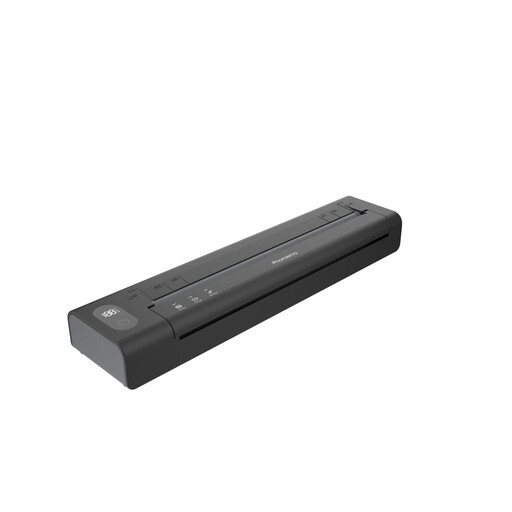 No image available
A portable model to consider if you want to print from a mobile device. Check in advance that the paper and print output are suitable for your tickets.
Bluetooth; rechargeable battery; compatible with iOS and Android.
 No image available
A multifunction colour printer to consider for shared home use. Check that the paper is suitable for your tickets.
Wireless printing, copying and scanning; double-sided printing; printing from a smartphone or tablet.
 No image available
An A4 colour inkjet printer to consider if you also want to scan and copy. Check that the ticket paper is suitable for this model.
4800 × 600 dpi; black-and-white and colour printing; scanning and copying; USB 2.0; 60-sheet paper capacity.
Only if the card product and printer feed are compatible. Avery gives micro-perforated 185 g/m² cards as an example, but that doesn’t guarantee compatibility with every model. Check the paper settings and print a test sheet first.
If black and white is enough and you mainly print text, a mono laser printer may be suitable. If you want colour, compare an inkjet with cartridges and an ink-tank printer based on how much you expect to print after the raffle. The Consumers’ Association describes laser printing as an option without ink that can dry out, while Epson notes that print head cleaning on an inkjet can use ink and paper.
Create or import a checked number sequence into your layout before printing the tickets. Avery describes serial numbering and data import as features of Design & Print. Check a test sheet and the complete sequence yourself too, to make sure no numbers are duplicated or missing.
Not simply because you’re printing tickets at home: what matters is how the raffle is organised. According to the Netherlands Gambling Authority, payment, the group of participants and the purpose can make a difference. For a paid, one-off raffle outside a private circle for a charitable cause, the Authority says that if the total prize value is under € 4.500, you need a permit from the municipality where the draw takes place; for prizes worth € 4.500 or more, you need one from the Netherlands Gambling Authority. Promotional games of chance are subject to different conditions, including no entry fee. Decide how the raffle will be organised and check the relevant rules before selling or handing out tickets.
Compare the ticket paper, toner or ink, and any maintenance-related usage against how often you expect to print. The Consumers’ Association points out that inkjet printing may also use ink to prevent or clear blockages; Epson notes that print head cleaning uses ink and paper.