For text-heavy drafts, you could start by comparing monochrome models and checking whether automatic double-sided printing, paper capacity and network connectivity suit your studio. Choose colour or a scanner only if your printed copies need those features, and factor compatible refills and maintenance parts into your costs. Also consider separately how the studio handles documents containing personal data.
Who is this printer choice relevant to?
A studio with lots of text drafts
If you regularly print multi-page A4 drafts, weigh up paper capacity and automatic double-sided printing against the cost of compatible refills. Buying advice from Consumentenbond and Brother’s specifications can help you compare these factors.
An editorial team sharing a printer
If several workstations send jobs to one device, check which network connection suits your studio and agree who will collect the printouts. If your organisation processes personal data, the Dutch Data Protection Authority recommends taking appropriate security measures.
A creator working with illustrated drafts or paper revisions
Decide whether colour is meaningful in your drafts and whether you need to scan handwritten notes from paper revisions. These are separate reasons to consider additional features. Consumentenbond, Brother and Canon provide information about these factors and model specifications.
What should you look for in a studio printer?
Monochrome laser printer without a scanner
A good fit if: you mainly print text-based A4 drafts and don’t need to scan them on the same device.
Trade-off: there’s no colour or built-in scanning and copying; compare toner and any separate drum.
Monochrome laser printer with a scanner
A good fit if: as well as printing text, you regularly want to scan or copy paper revisions. Brother lists a 50-sheet automatic document feeder for the DCP-L2660DW.
Trade-off: extra scanning and copying features take up space, even if you usually make digital edits without using paper.
Colour ink tank printer
A good fit if: you need colour highlights or illustrations and want to weigh up refillable ink against your usage patterns.
Trade-off: compare the printer, compatible ink and maintenance. Consumentenbond notes that infrequent inkjet use can contribute to ink drying out and clogging.
Colour cartridge printer
A good fit if: you only need colour occasionally and want to compare the costs for your low print volume with those of an ink tank model.
Trade-off: check which cartridges are compatible, how often you’ll print and whether the exact model supports automatic double-sided printing.
| Consideration |
What should you check? |
Who is this important for? |
| Text volume and paper capacity |
Check automatic double-sided printing and the paper capacity of the exact model. |
If I often print multi-page A4 drafts, I want legible text and paper capacity that suits the jobs I handle. Around 31% of consumers prioritise text volume. |
| Ongoing running costs |
Compare compatible refills and any separate maintenance parts for the same expected page count. |
I want to weigh up the costs over several manuscript rounds, not just the price of the printer. Around 25% of consumers give total running costs top priority. |
| Shared access |
Compare Ethernet or Wi-Fi with the studio’s network and devices; also agree who will collect the printouts. |
When several workstations send jobs, I want a suitable connection and clear arrangements for collecting printouts. Around 19% of consumers prioritise shared access. |
| Colour in drafts |
Print a representative page and check how colour looks, which refills are needed and whether the chosen model supports automatic double-sided printing. |
If highlights or illustrations convey meaning, I want to be able to distinguish them in my printed copy. Around 13% of consumers prioritise colour when it’s needed. |
| Scanning paper revisions |
Check the scanning features and whether you need an ADF or automatic double-sided scanning. |
When notes on paper revisions need to be transferred back to digital, I want to know what scanning options the device offers. Around 12% of consumers prioritise scanning revisions. |
Common buying mistakes
-
Comparing only the purchase price
For repeated draft versions, compatible refills and any separate maintenance parts also add to the cost. The parts you need vary by model.
Compare printers using the same expected number of monochrome and colour pages, and include only consumables compatible with the exact model.
-
Confusing automatic double-sided printing with double-sided scanning
Double-sided printing doesn’t in itself tell you whether the device can automatically scan both sides of paper originals.
Check the ADF and scanning specifications separately if you handle double-sided paper revisions; without this feature, you may need to do more by hand.
-
Choosing an ink tank based only on its stated yield
A stated bottle yield isn’t a guarantee of what you’ll get from your manuscripts. Consumentenbond points out that ink can dry out and cause blockages when the printer is used infrequently.
Compare how often you print and which refills are compatible with the alternatives, and treat yield figures as model specifications.
-
Assuming consumer rules automatically apply to a business purchase
The rules that apply depend in part on who buys the printer. The Dutch government and Ondernemersplein distinguish between consumer purchases by individuals and business purchases.
Before buying, establish whether the purchaser is an individual or a business, and check the terms that apply to that type of purchase.
Brands to compare
Brother
The HL-L2400DWE and HL-L2445DW are monochrome print-only models, while the DCP-L2660DW also scans and copies.
- Brother lists automatic double-sided printing for these models. For the HL-L2445DW and DCP-L2660DW, Brother lists Ethernet; for the HL-L2400DWE, it lists Wi-Fi and USB.
- The HL-L2445DW and DCP-L2660DW models mentioned use separate toner and drum consumables. Include both parts when comparing costs.
Epson
The EcoTank ET-2950 is an A4 colour ink tank model to compare if you need colour, double-sided printing and scanning in one device.
- Epson lists refillable bottles and double-sided printing for this model.
- Consumentenbond notes that infrequent use of inkjet printers can contribute to ink drying out and clogging, so take your printing frequency into account.
Canon
The MAXIFY GX4050 is a colour ink tank printer to compare if your studio also needs Ethernet, an ADF or greater paper capacity.
- Canon lists Ethernet, Wi-Fi, a cassette holding up to 250 sheets of plain paper, an ADF and a replaceable maintenance cartridge for the GX4050.
- Canon specifies that automatic double-sided printing is subject to conditions relating to size, paper type and feed path. Check these conditions for the paper you use.
HP
The LaserJet Pro 4002dw is a monochrome model to consider separately if a team is comparing printers for document jobs.
- HP lists automatic double-sided printing and a recommended monthly volume of 750 to 4,000 pages for this model.
- HP states that dynamic security may block cartridges without a suitable HP chip. Check the requirements for compatible cartridges.
Printers available on Joybuy
This selection includes monochrome and colour printers, with models for text drafts, colour printing and scanning paper revisions.
 No image available
Brother MFC-J6760DW A3 colour printer
An option to compare if your drafts need colour, scanning or copying.
The product description lists printing, scanning and copying, automatic double-sided printing, a 50-sheet ADF and a 250-sheet paper tray.
Connections listed are Wi-Fi, Ethernet and USB. The stated weight is over 15 kg; two people are recommended for lifting.
View on Joybuy
 No image available
HP Smart Tank 7305 colour printer
An option for drafts that need colour, scanning or copying.
The product information lists double-sided printing, scanning and copying, refillable ink bottles and a 35-sheet ADF.
Dual-band Wi-Fi is listed for wireless connectivity.
View on Joybuy
 No image available
Canon PIXMA MG2556S A4 inkjet printer
An A4 option to compare for smaller jobs where scanning or copying is also needed.
The product information lists printing, scanning and copying, a 60-sheet paper feed and a USB 2.0 connection.
Standard and optional XL cartridges are listed. Check which cartridge is compatible with this model.
View on Joybuy
 No image available
Epson WorkForce Pro WF-C5390DW A4 colour printer
An option to compare if you need colour and automatic double-sided printing for document jobs.
The product information lists a 330-sheet input capacity, expandable to 1,830 sheets, as well as Wi-Fi and Ethernet.
The stated weight is over 15 kg; two people are recommended for lifting.
View on Joybuy
 No image available
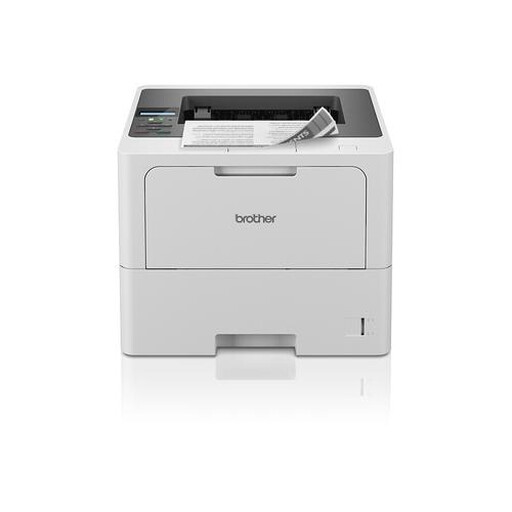
Brother HL-L6210DW A4 monochrome laser printer
An option to compare for text drafts that don’t need colour.
The product information describes monochrome A4 laser printing and lists Wi-Fi.
The stated resolution is 1200 × 1200 DPI.
View on Joybuy
Frequently asked questions
Do you need a colour printer for a text-only manuscript?
No, not if the printed proof is clear without colour. Check a representative page if highlights or illustrations convey meaning.
How do you set up a printer for several studio members?
Choose a model whose Wi-Fi or Ethernet connection suits the studio network and its devices, and agree who will collect the printouts. If the studio processes personal data as an organisation, the Dutch Data Protection Authority says it must determine appropriate security measures based on the risks; a network connection alone doesn’t take care of this.
Which refills and maintenance parts should you compare?
Compare the parts for the exact model and your expected print volume. Brother lists separate toner and drum units for the HL-L2445DW; Canon lists a replaceable maintenance cartridge for the MAXIFY GX4050. Infrequent inkjet use can mean that cleaning uses extra ink.
Which warranty rules apply if the studio buys the printer?
In the Netherlands, statutory consumer protection applies to purchases by individual consumers, with no fixed statutory time limit. The Dutch government explains that the assessment depends on what you could reasonably expect from the product. If a business buys the printer for business use, consumer rules don’t automatically apply; Ondernemersplein explains this distinction for business sales.
What privacy arrangements are needed for a shared printer?
If the studio processes personal data as an organisation, the Dutch Data Protection Authority says it must take appropriate security measures. Based on how the data is processed, decide who can see print jobs and paper left behind, and which measures are appropriate.


