
Vandaag of morgen in huis

Kwaliteit gegarandeerd

Welkomstaanbiedingen ontgrendelen: GRATIS bezorging | Tot 80% korting | Gratis 30 dagen JoyPlus-proefperiode
Download de app
A pre-workout supplement can be useful when you want extra alertness, focus or energy before a workout. However, products vary considerably. A powder for strength training does not work in the same way as a shot for when you are on the go, while a caffeine tablet usually contains none of the ingredients found in products such as creatine, beta-alanine or electrolytes.
The biggest purchasing mistakes often come down to three recurring pitfalls:
Always check how much caffeine per recommended serving the product contains. The amount ranges from 100 mg in an amino energy drink to 200 mg in a pre-workout gel and 400 mg per daily dose in the Lucovitaal Pure 400mg Caffeine tablets.
Do not only count coffee. Tea, energy drinks, caffeine tablets, pre-workout powder and a pre-workout shot all contribute to your intake. Avoid simply combining several stimulant products. According to the product information, caffeine can contribute to alertness and concentration, but a higher dose is not automatically more suitable.
Preferably, do not take a caffeinated product shortly before going to bed. The labels of several products also warn against use by children, young people, pregnant women and breastfeeding women. Are you sensitive to caffeine, taking medication or living with a medical condition? Ask a doctor or pharmacist for advice.
A pre-workout for strength training may contain a combination of:
Compare the dosage per serving, not just the long ingredients list on the front. In some blended formulas, the individual components of a “blend” are not quantified separately. This makes it more difficult to compare products objectively.
According to the product information, beta-alanine may cause a temporary tingling sensation. This is not the same as a proven personal benefit. Stop using the product if you experience unwanted reactions and follow the instructions on the label.
Pre-workout powder is usually practical when you train at home and want to adjust the amount mixed with water. Pay attention to the serving size, number of servings and storage instructions. Powder can start to clump when exposed to moisture, so make sure you close the packaging properly.
A pre-workout shot is ready to use and fits easily into a gym bag. The shots available contain approximately 150 to 200 mg of caffeine per bottle. A pre-workout gel is also ready to use and can be taken without water, but the variants mentioned contain 200 mg of caffeine per gel. This is clearly a choice for convenience, not necessarily for a low stimulant dose.
Caffeine tablets are compact, but generally do not provide a broad pre-workout formula. According to the label, a product such as Lucovitaal Pure contains 200 mg of caffeine per tablet and 400 mg when taking two tablets. The score line allows you to take a lower amount, but always check the recommended dosage.
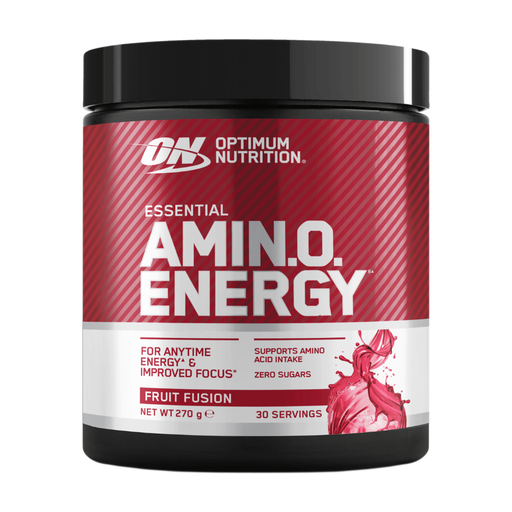
Why it suits this profile: A powder with approximately 30 servings, 100 mg of caffeine per serving and 5 g of amino acids. This makes it a straightforward choice for anyone who wants to start gently with a supplement for focus and energy.
The caffeine dosage is clearly stated per serving, so you do not have to rely solely on the name “energy”.
100 mg of caffeine, 5 g of amino acids, zero sugar and approximately 30 servings per pack.
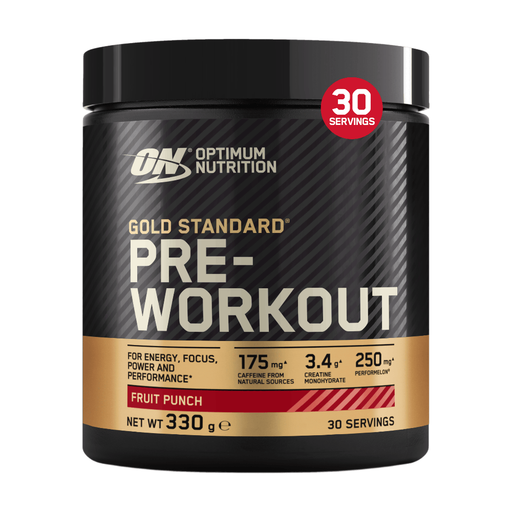
Why it suits this profile: Designed for adults who want to combine several ingredients in one serving before strength training or intense exercise.
The quantities are broken down per serving, including 175 mg of caffeine and 3.4 g of creatine monohydrate.
Approximately 30 servings, 3.4 g of creatine per serving and a separately stated caffeine content of 175 mg.
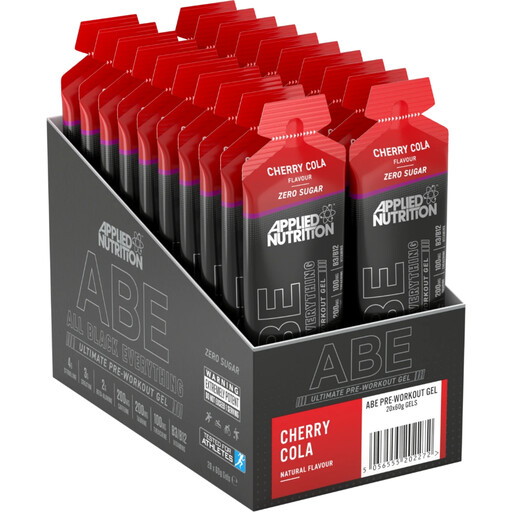
Why it suits this profile: For athletes who do not want to carry a shaker and prefer a ready-to-use gel before an intense session.
The gel states the quantities per pack and per serving: 200 mg of caffeine, 4 g of citrulline malate and 3 g of creatine.
Ready to use, no water required, 20 individually packaged gels and a maximum of one gel per day according to the product information.
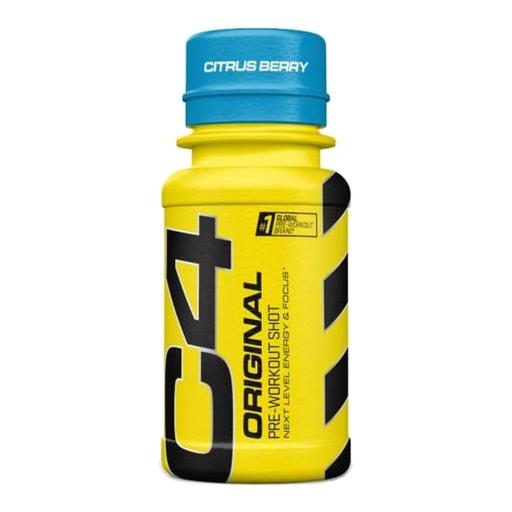
Why it suits this profile: A compact option for adults who want a small, ready-to-use serving before a workout.
The bottle contains one clearly defined 60 ml serving with 150 mg of caffeine. There is no need to use a scoop or work out a mixing ratio.
Ready-to-drink format, 150 mg of caffeine, and beta-alanine, L-arginine and N-acetyl-L-tyrosine according to the label.
We have compiled a complete, up-to-date list of products that fully meet these strict selection criteria and the applicable European safety regulations.
This varies by product. Many powders and shots recommend taking them 20 to 30 minutes before training. Some gels recommend approximately 15 minutes, while an amino energy drink can be used around 30 minutes before exercising according to the product information. Always follow the label for your particular variant.
Not automatically. Check the recommended maximum dosage and add up all your caffeine sources for the day. A product containing 100 mg of caffeine per serving requires different planning from a gel containing 200 mg or caffeine tablets with a maximum of 400 mg per daily dose. Do not use a product if the warnings do not apply to your situation.
Look at the price per serving, not just the purchase price. A pack with 30 servings may work out cheaper per use, but it does require preparation. Shots and gels are easier to take with you, but are used one at a time. Also compare the caffeine content, ingredients, shelf life and number of servings. This will help you choose an energy supplement that fits your training routine, rather than simply choosing based on the packaging.
