
Vandaag of morgen in huis

Kwaliteit gegarandeerd

Welkomstaanbiedingen ontgrendelen: GRATIS bezorging | Tot 80% korting | Gratis 30 dagen JoyPlus-proefperiode
Download de app
Algae buildup on the patio tiles, mud on your mountain bike, or a car that could use a good wash. Sound familiar? A quality pressure washer makes these kinds of cleaning jobs much easier and faster. But with so many options available, it can be difficult to determine which model is right for your situation.
As a Joybuy Product Recommendation Officer, I'm here to help you get started. In this article, you'll find practical tips and a selection of popular models, so you can make a well-informed decision without being swayed by marketing jargon.
Before you purchase a pressure washer, it's wise to consider a few key specifications. These determine how effective the device will be for the jobs you want to tackle.
The power of a pressure washer is expressed in two values:
An electric pressure washer is the most practical choice for most households. They are relatively quiet, lightweight, and low-maintenance.
The right accessories make a huge difference. A standard pressure washer wand is versatile, but specific attachments allow you to work more efficiently. Consider:
pressure washer for their car. It creates a thick layer of foam that loosens dirt before you rinse it off.Also, pay attention to practical matters. A long hose (6 metres or more) gives you plenty of freedom of movement. A reel on the unit itself is convenient for storing the hose neatly and without kinks. Also, check the weight and the presence of wheels, especially if you need to move the washer frequently.
Based on specifications and features, we have highlighted a few interesting models for you.
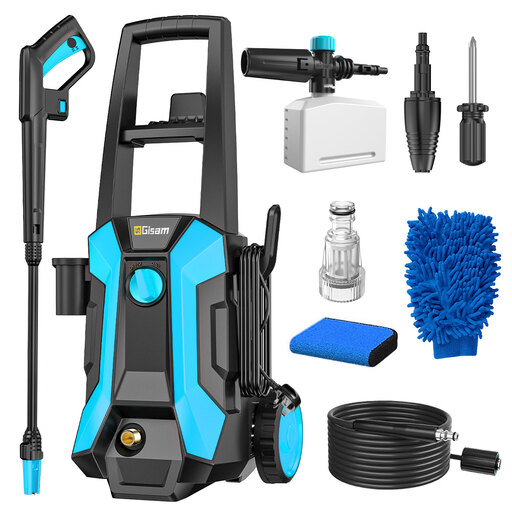
Why it stands out: This model from GISAM combines a powerful motor with high operating pressure and water flow. According to the manufacturer, the 2200W motor delivers a pressure of up to 180 bar and a water flow of 480 L/h, making it suitable for the most demanding cleaning jobs. The integrated reel for the 8-metre hose is a practical detail that simplifies storage.
Pros:
Who is it for? For homeowners with large surface areas like a long driveway, large patios, or high fences who want to effectively remove stubborn dirt.
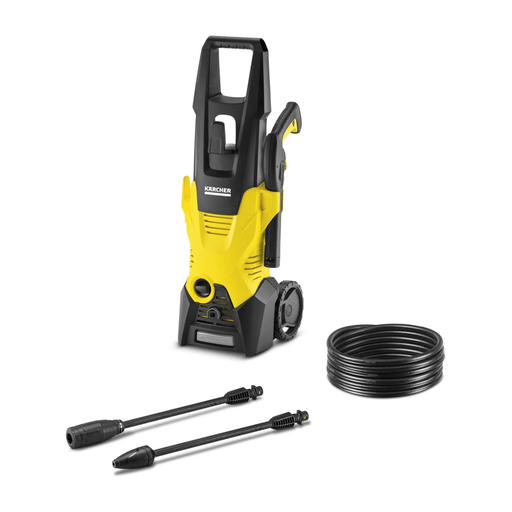
Why it stands out: The K?rcher pressure washer is a well-known name, and the K3 is a popular model for general use. With a power of 1600W, a maximum pressure of 120 bar, and a water flow rate of 380 L/h, this is a solid all-rounder. K?rcher's Quick Connect system makes it easy to attach the hose and accessories. The integrated detergent tank is a handy addition.
Pros:
Who is it for? Ideal for those looking for a reliable and user-friendly machine for common tasks, such as cleaning a bicycle, garden furniture, and smaller patios.
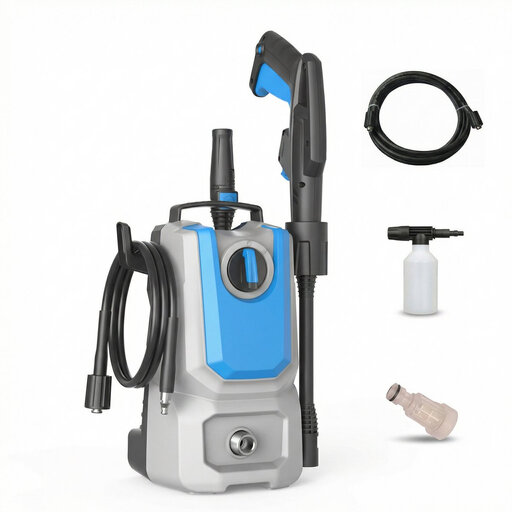
Why it stands out: The Lugia Jet+ is designed with compactness and ease of use in mind. With a maximum pressure of 90 bar and a 1300W motor, it is primarily intended for lighter cleaning tasks. Its biggest advantage is its very compact size and light weight. The Automatic Total Stop System, which shuts off the motor when you release the trigger, helps save energy and reduces wear and tear.
Pros:
Who is it for? Perfect for people with limited storage space, such as in an apartment with a balcony, or for those looking for a simple pressure washer for light tasks like rinsing a scooter or garden furniture.
Is the model for your specific job not listed here? Every situation requires a different approach. Perhaps you're looking for a model with a built-in patio cleaner or a specific accessory kit.
Check out our full range of Jet Wash Pressure Washers for more models and specifications.
To remove stubborn algae from tiles, an operating pressure of at least 130 bar is recommended. For the annual maintenance of a patio that is not extremely dirty, a model with 110 to 120 bar is often sufficient, especially when combined with a good patio cleaner accessory.
Yes, you certainly can. However, do not use the highest pressure setting and maintain a safe distance (at least 30 cm) from the paint to prevent damage. A pressure around 120 bar is generally safe and effective. Using a foam nozzle is highly recommended to loosen the dirt first. Avoid aiming the powerful jet at tyres, rubber seals, and bearings.
In practice, there is no difference. The terms pressure washer and jet wash are often used interchangeably to refer to the same device: a machine that sprays water under high pressure for cleaning purposes.
