Choose an electric pressure cooker based on the amount of stock that fits below the fill line, not just its stated capacity. A larger cooker can be practical for making a batch for a group, while a simpler model may be enough for a smaller demonstration. Allow time for pressure to build and release safely, and always follow the manual for the exact model.
Who should consider this?
Workshop leader making a batch for a group
You want to make enough stock in one go, so you work to the fill line rather than the stated cooker capacity alone. The Instant Pot Duo manual and Philips product information provide model-specific details to compare.
Teacher working to a tight schedule
You want to fit the entire process into your schedule, allowing for pressure build-up and release as well as the set cooking time. For instructions, consult the manual for the exact model, such as the Instant Pot Duo manual.
Instructor guiding beginner cooks
You want the controls and pressure-release process to be clear when participants are gathered around the worktop. The Instant Pot Duo manual includes model-specific instructions for filling and safe use.
What should you look for when buying?
Start with your desired batch size and the fill line, then check that the full cycle and controls suit your workshop.
| What to consider |
What should you check? |
Who is this important for? |
| Usable batch size |
Compare the recipe volume and ingredients with the fill line for the exact model. The Instant Pot Duo manual specifies a maximum fill of 2/3, or 1/2 for ingredients that expand during cooking, such as rice or dried vegetables. |
When I’m cooking for a group, I want to know how much will actually fit in one batch. Around 36% of consumers put usable batch size first. |
| Workshop schedule |
Allow separate time for preparation, pressure build-up, cooking, the recommended pressure-release method and straining. Don’t treat claims about speed as a timing guide for your recipe. |
For a class with a set finish time, I want to leave room for the whole cycle, not just the set cooking time. Around 29% of consumers give the class schedule top priority. |
| Controls and pressure release |
Read the manual, check how the pressure is released and decide who will operate the appliance. Automatic pressure release changes the steps involved, but doesn’t replace clear instructions. |
When participants are gathered around the worktop, I want to know in advance who will operate the cooker and how to release the pressure safely. Around 21% of consumers put clear, safe operation first. |
| Cleaning and storage |
Check which parts can be cleaned according to the manual. The Netherlands Nutrition Centre advises putting leftovers in the fridge, covered and chilled, within 2 hours. |
After the workshop, I want to know how to clean the cooker and deal with any leftover stock promptly. Around 14% of consumers start with cleaning and storage. |
Common pitfalls
-
Confusing stated capacity with the amount of stock you can make
Vegetables and liquid both take up space, and the fill line limits how much you can cook. The Instant Pot Duo manual gives fill limits for those models; they don’t automatically apply to other cookers.
Check your recipe against the fill line and manual for the model you choose. If needed, test the batch before the workshop; a smaller cooker may mean cooking in more than one round.
A second batch could take up extra time during the workshop.
-
Allowing time only for the set cooking time
Pressure build-up and release are also part of the full cycle. A manufacturer’s claim about faster cooking doesn’t tell you how long your workshop batch will take from start to finish.
Test-cook the intended quantity and allow time for pressure release and straining. Follow the manual for the exact model.
A longer-than-expected cook could delay your demonstration or serving time.
-
Confusing the keep-warm setting with storing leftovers
A keep-warm setting is no substitute for a plan to chill any leftover stock afterwards.
Plan when to strain, portion and chill the stock in advance. The Netherlands Nutrition Centre advises putting leftovers in the fridge, covered and chilled, within 2 hours.
Dealing with a larger quantity may require extra fridge space and clean storage containers.
Brands to consider
Instant Pot
According to Instant Pot Netherlands, the Duo range comes in 5,7 l and 7,6 l sizes and includes a soup/stock programme.
- Instant Pot Netherlands lists a stainless steel inner pot for the Duo.
- The filling and pressure-safety instructions in the Duo manual are model-specific. So don’t compare the stated capacity directly with the amount of finished stock.
Tefal
According to Tefal Netherlands, the Turbo Cuisine CY7548 is a multicooker with pressure cooking and a single dial control.
- Tefal lists a non-stick inner pot, 10 automatic programmes and a manual function.
- Tefal’s claims about speed and energy savings are manufacturer claims; the cited energy test was carried out using potatoes, not vegetable stock.
Philips
According to Philips Netherlands, the Philips 3000 Series HD2823/80 has a stated capacity of 8 l, making it a model to compare for larger workshop batches.
- Philips lists automatic pressure release, a soup programme and manual settings.
- The 8 l is the stated capacity; on its own, this doesn’t tell you how many litres of finished vegetable stock the cooker can make.
Joybuy products
These Joybuy products are options to compare for making vegetable stock and larger batches in a cookery workshop. Check the fill line and manual for each model before deciding on your batch size.
 No image available
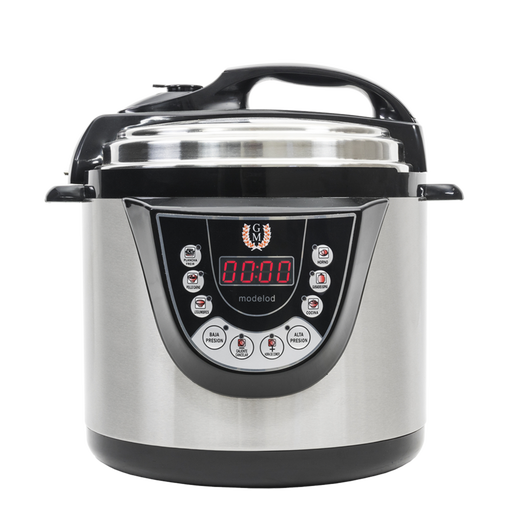
Cecotec Programmable Cooker Model D with frying and voice functions, 6 l
Its stated capacity makes this model worth comparing for a workshop batch; check the fill line against your recipe.
Stated capacity: 6 l; usable capacity: 5 l.
The product name lists 9 cooking programmes and 2 pressure settings.
View at Joybuy
 No image available
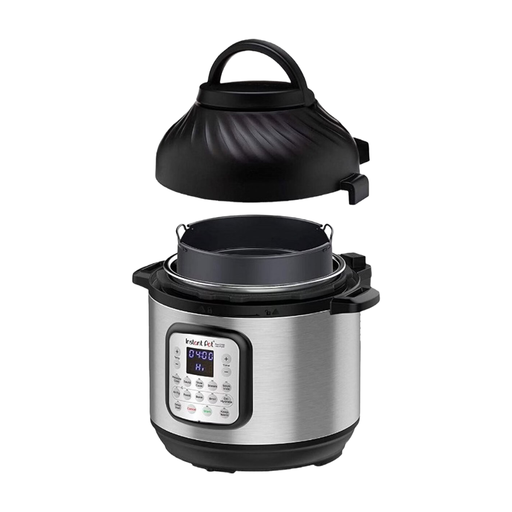
Instant Pot Duo Crisp 7,6 l 11-in-1 pressure cooker and air fryer, two lids
Its stated capacity makes this model an option to compare for a larger batch; size your batch according to the appliance’s fill line.
Stated capacity: 7,6 l; 11-in-1; two lids.
The product information warns that the pressure must be fully released before opening the lid; take care around hot steam and surfaces.
View at Joybuy
 No image available
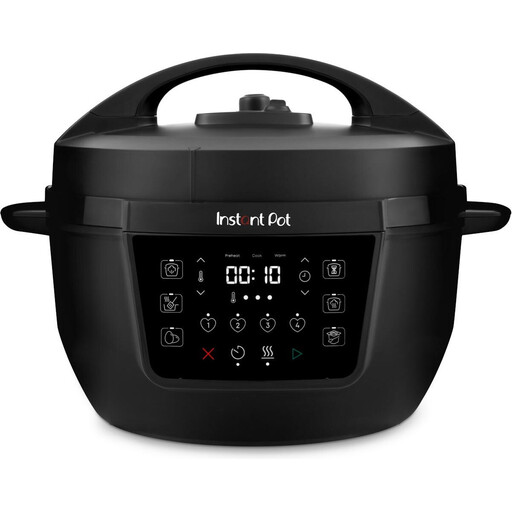
Instant Pot Rio XL 7,1 l 7-in-1 pressure cooker, stainless steel inner pot
Its stated capacity and pressure-cooking function make this model worth comparing for a larger batch of soup; follow the fill line for the exact model.
Stated capacity: 7,1 l; 7-in-1; stainless steel inner pot.
View at Joybuy
 No image available
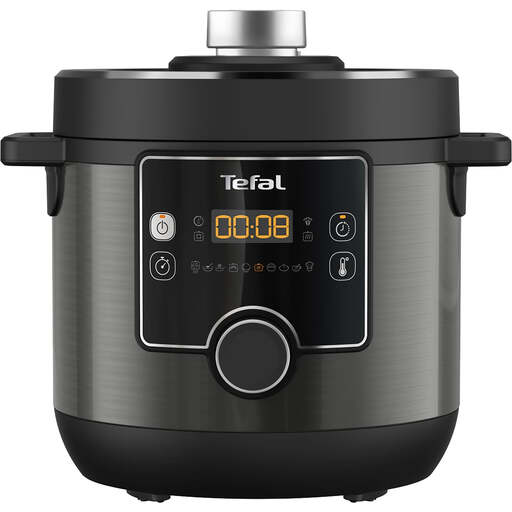
Tefal Turbo CY7788 Cuisine & Fry multicooker and air fryer, 7 l, One-Touch Programs
Its stated capacity and One-Touch Programs make this model worth comparing for a larger workshop batch. Check the product information and manual for its features and fill line.
Stated capacity: 7 l; One-Touch Programs.
The product information warns against forcing the appliance open and says to release the pressure first.
View at Joybuy
 No image available
Midea 9-in-1 electric pressure cooker, 7,6 l, with non-stick pot
Its stated capacity makes this model an option to compare for a larger workshop batch; check your recipe against the fill line.
Stated capacity: 7,6 l; 12 preset programmes; non-stick pot.
The product information warns not to exceed the MAX fill line and recommends filling the cooker halfway for ingredients that expand.
View at Joybuy
Frequently asked questions
Can I use the stated capacity as the amount of stock I can make?
No. Allow for both the vegetables and the liquid, and follow the fill line for the model you choose. For the Instant Pot Duo, the manual specifies a maximum fill of 2/3, or 1/2 for ingredients that expand during cooking, such as rice or dried vegetables.
When can I open the lid, and where should I put the pressure cooker?
Follow the manual for the exact model, and only open the lid once the pressure has fully dropped in accordance with its instructions. The Instant Pot Duo manual also warns you to keep children away while the appliance is in use.
How should I store stock left over after the workshop?
Cool the stock promptly and put any leftovers in the fridge, covered, within 2 hours, advises the Netherlands Nutrition Centre. Its storage guide recommends keeping stock in the fridge for 2 days or in the freezer for 3 months; don’t leave a large quantity to cool slowly in the full cooker.
Does an electric pressure cooker in the Netherlands need a CE mark?
According to the Netherlands Food and Consumer Product Safety Authority, CE marking is compulsory for electrical consumer products. Check the mark on the specific appliance; CE marking is not an independent test of how it performs in use.
Is NVWA registration or a food safety plan required for every cookery workshop?
Not simply because it’s a workshop: what matters is the nature of the sales activity. According to the Netherlands Food and Consumer Product Safety Authority’s step-by-step guide, a business must register if it sells food to consumers several times a year; for a sale once a year, the guide says registration is not compulsory. Assess the workshop’s set-up separately.


