
If you’re serving a range of toppings
You want spicy, savoury or creamy toppings, for example, to provide the main flavour. Plain Melba toast is a more logical starting point than toast flavoured with olives and herbs.


Choose plain Melba toast if you want the toppings to take centre stage. Sesame or multigrain toast gives the base more character; if you’re serving moist toppings, think about when you add them too. Compare the ingredients, allergens and nutritional information for each variety before choosing.
You want spicy, savoury or creamy toppings, for example, to provide the main flavour. Plain Melba toast is a more logical starting point than toast flavoured with olives and herbs.
You’re looking for flavour in the base as well as in the toppings. Sesame or multigrain toast is worth comparing, as long as its flavour works with your toppings.
You want to know which allergens and ingredients the variety you’ve chosen contains before serving it. The salt per 100 g or use of baker’s salt may also be relevant to your choice.
First decide whether the topping or the toast should provide the main flavour. Then think about when you’ll add the toppings and check the packaging for the exact variety.
| What to consider | What to check when buying | Who it matters to |
|---|---|---|
| Flavour base | Check whether the toast is plain or contains ingredients such as olives, tomato and herbs. | If I’m serving several bold toppings, I don’t want an extra herb flavour in the base. A neutral flavour would therefore be the main reason for choosing a variety for around 36% of consumers. |
| Crispness | Check the product description and, if you’re serving moist toppings, add them as late as possible. | If I’m serving a creamy spread, I want the toast to stay crisp while it’s being served. Crispness would be the top priority for around 29% of consumers. |
| Ingredients and allergens | Check the current packaging to see which allergens the exact variety contains and which may be present as traces. | If I’m serving guests with allergies, I need to be able to check in advance which variety may be suitable for them. Around 21% of consumers would put checking ingredients first. |
| Fibre and salt | Compare the nutritional information per 100 g and take the amount you’ll serve into account. | I want to compare the fibre and salt levels of different varieties rather than judge them by their name. For around 14% of consumers, this would be the main consideration. |
According to Jumbo, Jumbo Knapperige Toast contains ingredients including black olives, sun-dried tomato, herbs and chilli. Those flavours may compete with your toppings.
Choose seasoned toast if that’s the combination you’re after. For a table with a range of toppings, plain Melba toast is a more neutral starting point.
As well as wheat, sesame and multigrain varieties may contain other ingredients that matter to guests with allergies. Ingredients vary from product to product.
Check the allergen information on the exact packaging and keep a suitable alternative separate if a guest needs to avoid certain ingredients.
According to Albert Heijn’s product information, AH Biologisch Melba-toast met sesam contains 1,1 g of salt per 100 g; Jumbo lists 2,1 g per 100 g for Van der Meulen biologische sesamtoast. So being organic or containing sesame doesn’t tell you the salt content.
Compare the nutritional information per 100 g, then consider how much toast you want to serve.
Not all toast automatically contains iodised baker’s salt. The Voedingscentrum says that bakers are not required to use baker’s salt.
If this ingredient matters to your choice, check the label on the specific toast or ask the manufacturer.
The Melba range includes a plain base as well as sesame and multigrain varieties.
The own-brand range includes both plain Melba toast and an organic sesame variety.
Jumbo Knapperige Toast is an option if you want the toast itself to add a seasoned flavour.
Krokant Toast is worth considering if you want to serve moist toppings.
Bolletje is worth considering if you’re looking at crackers or snack crackers as well as Melba toast.
These Joybuy products are Melba toast varieties to consider if you’re planning to offer a range of toppings at an Asian-themed evening. Choose the pack and flavour base that suit your serving plans.
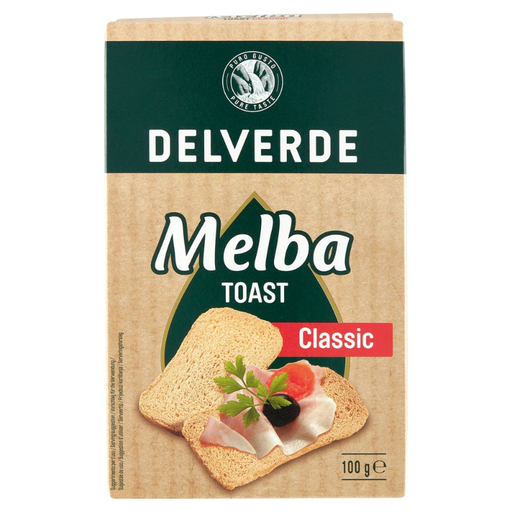 Image unavailable
Melba toast to consider if you want different toppings to provide the main flavour.
According to the product information, it contains cereals containing gluten; sesame, soya and mustard may be present as traces. If you have allergies, check the current packaging. Also check the label if the use of baker’s salt matters to you.
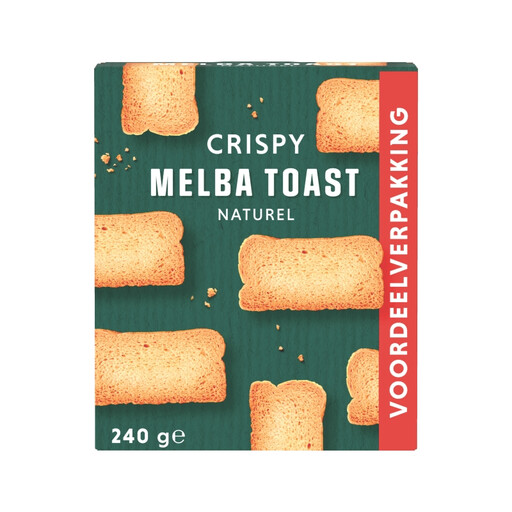 Image unavailable
Melba toast to consider if you’re serving several types of toppings or dips.
Before buying, check the allergens listed on the current packaging, especially if you’re choosing it for guests with allergies. Also check the label if the use of baker’s salt matters to you.
Sesame toast is a good choice if you want to taste sesame in the base too; plain Melba toast leaves more room for the flavours of a range of toppings. Albert Heijn lists 7% sesame in its organic Melba toast. If you choose it, check the allergens on the packaging.
Keep the toast dry and add the toppings as late as possible. If you’re serving moist toppings, you could also compare it with Haust Krokant Toast: according to Haust, this twice oven-baked variety stays crisp for longer, but that’s no guarantee with every topping or serving time.
No, don’t assume that it does. The Voedingscentrum says that bakers are not required to use baker’s salt. Check the label or ask the manufacturer if this ingredient matters to your choice.
Check the exact variety for ingredients such as cereals containing gluten, soya and sesame; other allergens may also be relevant, depending on the product. Read both the ingredients list and any warning about possible traces on the current packaging, especially if you’re serving guests with allergies.