Choose a thin, mildly flavoured toast if you want your toppings to take centre stage, or compare multigrain and wholemeal options if fibre is more important to you. Looking for an organic product? Check the certification on the specific variety. Whatever you choose, read the current label: the products mentioned differ in ingredients, allergens and salt content.
Which toast is right for you?
For hosts who want the toppings to shine
Serving bite-sized snacks with soft cheese, tapenade or fish, for example? Choose a thin Melba toast or cracker whose flavour complements the topping. Van der Meulen describes its multigrain Melba toast as thin, while Gran Pavesi offers a thin cracker for savoury toppings.
For shoppers who keep an eye on grains and fibre
If you often use toast as a base for snacks, compare wholemeal and multigrain options by their fibre content per 100 g. Check the ingredients at the same time: the grains and seeds used may also affect which guests can eat the toast.
For shoppers who check certifications and labels
If you want to serve an organic product or need to account for allergens, check the certification and ingredients on the exact pack. The EU organic logo on AH Biologisch Melba toast does not, by itself, mean it is suitable for guests with allergies.
What to look for in teatime toast
Start with the toppings, then decide whether the grain content or an organic certification matters more to you. Always compare nutritional information on the same basis, such as per 100 g.
| What to consider |
What to check when buying |
Who it matters to |
| Base for toppings |
Consider the thickness and flavour of the toast alongside the toppings you want to serve. |
With soft cheese or other delicate toppings, I want the toast to complement rather than overpower the flavour. Around 40% of consumers put this role as a base first. |
| Grains and fibre |
Compare the grains and fibre listed per 100 g, and check the salt content on the same basis. |
If I regularly use toast as a base for snacks, I prefer an option with whole grains or more fibre. This is the first consideration for around 30% of consumers. |
| Certification and label |
Check the organic certification, allergens and salt content on the current pack. |
When serving several guests, I want to check in advance what the toast contains and whether its certification suits my preferences. This is the top priority for around 30% of consumers. |
Common mistakes when choosing
-
Assuming a premium look makes it suitable for every tea table
Organic sesame toast, multigrain Melba toast and crackers with olive oil all differ in flavour and ingredients. None of these qualities alone tells you whether a product will suit your toppings or your guests.
First decide what you want the toast to do, then compare the ingredients, allergens and salt per 100 g.
-
Serving a grain or sesame variety without reading the label
The Melba toasts mentioned contain a range of gluten-containing grains; some varieties also list sesame and soya. So an appealing flavour combination may not be suitable for every guest.
Check the pack you are actually serving, and if a guest has an allergy, only choose an alternative that has been checked separately.
-
Assuming a product listing means it is currently available
Albert Heijn’s product page lists Van der Meulen Melba Toast Luxe Volkoren & Spelt as no longer in the range. The fibre and salt values given describe that specific product and do not automatically apply to an alternative.
When choosing a replacement toast, check the ingredients, nutritional information and availability again.
-
Assuming all toast contains iodised baker’s salt
If a product label only lists ‘salt’, you cannot tell from that alone which type of salt was used.
If the type of salt matters to you, check the information for the exact product or ask the manufacturer.
Brands to compare
Van der Meulen
A useful brand to compare if you’re looking at different types of Melba toast, including multigrain and wholemeal spelt.
- Jumbo’s product information describes the multigrain variety as thin; Albert Heijn lists 9,4 g of fibre per 100 g for the wholemeal spelt variety.
- Check the allergens for each variety. Albert Heijn also lists the wholemeal spelt variety mentioned as no longer in the range.
AH Biologisch
Organic sesame Melba toast for anyone weighing up the certification and ingredients of a specific variety.
- Albert Heijn lists 7% sesame, the EU organic logo and certification code NL-BIO-01 for this toast.
- The product information lists sesame, soya, barley and wheat among the allergens.
Gran Pavesi
Le Sfoglie Classiche is a thin cracker that can be served with savoury toppings as an alternative to classic Melba toast.
- Albert Heijn lists 6,7% olive oil and suggests pairings such as tapenade, pesto and cheese.
- It is not Melba toast. The product information lists wheat and milk, and 1,8 g of salt per 100 g.
Bolletje
A brand to explore if you’re considering other crackers and crispbreads as well as Melba toast.
- Bolletje’s range includes ciabatta snack crackers, seed crackers and crispbreads.
- Choose based on the label of the specific product; these categories are not interchangeable with Melba toast.
Toast and toast alternatives at Joybuy
These products include Melba toast to serve with toppings and one rice toast as an alternative. Focus on how the shape and ingredients compare with what you’re looking for to serve at teatime; rice toast is not the same product as classic Melba toast.
 No image available
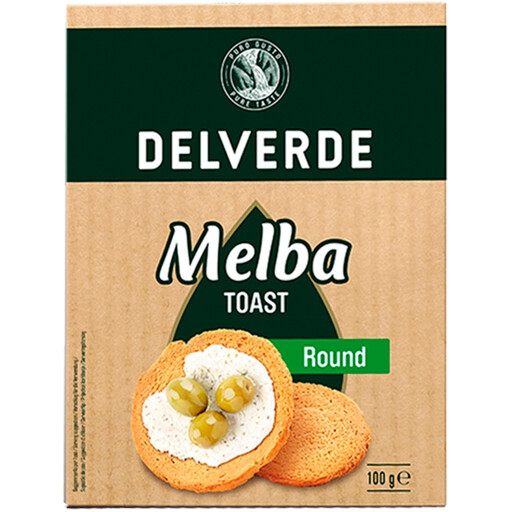
Conimex Delverde Melba Toast Round, 100 g
Round Melba toast for bite-sized sweet or savoury snacks. The product information lists wheat and barley; sesame, soya and mustard may also be present. Check the pack if you’re serving guests with allergies.
View at Joybuy
 No image available
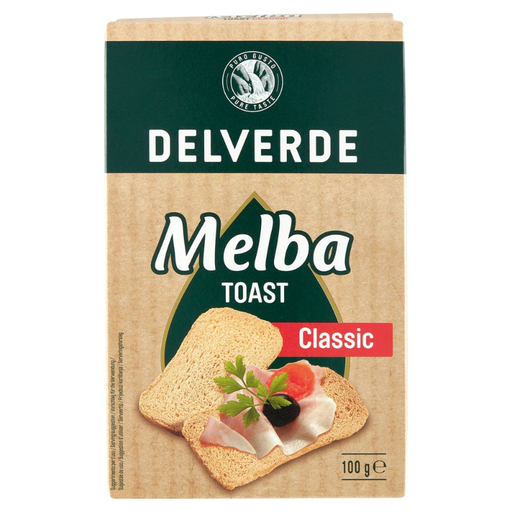
Delverde Classic Melba Toast, 100 g
Classic Melba toast to serve with cheese, pâté or sweet toppings, for example. The product information lists wheat and barley and warns that traces of sesame, soya and mustard may be present. Check the current label if you have allergies.
View at Joybuy
 No image available
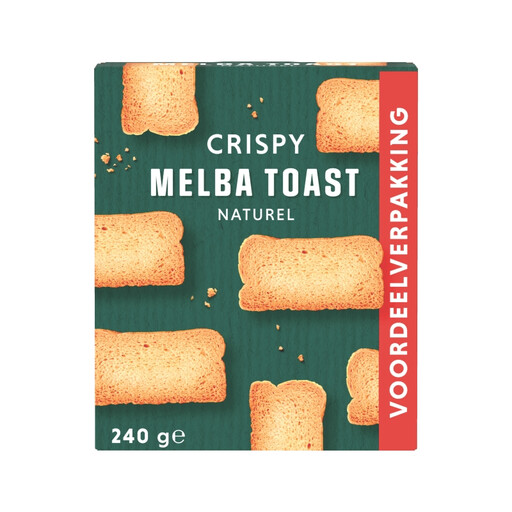
Crispy Melba Toast, 240 g
Thin Melba toast to serve with cheese, dips or spreads. Check the allergens on the pack before buying: the product information gives conflicting details.
View at Joybuy
 No image available
Van Der Meulen Rice Toast Natural, 65 g
Rice toast makes a crisp alternative if you’re not looking for classic Melba toast. The product information contradicts itself about sesame and soya, so check the pack to see whether they are listed as ingredients or possible traces.
View at Joybuy
Frequently asked questions
Is premium toast automatically suitable for guests with a gluten or sesame allergy?
No. The Melba toasts mentioned contain wheat or other gluten-containing grains, and sesame is listed for some varieties. Check the current pack of the product you’re serving.
What does the organic certification on AH Biologisch sesame toast mean?
Albert Heijn lists the EU organic logo and certification code NL-BIO-01 for this specific Melba toast. The certification does not mean the toast is allergen-free or suitable for every dietary preference; check the ingredients and nutritional information for that.
Can you assume that toast contains iodised baker’s salt?
No. A product label that simply lists ‘salt’ does not confirm this. If the type of salt used matters to you, check the information for the exact product or ask the manufacturer.
How can you keep Melba toast crisp until you serve it?
Store the toast according to the instructions on the pack and seal it well once opened. The multigrain Melba toast mentioned should be stored in a cool, dry place; for its organic Melba toast, Albert Heijn recommends storing it in a sealed tin after opening.


