
Brunch and entertaining shoppers
You want to serve rusks at a special breakfast or brunch. Size, seeds and how you serve them can all influence your choice.


Choose rusks for your first grocery shop according to how you plan to use them: go for a larger seeded variety for brunch, or wholegrain rusks if you’re looking for a familiar everyday option. If ingredients or nutritional values are your priority, compare the exact varieties and check the allergen information. And don’t assume a product contains iodine because it was made with baker’s salt – check the packaging first.
You want to serve rusks at a special breakfast or brunch. Size, seeds and how you serve them can all influence your choice.
You’re looking for rusks for breakfast or lunch and mainly comparing wholegrain varieties and their fibre content. A premium look matters less to you than what they’re made of.
You check the ingredients, allergens and nutritional information for the exact variety, perhaps because carbohydrates, protein or fibre are important factors in your choice.
Before your first grocery shop, decide whether you’re mainly buying rusks for brunch, everyday use or a particular ingredient preference. Then compare the packaging of the varieties that suit your needs.
| What to consider | What should you check? | Who is this important to? |
|---|---|---|
| Presentation and flavour | Check the size and the seeds or kernels listed for the exact variety. | For brunch, I want rusks that feel like a considered choice on the table, even without elaborate toppings. Presentation and flavour are the top priorities for about 27% of consumers. |
| Wholegrain and fibre | Read the ingredients list and compare fibre per 100 g. | If I eat rusks regularly, I mainly look for a wholegrain variety whose ingredients I can assess. Wholegrain and fibre are the main reasons for choosing a product for around 33% of consumers. |
| Nutritional profile and ingredients | Compare the nutritional information per 100 g and per serving, and read the allergen statement. | I want to know whether the ingredients and nutritional values of this particular rusk suit my preferences. Around 20% of consumers prioritise the nutritional profile and ingredients. |
| Pack size and storage | Check the number of rusks, the pack weight and the storage instructions. | When stocking up at home for the first time, I want a pack I can store and am likely to finish. This practical consideration matters most to around 20% of consumers. |
A large size or visible seeds doesn’t tell you how much fibre, sugar, fat or salt a rusk contains.
Compare the nutritional information per 100 g and per serving for the varieties you’re considering, along with their ingredients and allergens.
According to the Netherlands Nutrition Centre, using baker’s salt when baking bread isn’t compulsory. So don’t assume rusks contain it just because of the type of product.
Check whether baker’s salt is listed on the packaging of the exact rusk, or ask the manufacturer.
A name such as wholegrain or multiseed doesn’t give you the full picture of the ingredients used. PLUS lists wheat, barley, oats, egg and sesame, among other ingredients, in its wholegrain rusks with seeds.
If you have an allergy, always check the current allergen information on the exact pack, even if you’ve bought that variety before.
Bolletje offers classic, wholegrain and multiseed rusks, among other varieties, for shoppers comparing size and texture.
Albert Heijn offers own-brand rusks in wholegrain and multiseed varieties, among others, alongside rusks from other brands.
Jumbo sells various types of rusks, including plain, wholegrain and varieties with grains or seeds.
PLUS sells both simple wholegrain rusks and wholegrain rusks with seeds.
TastyBasics multiseed rusks are aimed at shoppers who want to compare the nutritional profile of a particular variety.
These rusks suit two choices for your first grocery shop: multiseed rusks for brunch or a particular ingredient preference, and wholegrain rusks as a breakfast or lunch staple. Compare the exact packaging before you choose.
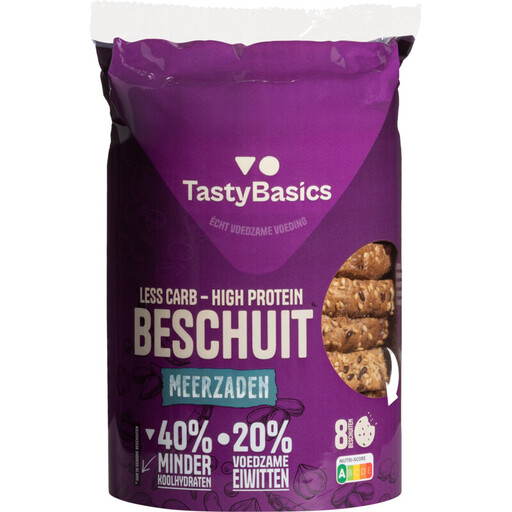 Image unavailable
An option if you’re specifically looking for multiseed rusks to serve at brunch or as a snack. The pack is marked as 184 g; check the ingredients and allergens for this variety.
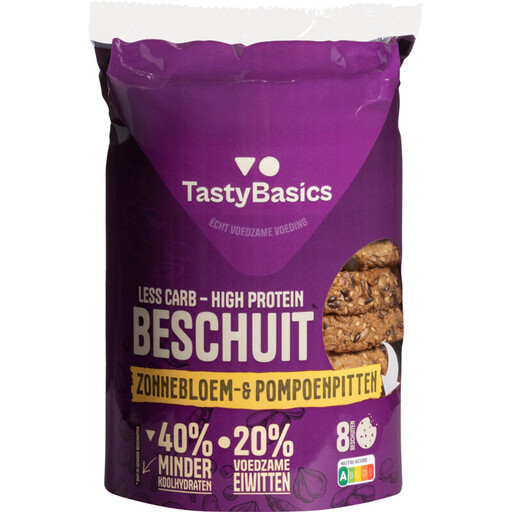 Image unavailable
A variety for anyone specifically looking for sunflower seeds when serving rusks. The product name states that the pack contains 8 pieces; check the current packaging for allergen information.
 Image unavailable
A good fit if you’re looking for dark wholegrain rusks for breakfast or brunch. The product name states that the pack contains 10 pieces; compare the nutritional information and allergens for this variety with those of other wholegrain rusks.
 Image unavailable
An option if seeds are what make the difference for you at breakfast or brunch. The product name states that the pack contains 10 pieces; if you’re also looking for a wholegrain base, check the ingredients of this exact variety.
 Image unavailable
A wholegrain option if you’re mainly looking for rusks for everyday breakfasts or lunches. The product name states that the pack contains 13 pieces; check the packaging for nutritional and allergen information.
No. Size and presentation don’t tell you what a rusk contains per 100 g or per serving. Compare the nutritional information and ingredients of the exact varieties, especially if fibre, sugar, fat or salt are important to your choice.
No. Don’t assume baker’s salt is used based on the product type alone. The Netherlands Nutrition Centre says that using baker’s salt when baking bread isn’t compulsory, so check the label on the rusks you’ve chosen or ask the manufacturer whether baker’s salt has been used.
That depends on the exact variety. PLUS lists wheat, barley, oats, egg and sesame, among other ingredients, in its wholegrain rusks with seeds. If you have an allergy, always check the current allergen information on the packaging you’re buying.
Follow the storage instructions on the packaging and seal any opened roll securely. PLUS recommends storing its wholegrain rusks with seeds in a cool, dry and dark place.