
Vandaag of morgen in huis

Kwaliteit gegarandeerd

Welkomstaanbiedingen ontgrendelen: GRATIS bezorging | Tot 80% korting | Gratis 30 dagen JoyPlus-proefperiode
Download de app
When you’re looking for premium dry dog food, you’ll quickly come across terms such as “natural”, “grain-free” and “rich in animal ingredients”. These descriptions sound appealing, but they don’t always tell you enough about whether a food is right for your dog. An active dog has different needs from a laid-back senior, and a large-breed puppy needs a different type of food from a small adult dog.
A percentage on the front of the pack may refer to fresh ingredients, dried ingredients or the proportion of protein from animal sources. Always check the full ingredients list and the analytical constituents. Pay particular attention to crude protein, crude fat, fibre and the energy content per kilogram.
A recipe with 38% crude protein, such as some Orijen products, isn’t automatically right for every dog. The daily feeding amount should be suited to your dog’s weight, activity level and body condition.
Grain-free dog food contains no grains, but that doesn’t automatically make it suitable for every dog with sensitivities. Grains may have been replaced with ingredients such as peas, lentils, chickpeas or sweet potato. So check the full ingredients list and look at the specific protein source.
If you suspect a food sensitivity, it’s a good idea to discuss any changes with your vet. A product description shouldn’t suggest that a food has medical benefits.
A 12, 14.5 or 17 kg bag can be practical if you have a large dog or several dogs. However, the food may lose its flavour and freshness once opened if the bag isn’t sealed properly. Store dog food in a cool, dry place away from direct sunlight. If you have a small dog, consider trying a smaller size first to avoid waste.
Check whether the food is intended for:
A recipe suited to growth and breed size is particularly important for large-breed puppies. Products such as Farmina N&D Prime Chicken Puppy Medium/Maxi and Acana Puppy Large Breed are specifically formulated for medium or large puppies. Always check the latest feeding guide on the packaging, as the recommended amount also depends on age, weight and activity level.
A clearly stated first ingredient makes it easier to compare products. Popular options include:
Bear in mind that “high-protein dog food” isn’t the same as food with a high percentage of animal ingredients. Compare these figures separately. An active dog may benefit from an energy-rich recipe, but a very high-calorie kibble may lead to weight gain more quickly in a less active dog if you don’t adjust the portion.
The key values are usually listed in a table on the packaging. Look at:
For example, Acana Active & Agile lists 33% crude protein, 19% crude fat and 3.800 kcal/kg. According to the product description, it’s suited to adult and senior dogs of all breed sizes with high energy requirements. Always follow the feeding guide.
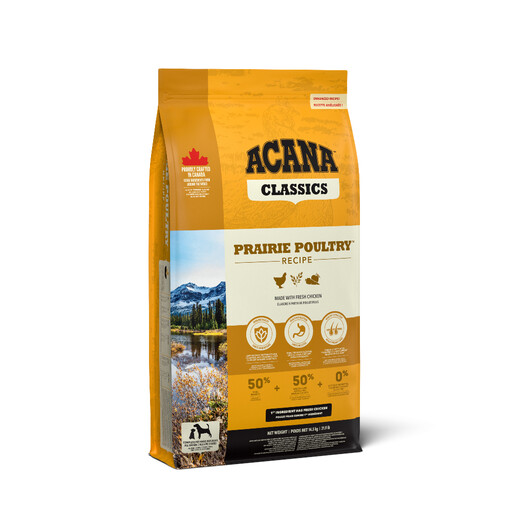
Why it suits this profile: A complete recipe for dogs at all life stages, with chicken, turkey, oats and vegetables. The larger bag can be handy for a medium or large dog.
The ingredients and analytical values are both listed, including 27% crude protein and 16% crude fat. This lets you compare the marketing claims with specific figures.
50% animal ingredients according to the product information, with oats and a stated energy content of 3.443 kcal/kg.
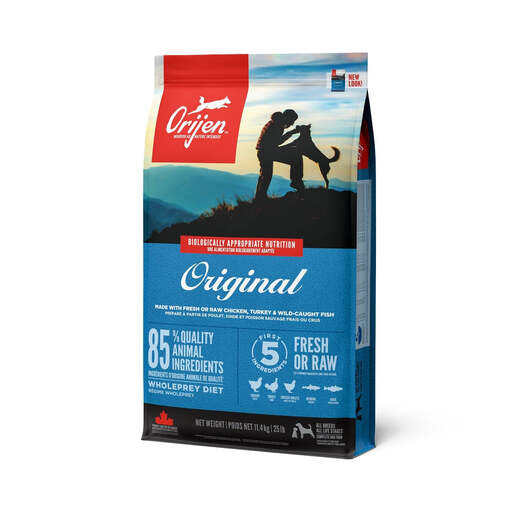
Why it suits this profile: For owners looking for a grain-free recipe with several animal ingredients for adult dogs or dogs at all life stages.
The product information names specific sources such as chicken, turkey, herring, cod and egg. It also lists 38% crude protein and 18% crude fat.
Grain-free recipe, 38% crude protein and a WholePrey composition according to the product description.
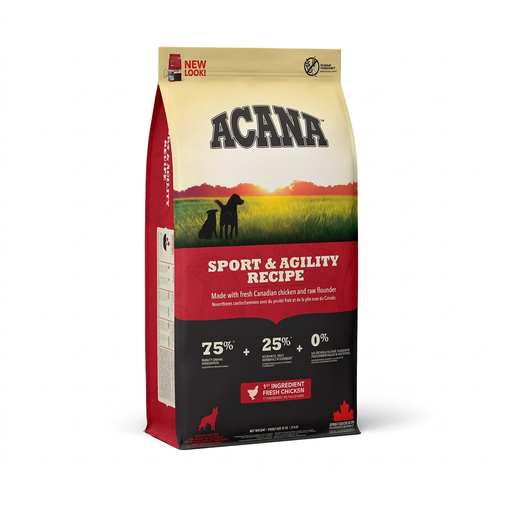
Why it suits this profile: Formulated for active adult and senior dogs of all breed sizes, such as working dogs or dogs that get plenty of exercise every day.
The product description gives clear percentages, energy content and feeding advice. This helps you tailor the portion to your dog’s energy needs rather than choosing based on bag size alone.
75% animal ingredients according to the product information, 33% crude protein, 19% crude fat and a choice of 11.4 or 17 kg bags.
For puppies, Farmina N&D Prime Chicken Puppy Mini, Farmina N&D Ocean Cod with Pumpkin Puppy Medium/Maxi, Orijen Puppy Formula and Eukanuba Grain Free Puppy Small/Medium are all worth comparing. Check the recommended age, your puppy’s expected adult size and the kibble size.
For a dog with a sensitive digestive system, a recipe with one main protein source or a different source, such as fish, lamb or venison, may be worth considering. Dog food for sensitive dogs isn’t guaranteed to solve the problem, though. Introduce new food gradually over about seven days and keep an eye on how your dog responds.
For adult dogs, options with different protein sources include Farmina N&D Quinoa Skin & Coat Adult, Farmina N&D Tropical Pork Adult, Buddy Free-range Duck and Buddy Wild Reindeer Meat. “Natural dog food” may be a preference, but always check whether the product is labelled as a complete food.
We’ve put together a complete, up-to-date list of products that meet these strict selection criteria and current European safety regulations.
No. The right choice depends on life stage, weight, breed size, activity level and any dietary issues. Compare the full ingredients list and follow the feeding advice on the packaging.
Gradually mix the new food with the old food over about seven days. Start with a small amount of the new food and increase it step by step. Stop or ask your vet for advice if your dog develops clear symptoms.
This varies by brand and packaging. Seal the bag tightly after each use, store it in a cool, dry place and follow the best-before information on the label. Don’t buy a large bag if your dog won’t finish it within a reasonable time.
