
Vandaag of morgen in huis

Kwaliteit gegarandeerd

Welkomstaanbiedingen ontgrendelen: GRATIS bezorging | Tot 80% korting | Gratis 30 dagen JoyPlus-proefperiode
Download de app
Anyone looking for premium dog food will quickly come across terms such as “grain-free”, “high-protein” and “with natural ingredients”. These phrases sound appealing, but on their own they do not tell you whether the food is right for your dog. The best choice depends on your dog’s life stage, size, activity level and the composition of the complete recipe.
As a Joybuy Product Recommendation Officer, I therefore focus mainly on verifiable information on the label: the stated protein and fat percentages, the first ingredients, whether the food is suitable for puppies or adult dogs, and the recommended portions.
A recipe containing a lot of protein is not automatically suitable for every dog. An active adult dog, a growing puppy and a small dog with lower energy needs all have different nutritional requirements. As well as the protein percentage, look at the fat content, energy content and feeding guide for your dog’s weight.
Grain-free dog food contains no grains, but it often uses other sources of carbohydrates, such as peas, chickpeas, potato or sweet potato. Grain-free therefore does not automatically mean easy to digest or suitable for a sensitive stomach. Check the full ingredients list and change your dog’s food gradually.
Does the packaging say “dog food with chicken”, “dog food with duck” or “dog food with fish”? If so, check how much of that ingredient is actually in the recipe. Some products mention a flavour even though the main ingredient is a broader category such as meat and animal derivatives. Ingredients are generally listed in descending order by weight.
Look for the legally required designation, such as complete food for adult dogs or puppies. Puppy food is formulated for growth and is often given in smaller, more frequent portions. For adult dogs, choose adult dog food suited to their expected body weight and activity level.
Also consider breed size. Dog food for small breeds often has smaller kibble and different portion guidance from dog food for medium and large breeds. A 12 kg bag may offer better value per kilogram, but it is less practical if your dog eats slowly or does not need much food.
Compare analytical constituents on a like-for-like basis. The product specifications provided, for example, list the following values:
These figures are only meaningful when considered alongside the feeding guide. High-protein dog food may suit an active dog, but a calmer dog may do better with a smaller portion or a different fat content. Weigh out portions and check your dog’s body condition regularly.
For sensitive digestion, a simple recipe with clearly identifiable protein sources may be more practical than one containing many different animal ingredients. Farmina Quinoa Digestion Adult Mini Lamb lists lamb, quinoa, inulin and fructo-oligosaccharides, among other ingredients. According to the product description, the recipe is intended for small adult dogs and also contains fennel, mint and artichoke.
For skin and coat care, some owners choose dog food containing omega 3. If so, look at the stated level and its source, such as fish oil, herring oil or linseed. According to Farmina’s own information, N&D Ocean Salmon Adult Medi/Maxi contains salmon, cod and herring oil, among other ingredients, with 2.30% omega 3 in the stated analysis. This is a product specification, not a medical claim. For persistent skin or stomach problems, seeking advice from a vet is more sensible than repeatedly changing your dog’s food yourself.
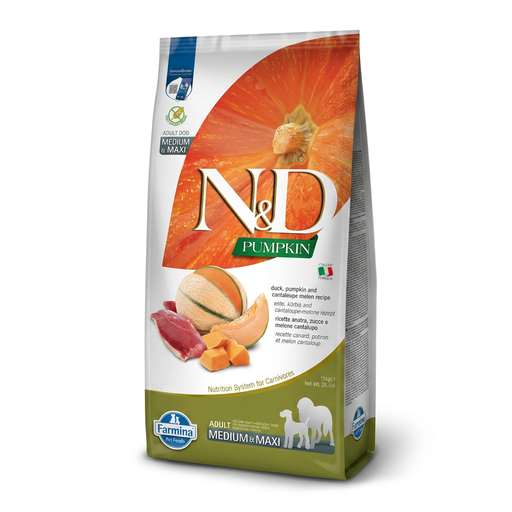
Why it suits this profile: A large pack for medium-sized and large adult dogs, with clear portion guidance from 15 kg upwards.
The recipe gives specific percentages: 32% protein, 18% fat and 2.5% fibre. This makes it easier to compare than relying on the word premium alone.
Duck and herring are clearly named in the ingredients list; the recipe contains pumpkin and is grain-free according to the product information.
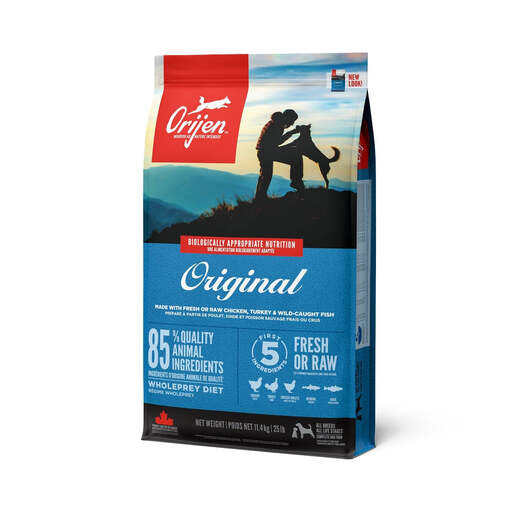
Why it suits this profile: For owners looking for a recipe with several clearly named animal ingredients and a high analytical protein content.
The product information names chicken, turkey, herring, cod and egg, among other ingredients, with separate percentages. However, check that your dog tolerates multiple protein sources well.
According to the product specifications, the food contains 38% crude protein, 18% fat and omega 3, including DHA and EPA.
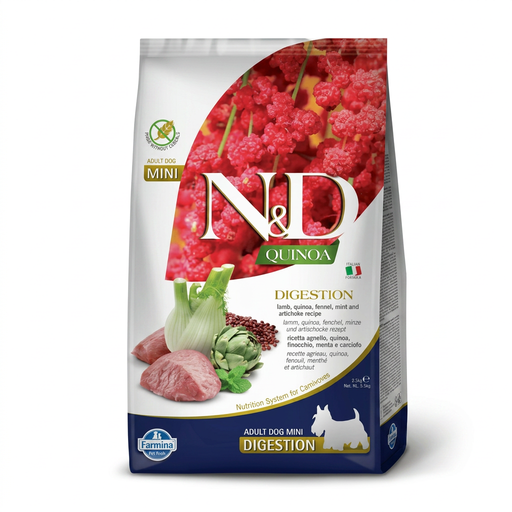
Why it suits this profile: A targeted choice for small adult dogs when a more compact bag and a recipe for digestive support are important.
The product description does not simply say “sensitive”; it also lists specific ingredients such as lamb, quinoa, inulin and fructo-oligosaccharides.
For small adult dogs; 25% crude protein, 12% fat, 0.40% omega 3 and a 2.5 kg pack.
Wet dog food can be useful for adding variety, controlling portions or providing extra moisture with a meal. Here too, check whether it is complete food. A multipack such as CESAR Adult Wet Dog Food can be practical, but the nutritional values and proportion of specific meats vary between varieties. Only combine dry dog food and wet food after checking the total daily portion.
We have compiled a complete, up-to-date list of products that fully meet these strict selection criteria and the applicable European safety regulations.
No. Premium dog food may contain grains such as oats or rice, or it may be completely grain-free. Look at the full composition and choose based on tolerance, life stage and energy needs.
Gradually mix the new food with the old food over about seven days. For example, start with a small proportion of new food and increase it step by step. Stop or slow down the transition if clear digestive problems occur, and seek advice from a vet if necessary.
A large bag is often better value per kilogram, but only if your dog tolerates the food well and you can store it in an airtight container in a cool, dry place. Calculate the cost per day based on the recommended portion, not just the price of the pack.
