
Shoppers looking for wholegrains and fibre
Looking for crispbread for breakfast or lunch, and want to compare the grain type and nutritional information before choosing toppings.


Start by choosing crispbread to suit the occasion: wholegrain rye if you want a grain-based option for breakfast or lunch, or a thin sesame variety if flavour and texture matter more for snacks. If you’re looking for a specific nutritional profile or need to avoid gluten, check the claims, ingredients and allergens on the exact pack. A premium look doesn’t tell you anything about these.
Looking for crispbread for breakfast or lunch, and want to compare the grain type and nutritional information before choosing toppings.
For example, they may be looking for a different carbohydrate or protein profile, or need to avoid gluten. For them, the ingredients and allergens in the exact variety are crucial.
Looking for a thin or seed-rich base for a lunch platter or snacks, and want to know which flavourings and allergens it contains.
First, decide how you’ll use the crispbread. Then compare varieties on a like-for-like basis, for example by looking at the nutritional information per 100 g. If you have dietary restrictions, read the full ingredients and allergen information too.
| What to look for | What to check | Who it matters to |
|---|---|---|
| Wholegrains and fibre | The type of grain and the proportion of wholemeal flour in the ingredients list; fibre per 100 g in the nutritional information. | For breakfast or lunch, I want to know whether the base is genuinely wholegrain, rather than judging by its appearance. Around 33% of consumers prioritise wholegrains and fibre. |
| Nutritional profile and allergens | The exact claim on the pack and the allergens present or that may be present; compare carbohydrates and protein per 100 g if they’re relevant to your choice. | If I need to avoid gluten or am looking for a particular nutritional profile, I shouldn’t assume that a sesame variety and a protein variety are interchangeable. This is the top priority for around 25% of consumers. |
| Flavour and texture | Whether the variety is thin or more substantial, and which flavourings, such as sesame, are listed in the ingredients. | For snacks or more substantial toppings, I want to choose a shape and flavour that suit the meal. Flavour and texture come first for around 25% of consumers. |
| Packaging and storage | The pack size and portion size; follow the storage instructions on the pack and seal it well once opened. | If I don’t use a whole pack at once, I want to know how much it contains and how to store the rest. Around 17% of consumers prioritise packaging and storage. |
According to the Voedingscentrum, using baker’s salt in bread is not compulsory. So you can’t tell whether a crispbread variety contains baker’s salt from its product category or appearance.
If iodine matters to your choice, read the ingredients list for the exact variety or ask the manufacturer.
A gluten-free variety may contain other allergens. For Wasa Gluten- & Lactosevrij Sesame & Sea Salt, Jumbo lists the possible presence of milk, mustard and soya.
Check both the ingredients present and any warnings about possible allergens on the pack you’re buying.
Sesame, a protein claim or a carbohydrate claim doesn’t tell you how much fibre or salt a variety contains, or which allergens are in it.
Compare the ingredients and nutritional information per 100 g before deciding which qualities matter most for your meal.
Jumbo’s range includes wholegrain, sesame, and varieties labelled gluten- and lactose-free.
Leksands Knäcke Original is a wholegrain rye variety for anyone looking for a rye-based option.
The Low carb variety with poppy seeds and sesame is aimed at shoppers comparing a specific carbohydrate or protein profile.
The own-brand range includes several crispbread varieties, including wholegrain and sesame options.
These Joybuy products include rye and wholegrain varieties for breakfast or lunch, as well as sesame options for anyone who values flavour and texture with toppings or snacks. Don’t choose a specific nutritional profile based on the product name alone: check the current packaging.
 Image unavailable
A rye variety to consider if you’re looking for sourdough-flavoured crispbread for breakfast or lunch.
Check the ingredients and allergens on the pack if you need to avoid rye or gluten.
 Image unavailable
A variety to compare if the amount of fibre matters to you for breakfast or lunch.
Check the fibre per 100 g and the allergens on the current pack before comparing it with other varieties.
 Image unavailable
A variety labelled wholegrain to consider for breakfast or lunch with your choice of toppings.
Compare the proportion of wholegrain ingredients and the allergens on the pack if these qualities influence your choice.
 Image unavailable
A base labelled wholegrain to consider if you add your own toppings for breakfast or lunch.
When comparing wholegrain varieties, check the type of grain, fibre per 100 g and allergens on the pack.
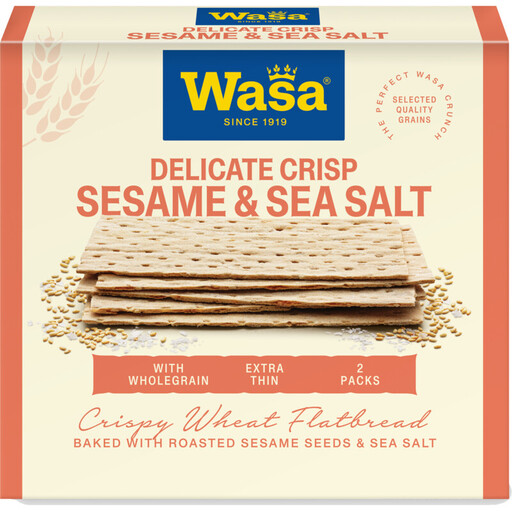 Image unavailable
A thin sesame variety to consider if its shape and flavour matter for snacks or toppings.
Sesame is included in the product name; check the current pack for other ingredients and allergens.
No. Check the ingredients list for the exact variety to see which grains it contains and how much wholemeal flour is used; a flavouring or premium appearance won’t tell you that.
No. For example, Jumbo lists the possible presence of milk, mustard and soya for Wasa Gluten- & Lactosevrij Sesame & Sea Salt. So check the full allergen information on the pack you’re buying.
Follow the storage instructions on the pack and seal it well once opened. The Wasa and Leksands varieties described recommend storing in a dry place; moisture can affect the texture.
No, you can’t tell from the product category. The Voedingscentrum states that using baker’s salt in bread is not compulsory. If this matters to you, check the ingredients for the exact crispbread variety.