
Vandaag of morgen in huis

Kwaliteit gegarandeerd

Welkomstaanbiedingen ontgrendelen: GRATIS bezorging | Tot 80% korting | Gratis 30 dagen JoyPlus-proefperiode
Download de app
Fancy a quick bowl of noodles with prawn or seafood flavour, but not sure which pack is right for you? With prawn instant noodles, portion size, spice level, preparation method and allergens can vary considerably. And eye-catching packaging doesn’t always tell you how much prawn flavour or seafood the product actually contains.
As a Joybuy Product Recommendation Officer, I focus on information you can check: the number of portions, the ingredients list, the nutritional information and the preparation instructions. That way, you can avoid paying too much for a multipack that doesn’t suit your eating habits.
Words such as shrimp, seafood or prawn often refer to the flavour. It may come from prawn powder, fish extract, shellfish extracts or flavourings. Some products also contain small pieces of dried seafood, but this isn’t always the case.
So check:
An instant noodle multipack of 20 or 30 packs is handy for student accommodation, offices and business buyers. However, a large box may not be practical if you haven’t tried the flavour before. Compare the price per portion and the net weight, not just the price of the box.
A 60 g portion works well as a light meal or snack. Packs weighing 90 to 127 g are generally a better choice if you’re after a more substantial meal. Nutritional values vary by product, so check the label for details.
Thai instant noodles often have a sour, spicy profile, as with Tom Yum noodles. Korean ramen tends to be savoury, spicy and well-seasoned. Japanese varieties can have a milder broth with soy, sesame or seafood flavours.
Look out for terms such as:
This will help you choose between Thai instant noodles, Korean ramen and Japanese seafood ramen.
Most instant noodles are ready in around three to four minutes with boiling water. However, the amount of water required varies by pack. MAMA products weighing 60 or 90 g are often prepared in a bowl. Some larger packs need to be cooked in a pan.
Before buying, check:
For an office or student room, packets that only need boiling water are practical. A cup is more convenient if you don’t want to use your own bowl.
Prawn noodles can contain several allergens. Many products contain wheat and gluten, and often soya, fish, crustaceans, molluscs or sesame too. Always check the latest label on the packaging. Online product information may differ from the packaging, as noted in product disclaimers.
For example:
If you have an allergy or intolerance, don’t rely on the product name alone. Check the full ingredients and allergen information before eating.
The seasoning sachet largely determines the flavour and salt content. You can often start by adding some of the seasoning powder, then add more to taste. This is useful if you prefer a milder bowl.
For a distinct Thai flavour, look at MAMA or Yum Yum varieties with Tom Yum, lime, lemongrass and chilli. If you’re after spicy prawn noodles or a robust Korean broth, consider Nongshim, Garak or ACECOOK. For a milder Japanese-style option, try Nissin Demae Ramen Seafood or Shrimp.
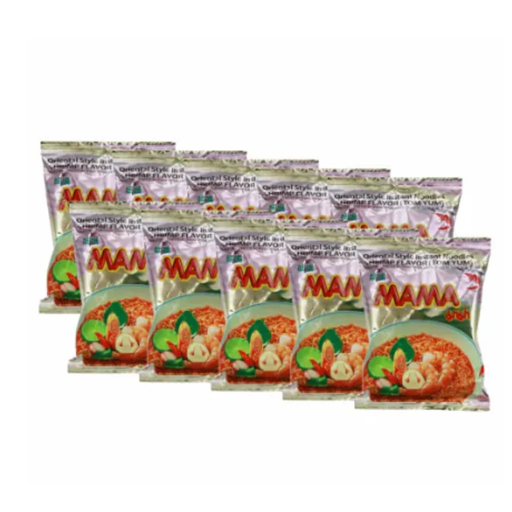
Why it suits this profile: Ten individual 60 g portions are a manageable choice for students and small households, or if you’d like to try a Thai prawn flavour first.
The multipack clearly states the number of packets and the weight per portion. This makes it easier to work out the price per meal than with an unspecified value pack.
10 portions of 60 g; according to the product information, prepare with boiling water; contains wheat, soya and prawns.
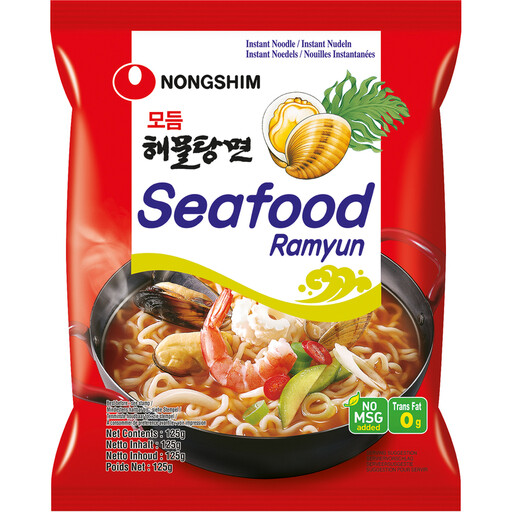
Why it suits this profile: The 125 g portion and combination of seafood seasoning, vegetables and firm noodles make this a good match for fans of Korean ramen.
The ingredients list includes squid, crab, prawns, fish and seaweed, among other ingredients. This makes it clearer that “seafood” can include several flavours and allergens.
125 g per pack; Korean origin according to the product information; contains vegetables and a seafood seasoning mix.
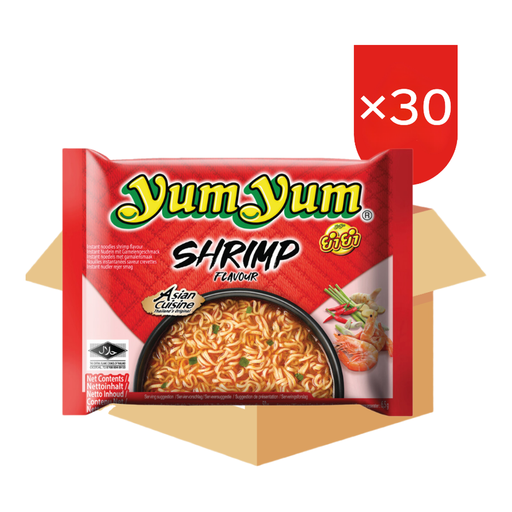
Why it suits this profile: The box of 30 individual portions is ideal for offices, larger households, food-service-style stock or business purchasing.
The pack clearly states that it contains 30 packets, each weighing 60 g. This makes stock planning and working out the price per portion easier.
30 individual portions; store in a cool, dry place; preparation instructions call for boiling water.
We’ve put together a full, up-to-date list of products that meet these strict selection criteria and current European safety regulations.
Instant noodles are quick to prepare, but you can easily add more to your bowl:
Store unopened packs in a cool, dry place away from direct sunlight. Don’t use damaged packs, and always follow the preparation instructions on the current packaging.
Usually not. Products with shrimp flavour, fish extract, prawn powder or seafood seasoning are generally unsuitable for a vegetarian diet. Check the ingredients list, as a product may contain fish or shellfish even if you can’t see any pieces of prawn.
The use-by or best-before date is printed on the packaging and can vary from batch to batch. Store the packets in a cool, dry place as directed. Always check the date when your order arrives, and don’t use a product if its packaging is damaged.
It depends on the price per portion, the weight and the flavour you’re after. Divide the total price by the number of packets, then compare the weight per portion too. A box of 30 is practical for regular use, while a smaller pack may be a better choice if you’re trying a flavour for the first time.
