
Vandaag of morgen in huis

Kwaliteit gegarandeerd

Welkomstaanbiedingen ontgrendelen: GRATIS bezorging | Tot 80% korting | Gratis 30 dagen JoyPlus-proefperiode
Download de app
Practical household products need to do exactly what you expect of them: store food without leaking, cook with the right pans, heat water quickly, or better equip your car for unexpected situations. Yet many purchases end up tucked away in a kitchen cupboard or drawer after just a few months. Often, it’s not about how they look, but about the wrong size, unsuitable material, or a feature that doesn’t match your daily routine.
A frying pan may be suitable for gas, electric and ceramic hobs, but not for an induction hob. The Tefal Easy Cook & Clean frying pan, 32 cm, is a clear example: according to the product information, it works on gas, electric and ceramic hobs, but not on induction.
An induction hob also comes with a technical requirement. A portable model only works with pans that have a magnetic, flat base. Aluminium or ceramic without a magnetic base won’t heat up properly.
Terms like “leak-proof”, “durable” or “fast” don’t tell you much without specifications. Instead, look at:
Claims from a brand about, for example, longer freshness or extra-strong adhesion come from the product description. They shouldn’t be read as a guaranteed result in every kitchen or home.
A glass storage container, kettle or car safety hammer requires correct use. Glass can break due to a sudden temperature change. A car safety hammer, according to the product information, only works on certain side windows made of toughened glass, and not on every windscreen, rear window or panoramic sunroof. Read the instructions before you store or use the product.
For food storage, food-grade 304 stainless steel, borosilicate glass and silicone are common material choices. Stainless steel generally doesn’t absorb odours and has no non-stick coating. A glass lid lets you see the contents, but requires care with temperature changes.
When it comes to kitchen organisers, also check the cleaning instructions. “Dishwasher-safe” sometimes only applies to certain parts. Check whether a silicone ring, lid, knife or clips need to be washed separately.
A large storage container is handy for meal prepping, but less practical in a small fridge. A set with 1000 ml, 1800 ml and 3000 ml offers different sizes for leftovers, salads and larger meals. For dry goods, jars of 700 ml are suitable for rice, herbs, nuts or snacks.
With a mini chopper, the nominal bowl capacity isn’t always the same as the recommended fill volume. The Russell Hobbs mini chopper has a 1-litre bowl, but a fill capacity of 500 ml. That difference matters when you’re cooking for several people.
The power rating doesn’t just determine speed, but also the load on your electrical circuit. The TOPWISH built-in ceramic hob has a total power of 3000 W at 220–240 V. Before installation, check that the connection and circuit can handle it.
A portable induction hob with 2000 W is more flexible for a student room, small kitchen or campsite. Keep ventilation openings clear and don’t move the appliance while it’s in use.
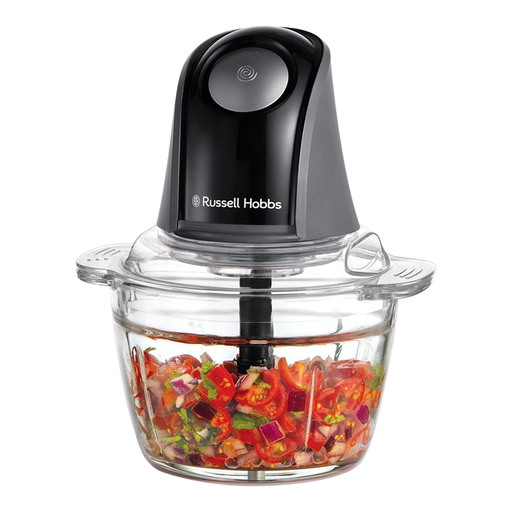
Why this fits the profile: The one-button operation and a fill capacity of 500 ml keep things simple for students, beginners and small households.
The product information lists the usable capacity separately from the total bowl volume, so you can judge portions more realistically.
200 W power, stainless steel blades, non-slip base and dishwasher-safe parts.
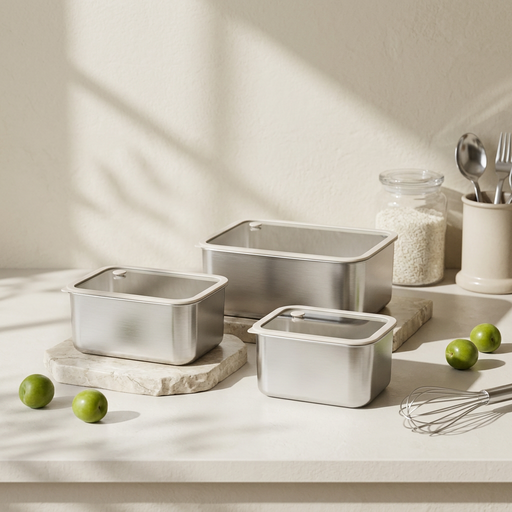
Why this fits the profile: Meal preppers and families get three deep sizes for the fridge, freezer, picnics or commuting.
The set clearly states the material, capacity and warnings. Do not use the lid or container in the microwave or over an open flame.
304 stainless steel, sizes of 1000, 1800 and 3000 ml, stackable design and dishwasher-safe parts.

Why this fits the profile: Handy as an extra cooking zone in a small kitchen, student room, holiday home or while camping where a suitable power supply is available.
The specifications explicitly mention magnetic pans, 2000 W and ten heat settings. Check this against your own cookware before buying.
Ten power levels, timer, child lock, boil-dry protection and a smooth glass surface.
For dry storage, glass jars with a silicone seal are suitable when you want to keep rice, porridge oats, herbs or snacks visible. Note that the PURECOOK jars, according to the product information, should not be considered dishwasher-safe and should not go in the microwave or oven without explicit instructions.
An electric kettle with a 1.7-litre capacity and 2200 W suits a household where several cups of tea are made at once. A 360-degree base is practical, but don’t let the appliance boil dry and never immerse the base in water.
For safety at home, anti-slip tape can be applied to a clean, dry surface. First check that the surface is suitable, and replace the tape when the edges start to lift. In the car, a blind-spot mirror can give extra visibility, but it doesn’t replace your regular mirrors or a shoulder check. A car safety hammer should be reachable from your seat, so don’t store it deep in the boot.
We’ve put together a full, up-to-date list of products that fully meet these strict selection criteria and comply with current European safety regulations.
First, choose food storage containers with the right capacity, stackability and a well-sealing ring. A combination of 1000 to 3000 ml is useful for individual portions and larger meals. Always check whether a container is suitable for the fridge, freezer, oven or microwave; these uses are not automatically interchangeable.
The lifespan depends on the material, use and care. Stainless steel can last a long time with normal use, while non-stick coatings are more sensitive to metal utensils and high temperatures. Clean blades, silicone rings and glass parts according to the manual, and replace parts when they crack, warp or no longer seal properly.
The consumption depends on the power rating and how long you use it. A 2000 W appliance running at full power for one hour uses about 2 kWh at most. In practice, a hob often switches between heating and reducing power. Also check that your electrical circuit can handle the total load.
