
Watching on a tablet in the kitchen
You want to follow a cookery lesson wirelessly at the kitchen worktop while your router is on another floor. TP-Link and Strong models show the Wi-Fi features available for this kind of viewing.


For a tablet or phone in the kitchen, a powerline kit with Wi-Fi at the receiving end is the right option; for a fixed television or computer with an Ethernet port, a wired kit may be enough. The quality of the connection also depends on your electrical wiring and sockets. TP-Link warns that kitchen appliances can interfere with the powerline connection, so test your cookery lesson in the intended spot while using the kitchen as normal.
You want to follow a cookery lesson wirelessly at the kitchen worktop while your router is on another floor. TP-Link and Strong models show the Wi-Fi features available for this kind of viewing.
You use a television or computer with an Ethernet port in a fixed location and want to try connecting it through your mains wiring. The TP-Link and Strong kits mentioned here are examples of wired connections.
You want to connect to another viewing spot as well as the kitchen, so you need to consider the number of adapters and their compatibility. devolo and FRITZ! product information is useful when comparing expansion options.
Choose this if: you watch the lesson wirelessly on a tablet, phone or laptop in the kitchen.
Bear in mind: both the powerline connection and Wi-Fi need to work well enough where you watch.
Choose this if: your television or computer has an Ethernet port and stays in one fixed location.
Bear in mind: you’ll still need a short network cable from the receiving adapter to the screen; this option doesn’t provide Wi-Fi for a tablet.
Choose this if: you want to try connecting to another floor as well as the kitchen.
Bear in mind: extra adapters don’t guarantee a usable connection from every socket; check that the products in the range are compatible too.
| What to consider | What should you check? | Who should pay particular attention? |
|---|---|---|
| Wi-Fi where you watch | Check whether the receiving adapter provides Wi-Fi, then test it where you plan to watch your cookery lesson. | I want to watch wirelessly at the kitchen worktop without connecting my tablet with a network cable; around 36% of consumers say wireless coverage where they watch is their top priority. |
| Connecting to a fixed screen | Check whether the screen has an Ethernet port and how many ports the adapter provides. | I watch on one fixed television or computer and want to connect it with a short network cable; around 29% of consumers prioritise a wired connection for a fixed screen. |
| Multiple viewing spots | Count the places where you want to watch and test each intended socket separately. | I want to watch somewhere else on another floor as well as in the kitchen, and need to know how many adapters I’ll need; around 21% of consumers make multiple viewing spots their top priority. |
| Compatibility with existing adapters | Compare the full model numbers and powerline ranges of your current and new adapters. | I want to extend my existing powerline network without buying an incompatible adapter; around 14% of consumers prioritise compatibility with the equipment they already have at home. |
The stated connection speed isn’t the same as the actual data throughput. Your electrical wiring and devices that cause interference can affect the results.
Compare the specifications, but also test the connection by streaming a lesson from the sockets you plan to use.
An adapter with Ethernet only won’t create a Wi-Fi network at the kitchen worktop by itself.
Check which device you’ll use to watch the lesson. If you want to watch wirelessly, choose a receiving adapter with Wi-Fi.
For wireless viewing, you may need a compatible Wi-Fi adapter or a different kit.
TP-Link lists extension leads, surge protectors and devices such as kitchen appliances as possible sources of powerline interference.
Follow the manufacturer’s instructions, try wall sockets and test another socket if the connection keeps dropping out.
Product ranges aren’t automatically compatible with one another. For example, Devolo says its Magic adapters don’t work with the dLAN range.
Before buying, compare the full model numbers and the supported powerline range.
An adapter that isn’t compatible with your existing network may be unusable as an addition.
The TL-PA7017P KIT is a wired option, while the TL-WPA7617 KIT adds Wi-Fi for a wireless viewing spot.
The Magic 2 WiFi next is a Wi-Fi option for the receiving end; there’s also a separate multiroom version.
The FRITZ!Powerline 1260 WLAN Set offers a Wi-Fi option, while the FRITZ!Powerline 1220 Set is a wired version to consider alongside an existing FRITZ! setup.
The Powerline 1000 Duo Wi-Fi EU V2 is a Wi-Fi option, while the Powerline 1000 V2 Duo EU is designed for a wired connection.
These product picks suit wireless viewing in the kitchen and a fixed, wired viewing spot.
 Image unavailable
An option for anyone who wants to watch their cookery lesson wirelessly where they plan to view it; check the exact version and Wi-Fi features on the product page.
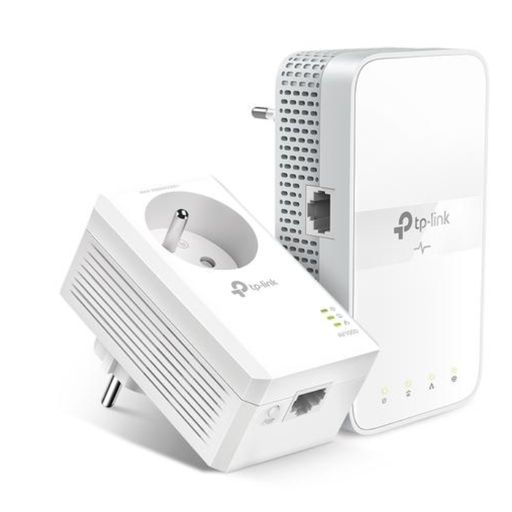 Image unavailable
For wireless viewing at the receiving end; the product title lists Wi-Fi, two units and 1200 Mbit/s. TP-Link distinguishes between the stated physical-layer speed and actual data throughput.
 Image unavailable
Suitable for a fixed screen with an Ethernet port. The product title lists Ethernet LAN, two units and 500 Mbit/s; that figure doesn’t guarantee the actual throughput between your sockets.
Connect the first adapter to your router with an Ethernet cable, then plug the receiving adapter in near your viewing spot. Connect a fixed screen there using Ethernet, or choose an adapter with Wi-Fi for a tablet. Follow the manufacturer’s instructions, then test the lesson in the spot where you plan to watch.
No. TP-Link explains that the stated powerline speed is the maximum physical-layer speed, not the actual data throughput. Your electrical wiring and devices that cause interference can also have an effect, so test the connection while using the kitchen as normal.
Compare the connection with those appliances switched on and off, and try another wall socket if needed. TP-Link lists appliances with motors, including kitchen appliances, as possible sources of interference; moving the adapter doesn’t guarantee the problem will go away.
For online consumer purchases, ACM ConsuWijzer says you generally have up to 14 days after delivery to change your mind, subject to applicable exceptions. Your statutory rights are separate from any manufacturer’s warranty offered: if a product doesn’t do what you could reasonably expect during normal use, the seller is responsible for putting things right.
The Dutch government says electronic devices sold in the EU must carry a CE marking. Check the product information, marking and instructions for the model on offer; a claim on a retailer’s page isn’t, by itself, an independent safety test.