What should you look for in a powerline kit?
First decide whether you need Ethernet alone or Wi-Fi as well at your workspace. If you’re expanding an existing kit, check which standard it uses before you buy. Running a cable to your workspace means you won’t depend on your electrical wiring, although installation can take time and cost money.
| What to consider |
What should you check? |
Who is this important for? |
| Connection through your sockets |
Test the adapters in wall sockets at the locations you plan to use, and transfer a representative file. |
If I can only tell whether the connection works by testing it with my own sockets, that’s where I want to start; around 36% of consumers prioritise how well it works through their own electrical wiring. |
| Wired file transfers |
Check how many Ethernet ports the receiving adapter has and test transfers between the devices you use. |
For a desktop PC, I want an Ethernet connection at my workspace and reliable transfers between my devices; around 29% of consumers prioritise wired file transfers. |
| Wi-Fi at your workspace |
Check whether the receiving adapter itself provides Wi-Fi and which Ethernet ports are also available. |
If my laptop needs to connect wirelessly beyond the walls, I need Wi-Fi there too; around 21% of consumers prioritise wireless coverage at their workspace. |
| Compatibility when expanding your network |
Note down the model names and powerline standard of your current adapters, then check those of the expansion kit. |
When adding an adapter, I want to avoid choosing one that won’t work with my existing kit; around 14% of consumers make compatibility their top priority. |
Joybuy powerline products for your workspace
This Joybuy selection includes powerline kits for workspaces where you need Wi-Fi, Ethernet or both.
 No image available
TP-LINK TL-WPA7517 KIT
A good fit for a workspace where you want to combine powerline with Wi-Fi; the product description also mentions a wired network connection.
View at Joybuy
 No image available
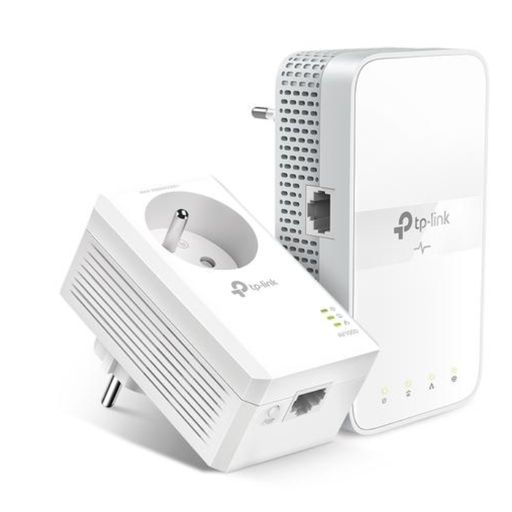
TP-Link TL-WPA7617 KIT, 1200 Mbit/s, pack of 2
A good fit for a workspace where you want to combine Wi-Fi and Ethernet. The title specifies a pack of two; the quoted 1200 Mbit/s isn’t a guaranteed file transfer speed through your sockets.
The product information lists Wi-Fi and Ethernet LAN.
View at Joybuy
 No image available
TP-Link TL-PA4015P KIT, 500 Mbit/s, pack of 2
A good fit for a permanent workspace where you need a wired powerline connection. The product description lists two adapters, each with one Ethernet port.
According to the description, the ports are Fast Ethernet (10/100 Mbit/s); bear this in mind when transferring files over a wired connection. The 500 Mbit/s in the product title doesn’t change that port specification.
View at Joybuy
Frequently asked questions
How can I test whether powerline is suitable for my project files?
Test the connection using the sockets you plan to use at your workspace. Connect one adapter to the router via Ethernet, plug the other into a wall socket at your workspace, then transfer a representative file between your own devices. Don’t judge the result by the maximum Mbit/s shown on the packaging.
Can I add a G.hn adapter to a HomePlug or devolo dLAN network?
Don’t assume these standards will work together as one powerline network. TP-Link states that the G.hn adapters listed aren’t compatible with HomePlug AV/AV2; devolo states that Magic doesn’t work with dLAN. Check the full model names before choosing an expansion.
What can I do if a kit bought online doesn’t work well with my sockets?
For a consumer purchase made online, ACM ConsuWijzer says you’ll usually have a statutory 14-day cooling-off period after delivery; check the relevant terms and any exceptions for returns. If the product is faulty, the Dutch government says the seller is your point of contact for a solution. The Netherlands doesn’t have a fixed statutory warranty period of two years.
What product rules apply to powerline equipment sold in the Netherlands?
According to Business.gov.nl, sellers of electrical equipment must ensure their products meet the applicable European requirements. For equipment covered by these requirements, the government portal mentions CE marking and an EU declaration of conformity, among other things; Wi-Fi models may also be subject to radio equipment rules. This is an obligation for businesses placing products on the market and, on its own, doesn’t prove that a specific offer meets the requirements.


