If you can connect your laptop or PC via Ethernet, a wired powerline kit is suitable for uploading from a fixed location. For a phone or tablet, you’ll need Wi-Fi at the second adapter. Test the connection using the sockets you intend to use, then compare the upload speed there with a test via Ethernet at the router. An adapter won’t speed up a slow internet connection, and the stated powerline speed doesn’t guarantee a particular file transfer rate.
Who is powerline suitable for?
Uploading photos from a laptop or PC
If you work in a fixed location behind thick walls and can use Ethernet, focus on whether the connection works over your home’s electrical wiring, rather than just the high figure on the box. TP-Link Netherlands explains the technical considerations for powerline and the difference between stated and actual speeds.
Uploading photos from a phone or tablet
If you’re uploading from a room with a weak router signal, you’ll need Wi-Fi from the adapter in that room. Strong describes a kit that includes a Wi-Fi adapter; check that the model you choose provides Wi-Fi on the receiving adapter.
Unsure about the electrical wiring route
If you’re not sure whether the sockets will provide a usable powerline connection, test the kit where you want to upload your photo album. TP-Link Netherlands advises taking the connection into account and notes that extension leads can cause interference.
What should you look for when choosing?
First, choose a connection that suits your device: Ethernet for a desktop computer, or Wi-Fi from the second adapter for a phone or tablet. Then check whether the electrical wiring and your internet connection can handle uploads in that location.
| What to consider |
What to look for |
Who is it important for? |
| Uploading via Ethernet |
Check that the kit includes two adapters and that the receiving adapter has an Ethernet port. Compare the upload speed at your workspace with a test via Ethernet at the router. |
If you upload from a laptop or PC in a fixed location, you’ll want to know whether a wired connection works there; around 33% of consumers prioritise a usable upload connection. |
| Wi-Fi from the second adapter |
Check that the adapter at your workspace provides Wi-Fi. The stated Wi-Fi speed and the speed over the mains describe different connections. |
If you want to upload from your phone or tablet without connecting an Ethernet cable, Wi-Fi on the receiving adapter is essential; around 25% of consumers prioritise this. |
| Connection over the electrical wiring |
Plug the adapters directly into the wall sockets you intend to use, then try uploading a file. A connection light doesn’t measure speed. |
If you’re unsure whether the sockets provide a usable route, you’ll want to test the kit in that exact location; around 25% of consumers prioritise this reassurance. |
| Keeping a socket free |
Check whether the exact model has a pass-through socket and what its rated capacity is. |
If you have few spare wall sockets, you may want to keep one available for another use; around 17% of consumers prioritise keeping the socket free. |
A powerline connection can avoid the Wi-Fi route through walls, but your home’s wiring and connected equipment affect the results. If a device already uploads slowly via Ethernet at the router, check that internet connection first: a higher stated adapter speed won’t solve the bottleneck. TP-Link Netherlands warns that extension leads and surge protectors can weaken or block the powerline signal.
Common buying mistakes
-
Assuming the speed on the box is a guaranteed upload speed
The powerline connection, the connection to your device and your internet connection are separate links. The speed on the box doesn’t tell you how quickly your photo album will transfer.
First, measure the upload speed via Ethernet at the router, then test it at your intended workspace. Assess the file transfer speed you actually get, not just the stated maximum. TP-Link Netherlands explains that a maximum powerline speed isn’t the same as actual upload speed.
-
Plugging an adapter into an extension lead
An extension lead or surge protector can weaken or block the powerline signal, so the connection may not perform as expected in your chosen location.
Test the adapter directly in a wall socket. If you also need that socket for another device, check whether the model you choose has a pass-through socket.
-
Choosing a wired receiver for a phone
An adapter without Wi-Fi won’t automatically provide a wireless connection for your phone. devolo Magic adapters are also not compatible with the dLAN range, according to devolo.
Check whether your device needs Ethernet or Wi-Fi, and find out which range you already use before choosing an adapter to extend your setup.
Brands to compare
TP-Link
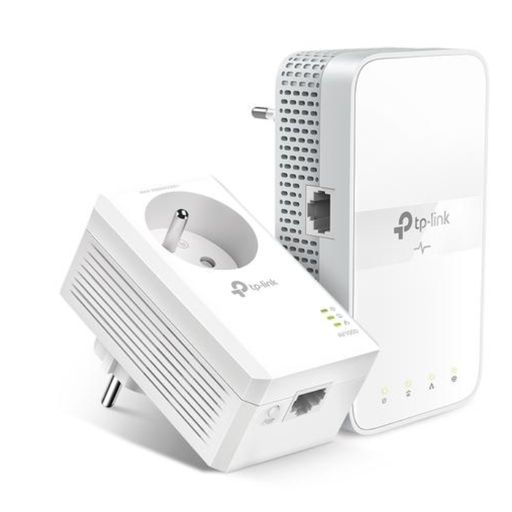
The Dutch TL-PA7017P KIT is a wired HomePlug AV2 starter kit with gigabit Ethernet and a pass-through socket.
- According to the model specifications, the integrated socket can be handy if you have few spare sockets.
- This kit doesn’t provide Wi-Fi from the receiving adapter. The stated 1000 Mbps isn’t a measured photo upload speed.
devolo
The Magic range includes a wired Magic 2 LAN triple Starter Kit and a Magic 2 WiFi next Starter Kit to suit different connection needs.
- According to devolo, the LAN triple receiver has three gigabit LAN ports, while the WiFi next kit provides local Wi-Fi.
- devolo states that Magic adapters aren’t compatible with the dLAN range. Stated maximum speeds don’t guarantee upload performance in your home.
Strong
The Powerline 1000 Duo Wi-Fi EU V2 is a kit with a powerline adapter and an adapter with Wi-Fi.
- According to the product information, the Wi-Fi adapter can provide a wireless connection for a phone or tablet, for example.
- The stated powerline and Wi-Fi speeds refer to different connections and don’t predict how quickly you’ll upload photos at home.
NETGEAR
The PLP2000 is a wired HomePlug AV2 kit with two adapters and extra power sockets.
- NETGEAR lists gigabit Ethernet on both adapters.
- To upload from a phone, you’ll need Wi-Fi where the receiving adapter is located; check that the connections on your chosen model suit your device.
Joybuy products for this situation
These products are suitable for uploading via powerline with Wi-Fi from the second adapter, or from a desktop computer via Ethernet. Before use, check that the specific device has the correct CE marking; this marking says nothing about the upload speed over the electrical wiring in your home.
 No image available
TP-LINK TL-WPA7517 KIT
Suitable for uploading from a phone or tablet if you need Wi-Fi from the second adapter.
The product information lists Wi-Fi and LAN. The stated 1000 Mbit/s isn’t a measured upload speed.
Check that the specific device has the correct CE marking.
View at Joybuy
 No image available
TP-Link TL-WPA7617 KIT
This kit is suitable for a place where you want Wi-Fi from the adapter, with Ethernet as another connection option.
The title lists two units, Ethernet, Wi-Fi and 1200 Mbit/s; this figure isn’t a measured upload speed.
Check that the specific device has the correct CE marking.
View at Joybuy
 No image available
TP-Link TL-PA4015P KIT
Suitable for a desktop computer that can be connected via Ethernet; the adapters described have an integrated power socket.
The two Ethernet ports are Fast Ethernet (10/100 Mbit/s). The kit doesn’t provide Wi-Fi for a phone or tablet.
Check that the specific device has the correct CE marking.
View at Joybuy
Frequently asked questions
Do I need one or two adapters?
You need at least two adapters for a new powerline network: one by the router and one where you want to upload. Check that you’re buying a starter kit, not just an additional adapter; TP-Link Netherlands also explains that the adapters need to be connected to the same electrical circuit.
Why doesn’t my photo upload reach the speed on the box?
The stated powerline speed isn’t the same as the actual file transfer rate. Your electrical wiring and sources of interference affect the connection, and a slow internet upload speed will still be a limitation. Compare a test via Ethernet at the router with an upload from the location you intend to use. TP-Link Netherlands explains the difference between maximum and actual speeds.
How do I install and test the kit?
Follow the instructions for your chosen model, plug the second adapter into the wall socket you intend to use and check that the adapters connect. TP-Link Netherlands recommends plugging powerline adapters directly into a wall socket rather than an extension lead or surge protector. Then test an actual upload at your workspace.
Can I add a devolo Magic adapter to an existing dLAN kit?
No. devolo states that Magic adapters aren’t compatible with the dLAN range. Check the range name on the adapters you already use before choosing an adapter to extend your setup.
Which CE check is relevant for powerline equipment in the Netherlands?
The Dutch Authority for Digital Infrastructure says that electrical and electronic equipment must have the correct CE marking on the device. Check the marking on the specific item and follow the installation instructions. CE marking isn’t a performance test of the electrical wiring in your home.


