
Listener with weak Wi-Fi in the loft
Downloads audiobooks to a phone or tablet and mainly needs a wireless connection where they listen.


A powerline Wi-Fi kit is a good option if you listen on your phone or tablet in the loft and your router’s Wi-Fi isn’t strong enough there. If your device has an Ethernet port, a wired kit may be all you need. First, test the connection using the sockets you plan to use: the stated powerline speed doesn’t guarantee the download speed you’ll get in your loft.
Downloads audiobooks to a phone or tablet and mainly needs a wireless connection where they listen.
Wants to know whether the sockets in a converted loft can provide a usable powerline connection.
Can connect their download device via Ethernet and may not need Wi-Fi on the adapter.
Choose this option: if you listen on your phone or tablet in the loft and need Wi-Fi there.
Bear in mind: Wi-Fi and powerline speeds are separate maximums and don’t predict the speed you’ll get over your home’s electrical wiring.
Choose this option: if your device in the loft has an Ethernet port or there’s already a suitable access point there.
Bear in mind: a wired kit won’t provide Wi-Fi to a phone or tablet on its own.
Consider this: if your tests point to the router’s position or Wi-Fi coverage, or if running a cable to the loft is practical.
Bear in mind: moving the router or running a cable may take some work, but it avoids buying a powerline kit when there’s no way to know in advance how well it will work with your wiring.
| What to consider | What should you check? | Who is this important for? |
|---|---|---|
| Wi-Fi in the loft | Check whether the adapter provides Wi-Fi at the receiving end. A wired kit doesn’t provide Wi-Fi by itself. | If I listen on my phone or tablet in the loft, I need Wi-Fi there; around 36% of consumers say Wi-Fi coverage in that spot is their top priority. |
| Electrical route | Test the adapter pair in the sockets you intend to use; don’t rely on the stated speed alone. | I want to know whether the connection will work through my converted loft before relying on its speed; around 29% of consumers say a usable electrical route to the loft is their top priority. |
| Device connection | Check whether your listening device can use Ethernet. Choose Wi-Fi if the device needs to connect wirelessly. | If my device can connect via Ethernet, I may not need Wi-Fi on the adapter; around 21% of consumers say a wired connection is their top priority. |
| Socket and kit contents | Check whether the model has a pass-through socket and whether you already own two compatible adapters. | If the electrical route already works, I may want to keep a socket free; around 14% of consumers say convenient placement and keeping a socket available are their top priorities. |
You’ll need at least two compatible adapters to connect your router to the loft: one by the router and one in the loft. You don’t always need to buy two new adapters if you already have suitable ones. When buying, also check that the device has the correct CE marking.
The maximum powerline speed doesn’t tell you what speed you’ll get with the wiring and sockets in your loft.
Compare models based on the connection you need, and test the pair in the sockets you plan to use before relying on the speed.
A wired kit can provide Ethernet, but it won’t give a mobile listening device a wireless connection by itself.
Check how your listening device connects and whether you need Wi-Fi on the receiving adapter.
You need at least two compatible adapters to connect the router to the loft.
Check what’s in the box and whether it’s compatible with any adapters you already own.
TP-Link Netherlands describes several types of powerline kit: a wired kit, a wired kit with a pass-through socket, and a kit with Wi-Fi.
Devolo describes the Magic range as offering wired and Wi-Fi starter kits for a connection over your home’s electrical wiring.
NETGEAR’s Dutch product page describes the PLP2000 as a wired set with two adapters and a pass-through socket.
D-Link’s Dutch product page describes the DHP-P601AV as a wired HomePlug AV2 kit with a pass-through socket.
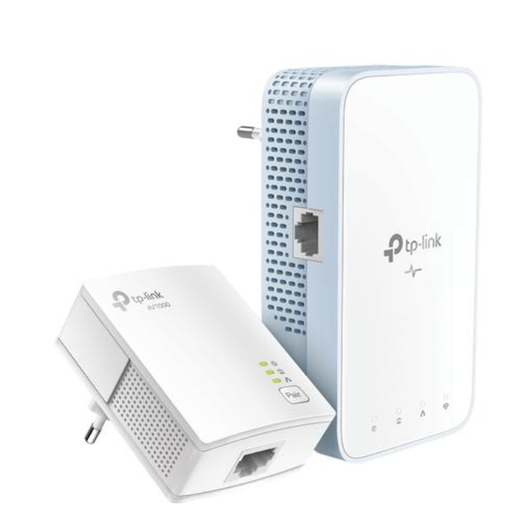
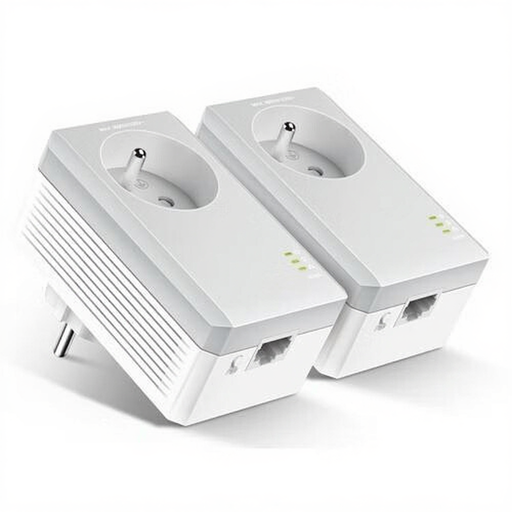
This selection includes a powerline Wi-Fi kit for a wireless listening device and a wired powerline kit for a device with Ethernet.
 No image available
Suited to a listening spot where your phone or tablet needs Wi-Fi; the manufacturer describes this kit as extending your wired and wireless network.
Powerline Wi-Fi kit with Wi-Fi and Ethernet. Performance depends on your electrical installation, so test the adapters in the sockets you plan to use.
 No image available
Suited to a listening device that can connect via Ethernet in the loft and doesn’t need Wi-Fi from the adapter.
The product description lists two adapters, each with an Ethernet port, and an integrated socket. The stated 500 Mbit/s doesn’t guarantee the download speed in your loft; the description doesn’t mention Wi-Fi.
No. First, find out where the slowdown is happening. The Consumers’ Association (Consumentenbond) recommends testing your internet speed using a wired connection and checking your router’s position and Wi-Fi coverage too. A faster package won’t automatically fix a poor connection inside your home.
Connect one adapter to your router via Ethernet and plug the second into the socket you plan to use in the loft. Pair them according to the instructions and test the download speed where you’ll use the connection. TP-Link recommends trying a different wall socket if the connection indicator is red.
No. According to devolo, dLAN adapters aren’t supported in the Magic range. Check the range of your existing adapter before choosing an extension.
Check that the device you receive has the correct CE marking. The Dutch Authority for Digital Infrastructure says that electrical and electronic equipment must meet the applicable CE requirements; a statement on a sales page doesn’t verify the marking on the device itself.
For an online consumer purchase, ACM ConsuWijzer says you have a statutory cooling-off period that ends 14 days after delivery; check the terms for trying and returning the product. Your statutory guarantee is separate from any limited manufacturer’s warranty and depends on what you could reasonably expect from the product.