
Manager of a multi-floor archive
Needs to provide a reliable connection on several floors and takes account of the number of connection points and workstations.


For a fixed archive computer, choose a wired powerline setup. Volunteers working on another floor with a phone or tablet will need a receiving adapter with Wi-Fi. Test the connection using the wall sockets you plan to use: TP-Link makes clear that the stated powerline speed is the maximum physical-layer speed, not the guaranteed throughput. If you’re expanding an existing setup, check that the new adapter uses a compatible standard. And if the archive contains personal data, assess access rights and security measures too, as required by the Dutch Data Protection Authority.
Needs to provide a reliable connection on several floors and takes account of the number of connection points and workstations.
Wants to access the archive from another floor using a laptop, phone or tablet, and needs Wi-Fi there—not just an Ethernet port.
Wants to add an archive location, so first checks that a new adapter is compatible with the existing powerline network.
First, work out how many floors need a connection and whether users on each floor need Wi-Fi or a wired connection. Also check that the product carries the CE mark: the Dutch Authority for Digital Infrastructure states that electrical and electronic equipment must carry the correct CE marking.
| What to consider | What to look for | Who is this important for? |
|---|---|---|
| Connection between floors | Test the connection on every floor where it’s needed, using the wall socket you plan to use. NETGEAR recommends plugging an adapter directly into a wall socket. | If I want the archive to be accessible on every required floor, I’ll first test the locations where the adapters will go. Around 36% of consumers put a connection between floors first. |
| Wi-Fi for mobile users | Check whether the receiving adapter provides Wi-Fi and which floors need a wireless access point. | If volunteers access the archive on their phones or tablets, I’ll need Wi-Fi on that floor. Around 29% of consumers make wireless access their top priority. |
| Connections for fixed workstations | Count the wired devices on each floor and compare this with the number of Ethernet ports on the receiving adapter. | If a desktop computer is used to access the archive, I’ll want to know whether it can be connected directly. Around 21% of consumers prioritise having the right Ethernet ports. |
| Access to archive data | If the archive contains personal data, assess access rights and security separately from your choice of adapter. | If the archive contains personal data, I’ll want to make sure a network connection isn’t treated as access security in itself. Around 14% of consumers prioritise protecting archive data. |
TP-Link explains that the speed shown on the packaging is the maximum physical-layer speed, not the guaranteed throughput at the archive computer. The electrical wiring and interference can affect the connection.
Test the connection on the floors where the archive will be used, with the devices and files the club needs.
A basic kit connects the router to one receiving location. You’ll need compatible additional adapters for other locations.
Before buying, count the floors and workstations that need a connection at the same time.
Expanding your setup may require extra adapters that are compatible with the existing range.
According to devolo, Magic doesn’t work with dLAN or other HomePlug AV products. An adapter from the wrong range won’t be a suitable addition.
Make a note of the full model names and check the standard used by your existing adapters before expanding your setup.
Choosing the wrong adapter could mean you still need to buy a different compatible adapter or kit.
An Ethernet port won’t, by itself, provide wireless access for phones and tablets.
Work out which devices will access the archive on each floor, and choose Wi-Fi there if those devices need a wireless connection.
You may need a Wi-Fi adapter or a separate access point to provide Wi-Fi on that floor.
The range includes wired HomePlug AV2 kits and Wi-Fi kits, such as the TL-PA7017P KIT and TL-WPA7517 KIT.
The Magic range includes LAN and Wi-Fi adapters, as well as kits for extending your setup to more rooms.
The powerline range includes wired and Wi-Fi kits, including the 1220 Set and 1260 WLAN Set.
Powerline options include wired adapters and Wi-Fi receiving adapters, such as the PLW1000 mentioned by NETGEAR.
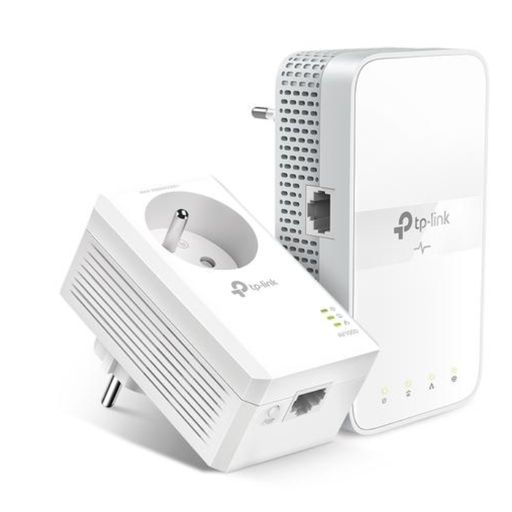
This selection includes powerline kits with Wi-Fi for wireless access on another floor, and an Ethernet kit for a fixed workstation. Before choosing, check the connections and compatibility with your existing powerline network.
 No image available
The product description mentions Wi-Fi and a wired network function. Consider this kit if you need both connection options on the receiving floor.
 No image available
The product title lists Wi-Fi and Ethernet, making this an option if you need both wireless and wired access at the receiving location.
The stated 1200 Mbit/s isn’t guaranteed throughput at the archive computer; TP-Link distinguishes between the stated physical-layer speed and actual throughput.
 No image available
The product description lists two adapters, each with one Fast Ethernet port and no Wi-Fi. This suits a fixed network connection, but not a setup where mobile devices need to connect wirelessly on that floor.
The stated 500 Mbit/s isn’t guaranteed throughput at the archive computer; TP-Link distinguishes between the stated physical-layer speed and actual throughput.
Connect one adapter to the router using Ethernet, then plug a receiving adapter in near the archive workstation. You’ll need compatible additional adapters for more locations. Test the connection where you plan to use it.
That depends on the existing range and standard, not just the brand. Devolo, for example, states that Magic doesn’t work with dLAN or other HomePlug AV products. Make a note of the full model names before choosing an adapter to expand your setup.
No. According to TP-Link, the stated speed is the maximum physical-layer speed, not the guaranteed throughput at the computer. So assess the connection on the floor where you plan to use it.
Not if those devices need to connect wirelessly: an Ethernet port doesn’t provide Wi-Fi on its own. Check whether the receiving adapter has Wi-Fi, or whether you’ll need a separate access point.
Not on its own. If the club processes personal data, the Dutch Data Protection Authority says it must determine appropriate security measures based on its risks. Assess access rights for the archive separately from the security of the network connection.