
Families with a TV or computer in a fixed position
Want to watch or transfer videos in another room over ethernet, without running a long cable through the house.


Choose an ethernet powerline kit if you can connect the TV or computer in the other room by cable. If phones or tablets also need a wireless connection there, choose a kit with Wi-Fi on the receiving adapter. Powerline uses your home’s electrical wiring instead of sending Wi-Fi through the walls, but actual speeds depend on your home’s wiring. Test the sockets you plan to use, and check the standard of any existing adapters before expanding your setup.
Want to watch or transfer videos in another room over ethernet, without running a long cable through the house.
Want to connect phones and tablets wirelessly beyond the thick wall, so they need Wi-Fi on the receiving adapter.
Want to connect an extra room without choosing a powerline adapter that won’t work with their existing network.
| What to consider | What should you look for? | Who is this important for? |
|---|---|---|
| Connection through walls | Check that suitable wall sockets are available by the router and where you plan to watch. Test the kit in the places you intend to use it. | If I need a connection through thick walls, I want to know whether powerline works with those sockets first. Around 40% of consumers cite range through walls as their main reason for buying. |
| Video file transfer speeds | Check the ethernet ports and test a representative file transfer at home. The stated powerline speed doesn’t predict actual throughput; TP-Link makes the same distinction in its guidance on powerline speeds. | If I want to transfer family videos, I look at the connection between the devices rather than just the speed on the box. Around 30% of consumers cite practical file transfer speeds as their main reason for buying. |
| Wi-Fi or ethernet | Choose Wi-Fi on the receiving adapter if phones or tablets need a wireless connection there. For fixed devices, compare the number of ethernet ports. | If phones or tablets need to connect in the other room, I need Wi-Fi on the receiving adapter. Around 20% of consumers prioritise wireless access there. |
| Adding more adapters | Make a note of the full model numbers and check which powerline standard is supported before adding an adapter. | If I want to expand an existing setup, I need to know that the adapter will work with my current kit. Around 10% of consumers cite compatible expansion as their main reason for buying. |
TP-Link describes the stated powerline speed as the maximum physical connection speed, not the actual throughput. This means your home connection may perform differently from what the figure on the box suggests.
Compare the features and ports, then test a representative video file transfer using the sockets you plan to use.
The powerline standard and product range matter. TP-Link says its G.hn adapters aren’t compatible with HomePlug AV/AV2, while devolo says Magic cannot be combined with dLAN.
Check the full model numbers and standards of your existing adapters before choosing an extension.
An ethernet connection on its own doesn’t provide a wireless access point for phones or tablets in the other room.
First, decide which devices you’ll use there and whether they’ll connect by cable or wirelessly.
TP-Link says that extension leads and surge protectors can filter or block the powerline signal.
Try plugging the adapters directly into wall sockets and check the connection again.
The product ranges mentioned include both ethernet-only HomePlug AV2 kits and kits with Wi-Fi on the adapter for the other room.
The Magic range includes a LAN kit for wired devices and a WiFi next kit for wireless access in another room.
The DHP-W611AV is described as a HomePlug kit with Wi-Fi and gigabit ethernet, a combination that may suit viewers using mobile devices.
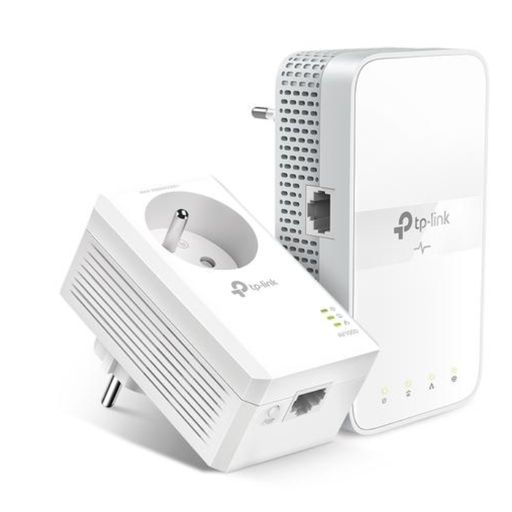
These Joybuy products are powerline starter kits for connecting rooms. The selection includes kits with Wi-Fi and an ethernet kit for fixed devices.
 No image available
An option for connecting phones or tablets wirelessly in another room using a powerline kit.
 No image available
An option for connecting rooms when mobile viewing devices need Wi-Fi there.
The product name lists Wi-Fi, ethernet and 1200 Mbit/s.
 No image available
An ethernet powerline kit for fixed devices that can be connected by cable.
The listed ethernet ports are Fast Ethernet (10/100 Mbit/s), not gigabit ports.
Connect one adapter to the router with an ethernet cable and plug the other in near the viewing device. Wherever possible, use wall sockets rather than extension leads; TP-Link warns that extension leads and surge protectors can reduce or block the powerline signal. Follow the instructions for your specific kit to pair the adapters.
No. TP-Link distinguishes between the maximum physical powerline connection speed and actual throughput. Wiring and electrical interference can affect the connection, so test a file transfer between devices in the places you plan to use them.
For many distance purchases, you have a 14-day cooling-off period, according to the Government of the Netherlands. You’re also entitled to a product that works as it should; the Dutch government says there is no fixed statutory guarantee period in the Netherlands. Check the terms for the specific purchase and seller.
Yes. According to the Dutch Authority for Digital Infrastructure, the CE marking must be on the equipment. Check the marking on the specific device; a declaration for a product family doesn’t replace this check.