
Vandaag of morgen in huis

Kwaliteit gegarandeerd

Welkomstaanbiedingen ontgrendelen: GRATIS bezorging | Tot 80% korting | Gratis 30 dagen JoyPlus-proefperiode
Download de app
Your laptop, smartphone, tablet, and headphones. They all need to be charged, but you only have two outlets in the wall. Sound familiar? A shortage of charging points is a common problem, whether at home, in the office, or while traveling. A good power strip with USB is not a luxury—it's a necessity.
This article is intended as a practical guide. We'll help you ask the right questions and show you several popular choices that solve different problems. This way, you can make an informed decision that fits your devices and lifestyle.
Before you make a choice, it's helpful to know what to look for. The specifications determine how well a charging solution will work for you.
Not every USB port is the same. The power output, expressed in Watts (W), determines how fast your devices charge. A standard USB port often delivers only 5W to 12W, which is fine for charging a phone overnight but too slow for a tablet or laptop.
Looking for a USB-C fast charger? Then look for ports with a higher power output, such as 20W, 45W, or even 67W. A higher wattage is especially important if you want to charge a laptop via USB-C or power multiple devices at full speed simultaneously.
How many devices do you want to connect at once? A modern multi-device charger combines traditional outlets with USB ports. Pay attention to the distribution:
A power strip must, above all, be safe. Look for certifications like CE and GS (Geprüfte Sicherheit), which indicate that the product meets European safety standards.
Convenient extras can enhance usability. Consider an extension cord with a switch to turn off all connected devices at once and prevent phantom power consumption. For travelers, a compact size or a retractable cable is a major plus.
Based on functionality, specifications, and use cases, we have selected a few models that offer a solution for different situations.
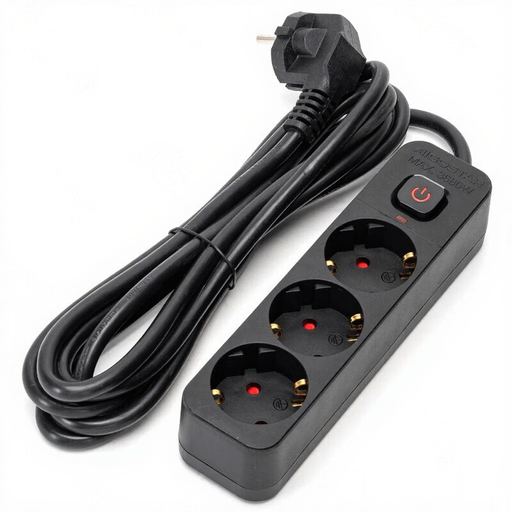
Why it stands out: This model from Aigostar is a classic and reliable extension cord, focused on safety and durability for home or office use. It doesn't offer USB ports but serves as an excellent base to combine with separate USB chargers. The focus is on safely distributing power to multiple devices.
Advantages:
Who is this for? For anyone looking for a simple, safe, and robust extension cord with a switch for indoor use. Ideal for under a desk or behind a TV stand to power multiple devices.
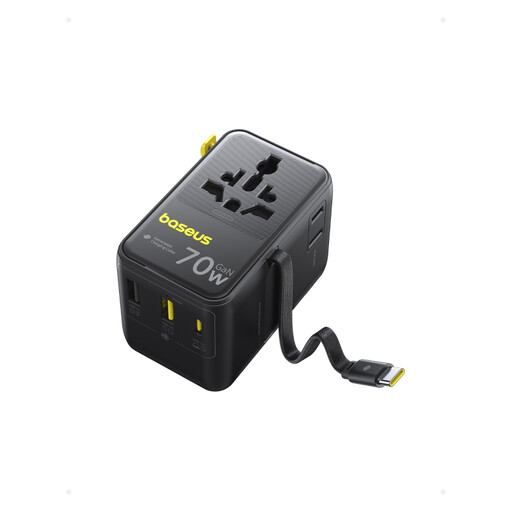
Why it stands out: The Baseus EnerCore CG11 is designed as the ultimate travel charging solution. It's a compact 6-in-1 universal travel adapter that combines traditional outlets with USB-A and a fast USB-C port. Its clever design with a retractable cable makes it a highly practical companion.
Advantages:
Who is this for? For the frequent traveler who needs a compact and powerful solution to charge all their devices, from smartphone to laptop, anywhere in the world. Note: this is a plug adapter, not a voltage converter.
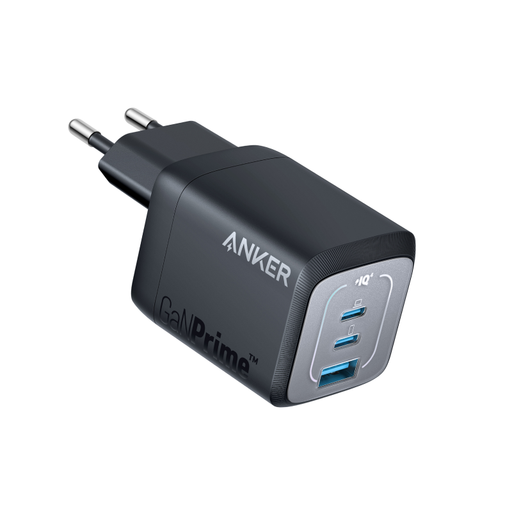
Why it stands out: The Anker 735 Prime is not a traditional power strip, but a very powerful and compact wall charger. With a 67W output and two USB-C ports, this is a modern multi-device charger perfect for anyone with the latest gadgets.
Advantages:
Who is this for? For the tech enthusiast, remote worker, or traveler who needs a powerful, compact, and versatile USB-C charger to quickly and efficiently charge modern devices like a laptop, tablet, and smartphone.
Didn't find exactly what you're looking for here? No problem. The right charging solution is highly personal. Sometimes you need more outlets, other times a specific combination of USB ports.
Check out our full range of charging solutions for more options that might better suit your specific needs.
Explore our Black Plug collection for more choices
What is the difference between USB-A and USB-C? USB-A is the traditional, rectangular port you've known for years. USB-C is the newer, smaller, and oval port. The main advantage of USB-C is that it supports higher charging speeds (via a protocol called Power Delivery) and the plug is reversible, so you can never plug it in the wrong way.
How many watts do I need for fast charging? This depends on your device. For a smartphone, 20W is already a significant improvement. For a tablet or a small laptop, you'll need at least 30W to 45W. For larger laptops, like a MacBook Pro, look for chargers of 65W or more. The Anker 735 with 67W is a good example of a charger that can also handle laptops.
Are power strips with USB ports safe? Yes, provided you choose a product from a reliable brand that complies with European safety standards. Look for certifications like CE and GS. Good power strips have built-in protection against overvoltage, overheating, and short-circuiting to protect both the charger and your valuable devices.
