
Train travellers with a USB torch
If you want to charge on the go without relying on a charging point on the train, you’ll need a suitable output and cable.


Choose a power bank with an output and cable that match your torch’s charging input, and check whether the output stays active when the torch draws very little power. Then choose a capacity that gives you the reserve you need without adding more weight than you want to carry. A high wattage or large mAh figure alone does not confirm that a particular torch will charge reliably.
If you want to charge on the go without relying on a charging point on the train, you’ll need a suitable output and cable.
If your torch draws very little power, check whether the power bank keeps charging or switches its output off.
If you want to charge other USB devices as well as your torch, weigh up the extra capacity and ports against the weight you’ll be carrying.
First, check your torch’s connection, cable and charging requirements. Then decide how much reserve you need and compare the weight of models that meet those requirements.
| What to consider | What should you check? | Who is this important for? |
|---|---|---|
| Output and cable | Check your torch’s charging input, whether the power bank port can provide power, and whether the cable fits. | If I want to connect my torch directly while travelling, the port and cable need to be compatible. Around 36% of consumers prioritise this compatibility. |
| Charging at low power draw | Check whether the exact model has a mode for low-power devices. | If my small torch draws very little power, I want to make sure the power bank doesn’t stop charging it. Around 29% of consumers prioritise continued charging at low power draw. |
| Power reserve | Compare the stated capacity. For a real-world comparison, also look at test data for the exact model, if available. | For longer journeys or repeated charging, I want enough reserve for my torch and possibly other devices. Around 21% of consumers prioritise power reserve. |
| Portability | Compare the weight and dimensions of the exact models with the space in your bag or coat pocket. | If I carry my power bank often, I might prefer less reserve to keep the weight down. Around 14% of consumers prioritise low weight. |
According to Anker, the USB-C port on the Anker 313 Power Bank (PowerCore 10K, A1229) is only an input for charging the power bank itself.
Check whether each port on the exact model provides power, then make sure it’s compatible with your torch’s cable.
The stated capacity does not confirm how many full charges your torch will get.
Use capacity as an initial guide and, if available, consult test data for the exact model.
NVWA warnings refer to specific models or batches and do not automatically apply to an entire range of products from a brand.
Check the model number and, where relevant, the batch number against official warnings. Do not use a product covered by a warning.
The Anker 313 Power Bank (PowerCore 10K, A1229) is worth considering if charging at low power draw is a priority.
According to Belkin, the 10,000 mAh BoostCharge BPB011btBK has several types of output for people using different USB cables.
The wired 10,000 mAh Redoh 24879 and 20,000 mAh Avala 25883 are models to compare if you’re looking for different levels of reserve.
The Dutch 10,000 mAh Fuel Series 5 FS5100U is a wired model with, according to Xtorm, two USB-C ports and one USB-A port.
This selection includes wired power banks with a stated USB output or an integrated USB-C cable. Before buying, check that the connection and charging requirements match those of your torch.
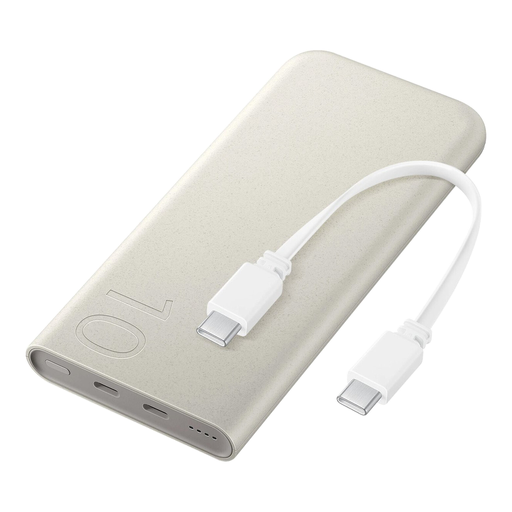 No image available
Worth considering if the integrated USB-C cable matches your torch’s charging input.
Stated capacity: 10,000 mAh. The description lists wired charging at up to 25 W via the integrated USB-C cable and a weight of 210 g.
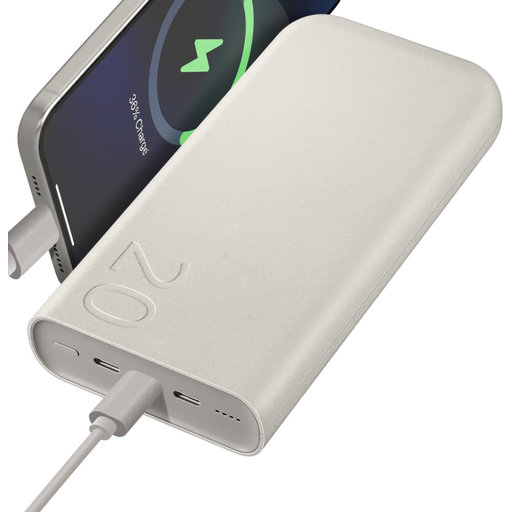 No image available
The three USB-C ports may be useful if your torch has a compatible USB-C connection and you want to connect other devices too.
Stated capacity: 20,000 mAh. The description lists three USB-C ports and charging for up to three devices at once.
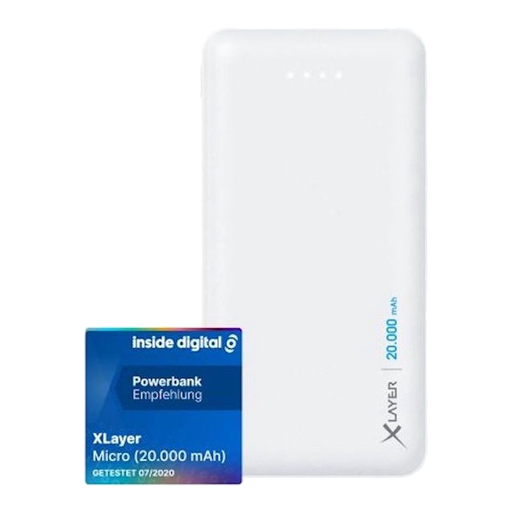 No image available
Worth considering if your torch has a cable that fits one of the USB outputs.
Stated capacity: 20,000 mAh. The description lists two USB outputs rated at 5 V/2.1 A and 5 V/1.0 A, and one USB-C input.
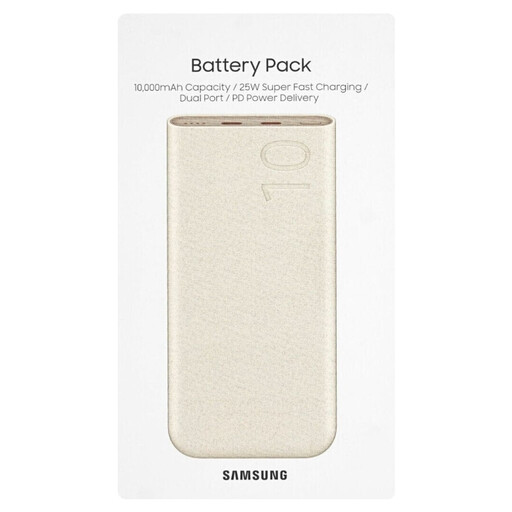 No image available
May suit a USB-C torch if the cable and charging requirements match the ports.
Stated capacity: 10,000 mAh. The specifications list two USB-C ports that work as both inputs and outputs, up to 25 W and a weight of 210 g.
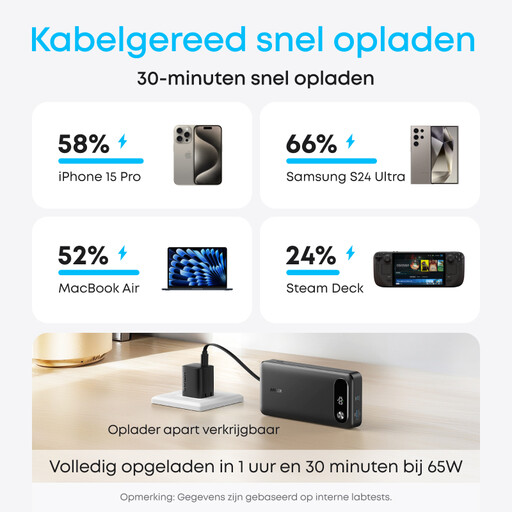 No image available
Worth considering if the built-in USB-C cable matches your torch’s charging input.
Stated capacity: 20,000 mAh and total output: 87 W. The description lists charging for up to three devices at once.
No. Connections and charging requirements vary from one torch to another. Check the input voltage and current, and the required port and cable. For example, Fenix lists a 5 V/2 A charging input for the C7, but this is not a general requirement for all USB torches.
A power bank may switch off its output when the connected torch draws very little power. Anker describes a mode for low-power devices, but check whether the exact power bank model supports it.
No, don’t assume that every seat has a charging point without checking. NS’s general information does not confirm that one is available at every seat. Charge your power bank in advance and check the facilities on your specific train.
Follow the instructions and don’t use damaged cables or a battery that is deformed or damaged. The fire service advises placing chargers in an open space so heat can escape. Check for any safety warnings relating to the exact model and batch number.
It depends on the capacity and how both the power bank and your torch are used. Don’t work out the number of full charges from the mAh figure alone; use any test data for the exact model as an additional point of comparison.