
Student with a USB charging base
You want to use your toothbrush’s existing charging base or cable with a power bank. First, check which toothbrush model and connector you have.


Before choosing a power bank, check your toothbrush’s original charger or charging cable and the connection it needs. A USB connection alone does not guarantee compatibility. If charging stops prematurely, check whether that specific power bank model continues to supply power at low current. More capacity or faster charging will not solve this problem by itself.
You want to use your toothbrush’s existing charging base or cable with a power bank. First, check which toothbrush model and connector you have.
You suspect your power bank switches off while a small device is still charging. Check whether the model you’re considering has a documented low-current mode.
You want to use the same power source for other USB devices too, so you’ll need to consider the available outputs and how easy the power bank is to carry around.
First, check how your toothbrush charges. Then make sure the power bank continues to supply power while charging, and only then decide which extra connections and how much capacity you need.
| What to consider | What should you check? | Who is this important for? |
|---|---|---|
| Compatibility | Check your toothbrush model, the compatible charging base or cable, and the USB connector. Philips describes charging methods that vary by model and warns that not all Sonicare chargers are compatible with one another. | If I want to use the original charging setup, the connector must fit the power bank and the charging base must be suitable for my toothbrush handle. Around 33% of consumers put compatibility first. |
| Continuous power delivery | Check the documentation for the specific model to see whether it has a low-current mode and how long it runs for. Anker points out that support varies between power banks. | If my power bank switches off while charging, I’ll look for a model that keeps supplying power at low current. Around 27% of consumers make this their top priority. |
| Safe charging in your room | Check the cable and casing for damage. Place the charger in a clear space, not under bedding, and keep charging equipment away from moisture. These are recommendations from the Fire Service. | If I use my power bank in my room, I want a clear, dry space and undamaged cables. Around 20% of consumers put safe use first. |
| Capacity and other uses | Compare the connections, stated capacity and weight. Where possible, also look at independently measured performance. The Consumentenbond distinguishes between capacity and the amount of power actually delivered. | If I want to charge other devices as well as my toothbrush, I’ll weigh up the extra connections and power against what I’m prepared to carry. Around 20% of consumers consider this the most important factor. |
A connector that fits doesn’t automatically mean the charging base is suitable for your toothbrush handle. Philips describes different charging methods for different Sonicare models.
Check the full toothbrush model and its compatible charging base before choosing a power bank.
Depending on the model, you may need a compatible original charging base or cable.
Anker describes support for this mode as model-dependent. The feature doesn’t prove that a particular toothbrush can charge continuously.
Check the instructions for the model you’re considering, including how long the mode runs for, and make sure your toothbrush completes its charging cycle.
The Consumentenbond compares how much power a power bank actually delivers. Its stated capacity alone won’t tell you how many times you can charge your toothbrush.
Where possible, compare measured performance. Don’t estimate the number of charges without data for both devices and their energy losses.
The Primo version reviewed, with 10,000 mAh, is worth considering if you want USB-A and USB-C connections.
The Go2 Fan Edition PDXG2103FE is worth a look if you need both USB-A and USB-C.
Anker is worth considering if you’re looking for a power bank model with documented support for low-power devices.
This selection includes power banks with USB-C connections or built-in charging cables. Check that your toothbrush’s charging base or cable can connect to one of them.
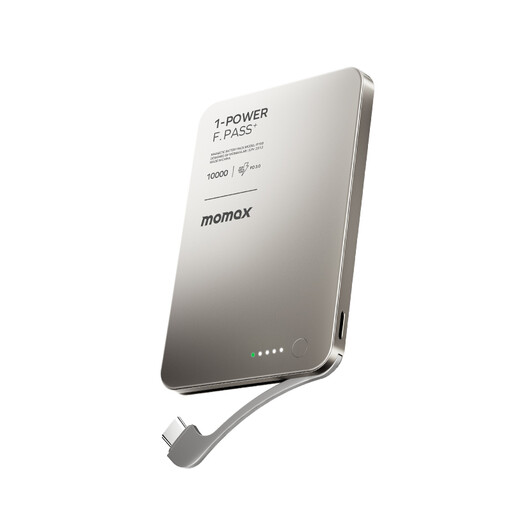 Image unavailable
An option if your charging setup uses USB-C or you need a USB-A output.
The product name lists 10,000 mAh; the product description mentions a built-in USB-C cable and a USB-A output.
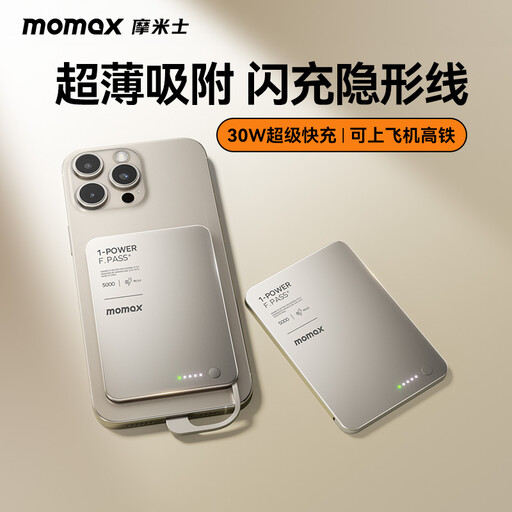 Image unavailable
Suitable for a USB-C charging setup, provided your toothbrush has a matching connection.
The product information lists 5,000 mAh and a built-in USB-C cable.
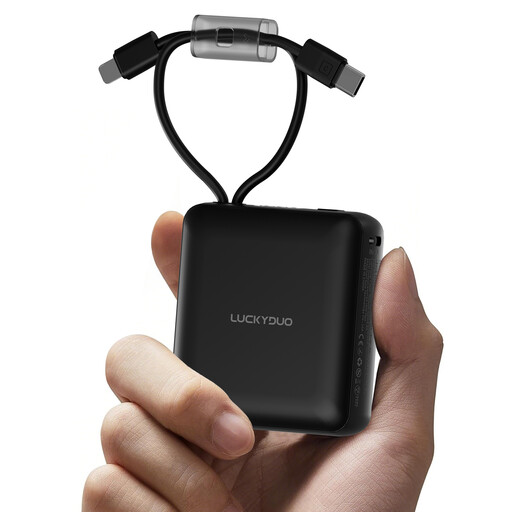 Image unavailable
An option if your toothbrush’s charging setup is compatible with one of the built-in connections.
The product description mentions USB-C and Lightning cables and a capacity of 10,000 mAh.
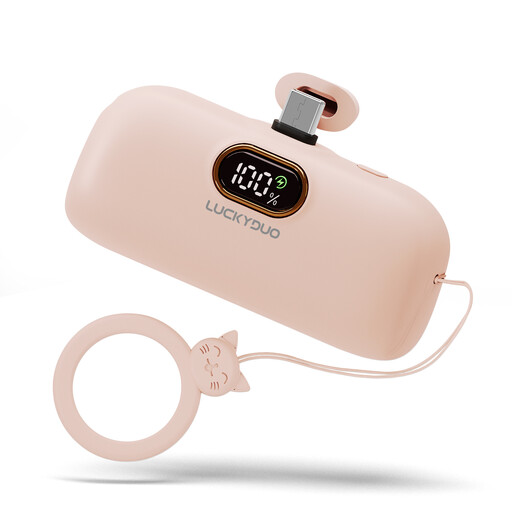 Image unavailable
Worth considering if your toothbrush charger has a compatible USB-C connection.
The product name and description list USB-C and 5,000 mAh.
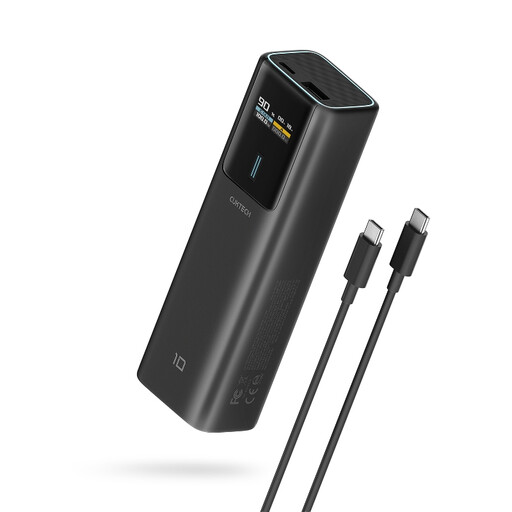 Image unavailable
An option if your charging setup uses USB-C. Check your toothbrush’s input before choosing.
The product information lists 10,000 mAh and a USB-C output of up to 100 W. This power rating alone doesn’t confirm compatibility with a toothbrush.
No. First, check how your model charges. Philips describes different charging methods and warns that not all Sonicare chargers are compatible with one another. Use the compatible charging base or travel case, then check that the USB connector fits the power bank.
First, check the cable, connection and charging indicator, following your toothbrush’s instructions. Then check whether your specific power bank has a low-current mode and how long it stays active. Anker says this feature varies by model; it isn’t a guaranteed solution for every toothbrush.
Place the charger in a clear space so heat can escape. Don’t charge it under a pillow or duvet, and don’t use damaged cables. Keep charging equipment away from moisture; this is safety advice from the Fire Service.
No. According to the Dutch government, there is no fixed period for the statutory guarantee in the Netherlands. What you can expect from a product depends on the product and the circumstances. If a product is faulty, contact the seller.
Not simply because a power bank charges via USB. The Netherlands Food and Consumer Product Safety Authority (NVWA) states that the Low Voltage Directive covers 50–1000 V AC or 75–1500 V DC. For electrical equipment outside the scope of that directive, the NVWA refers to the general EU Product Safety Regulation or other specific legislation. The CE requirements that apply to an individual product must be determined for that specific product.