
Travellers with a USB charging cable
You want to charge your toothbrush without relying on a spare mains socket. Check that the original cable fits an output that can charge devices.


Start with the original charging cable or charging case: this determines which power bank output you need. For extended charging of a low-power device, choose a model only if its low-current mode is explicitly confirmed, and test it with your own toothbrush. If there’s a suitable mains socket and the recommended charger, you may not need a power bank.
You want to charge your toothbrush without relying on a spare mains socket. Check that the original cable fits an output that can charge devices.
You want to avoid the charging output switching off before the toothbrush is fully charged. In that case, a low-current mode confirmed for the exact power bank model may be relevant.
You want to charge other devices as well as your toothbrush. Check the available outputs and capacity, but don’t use claims about phone charges to estimate how many times you can charge a toothbrush.
First check whether the holiday cottage has a suitable mains socket and the recommended charger; a power bank is only relevant if that charging option isn’t available. Then check the connection and, for a low-power device, look for an explicitly supported charging mode.
| What to consider | What should you check? | Who will find this most important? |
|---|---|---|
| Connection and charging method | Check the original charger and plug. Make sure the port you choose can charge devices, rather than only charging the power bank itself. | If I want to use my existing toothbrush charger, the output needs to match it. Around 36% of consumers see the connection as their main priority. |
| Charging at low current | Look on the page for the exact model for a confirmed mode for low-power devices, and test whether the charging indicator stays on. | If I want to avoid a long charging session stopping early, I look for a suitable charging mode. Around 29% of consumers prioritise continuous charging at low current. |
| Extra capacity | Compare the stated capacity and number of usable outputs with your stay and any other devices you’ll be charging. | If I also want to charge other devices or don’t want to rely on a mains socket, extra capacity matters. For around 21% of consumers, extra capacity is their main concern. |
| Portability and simplicity | Check whether you need a power bank and, if so, compare the size, weight and included cables with your charging method. | If I want to pack as little as possible and avoid buying an unnecessary extra battery, I first check whether the standard charger will do. Simplicity and portability are the main priority for around 14% of consumers. |
A toothbrush may use a model-specific charger or a charging case. A USB port on the power bank doesn’t automatically mean the toothbrush itself has a USB port.
Compare the original charger and plug with the power bank specifications, and check the recommended charging method for your model.
Manufacturer examples for 20 W or Power Delivery refer to compatible devices. They don’t prove that a toothbrush will work with the power bank or charge faster. A low-power device may also draw too little current to keep the output active.
Check that you have the right output, and look for a confirmed low-current mode for the exact power bank model.
Anker explains that energy is lost during conversion and through heat with its PowerCore 10000. This explanation isn’t a measurement of how a toothbrush charges.
Use the stated capacity as a point of comparison and choose enough spare capacity for your stay and any other devices, without expecting an exact number of toothbrush charges.
Brandweer Nederland warns about the risks of damaged cables and batteries. A charger also needs space to dissipate heat.
Use undamaged cables, follow the instructions and charge in a dry place where the charger has room around it.
The Anker 313 Power Bank (PowerCore 10K) is worth considering if you’re looking for a low-current mode that’s explicitly described.
According to Xtorm, the Fuel Series 5 FS5103U has two USB-C ports and one USB-A port, offering connection options for different cable types.
The BoostCharge BPB011btRG may suit a charging cable with a USB-A plug, thanks to its two USB-A outputs.
According to the manufacturer, the 2PB12100SG power bank has a USB-C port and a USB port, making it an option if you also want to charge other devices.
These Joybuy products are power banks for use on the go. Before buying, check that your toothbrush’s original charging method is compatible with an available output; the product details don’t confirm compatibility with any specific toothbrush model.
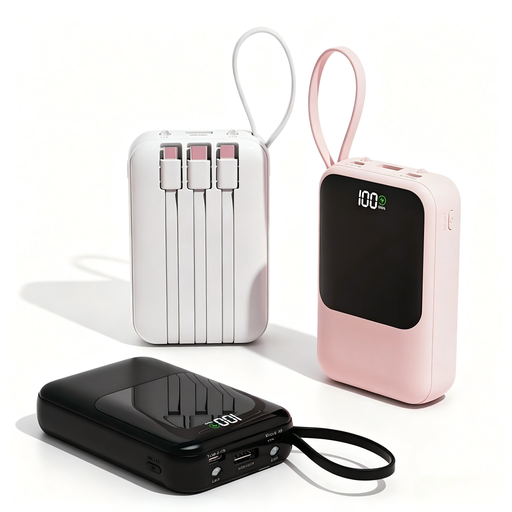 No image available
The built-in USB-C and Lightning cables may be handy if either connection suits your existing charging method.
The product name lists 10,000 mAh, 22.5W and a digital battery display. Check whether the original toothbrush charger works with one of the built-in cables.
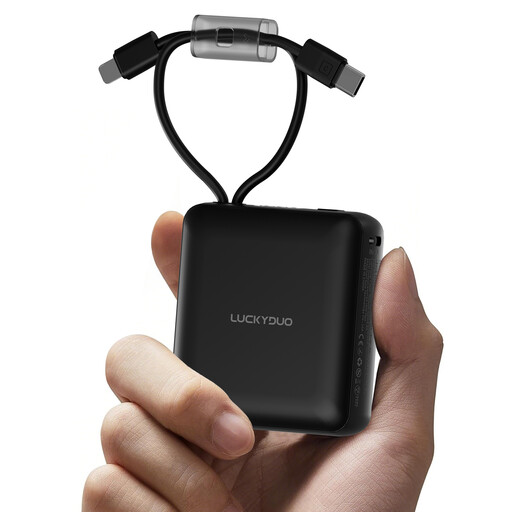 No image available
The two built-in cables may mean you need to pack fewer cables, if one of them suits your toothbrush’s original charging setup.
The product name also lists an LED display. Before buying, check the plug types on the built-in cables and whether the output is suitable for your charging method.
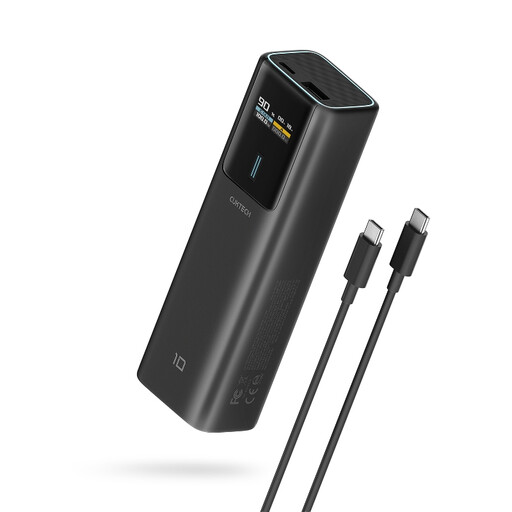 No image available
This power bank is an option if your toothbrush’s original charging setup uses USB-C.
The product name lists 10,000 mAh and 100W; the product details specify a USB-C output and a display. A high power rating alone doesn’t confirm compatibility with your toothbrush.
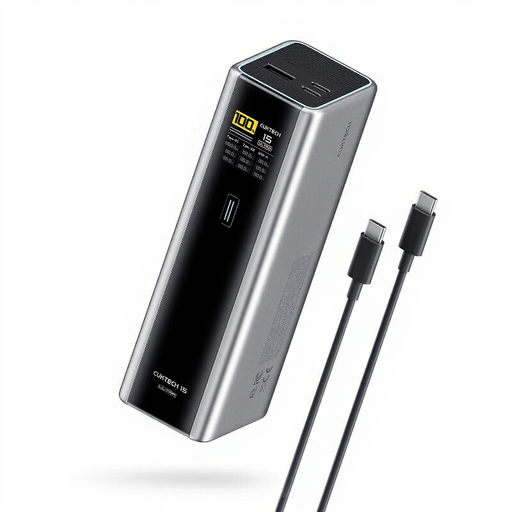 No image available
The range of port types may suit you if you want to connect other devices as well as your toothbrush, provided the original toothbrush charger fits one of the outputs.
The product name lists 20,000 mAh and 140W. The product details specify two USB-C outputs and one USB-A output, with simultaneous output.
 No image available
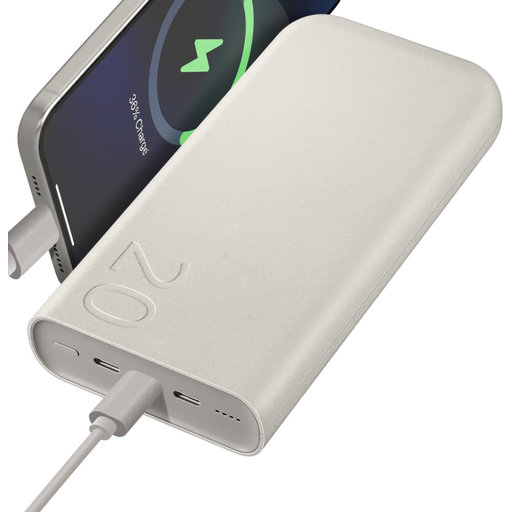
This power bank may work if your toothbrush’s original charger uses USB-C; check the plug type before choosing this model.
The product name lists three USB-C ports and 20,000 mAh. A charging cable with a USB-A plug won’t connect directly to these ports.
It depends on the exact toothbrush model. Philips describes model-specific chargers and charging via a travel case, so check the original charging method rather than assuming the toothbrush itself has a USB port.
First check the cable, connection and charging indicator. If a device draws very little power, a low-current mode confirmed for the power bank model may help. Test the combination with your own toothbrush before you leave.
Brandweer Nederland advises against using damaged cables and recommends placing chargers in a clear space so heat can dissipate. Keep the charging setup away from water and follow the device instructions.
No. According to ACM ConsuWijzer, statutory rights apply alongside any manufacturer’s or seller’s warranty. If a product breaks sooner than you could reasonably expect under normal use, the seller must put things right in line with the applicable terms; there is no general fixed time limit for statutory rights in the Netherlands.