
Anyone wanting to charge a lantern on the go
You want to be able to top up your USB lantern during your journey. So, first check which connection it has and how much charge you’ll need for your trip.


First, choose a power bank with an output and cable that match your USB lantern’s charging port. Then work out how much charge you’ll need for your journey, without directly converting the mAh figure into a number of full lantern charges. A lightweight model may be enough if you mainly want to top up one lantern, while extra devices or a longer journey may call for more capacity and suitable ports. If your lantern uses very little power, also check that the output stays active.
You want to be able to top up your USB lantern during your journey. So, first check which connection it has and how much charge you’ll need for your trip.
You carry your own luggage and need to weigh up extra charge capacity against the power bank’s size and weight. The Consumentenbond explains this trade-off between charging capacity and portability.
You may want to connect a phone as well as your lantern. Compare the number of compatible outputs and check what happens when you charge several devices at once.
The Consumentenbond explains the trade-off between size, weight and charge capacity: smaller, lighter models generally offer fewer charges. Also check your lantern’s connection and whether the power bank you choose is suitable for its power consumption.
| What to consider | What should you check? | Who is this most important for? |
|---|---|---|
| Connection and cable | Check your lantern’s charging port, the power bank’s output and whether the right cable is included. | I want to be sure I can actually connect my lantern. Compatibility is the priority for around 31% of consumers making this choice. |
| Charge capacity | Compare your lantern’s charging needs and how you plan to use it with information about the power bank’s actual output; don’t estimate an exact number of charges from the mAh figure alone. | If I want enough capacity for the whole journey, I also consider how long I’ll be travelling and whether I’ll use other devices. Around 31% of consumers prioritise charge capacity. |
| Size and weight | Compare the dimensions and weight of the exact model with the space in your bag and the capacity you need. | I want to keep my luggage light and only carry extra capacity if I need it for my journey. Portability is the priority for around 25% of consumers. |
| Charging devices with low power consumption | If your lantern uses little power, check whether the exact power bank model has a low-current mode and whether it requires a minimum current draw. | If my lantern draws very little power, I want to avoid charging stopping prematurely. Around 13% of consumers prioritise reliable charging at low power consumption. |
The stated capacity doesn’t tell you directly how many full charges your lantern will get. The amount of energy delivered also depends on the charging conditions.
Check your lantern’s energy requirements and, where possible, compare them with information about the power bank’s actual output. Don’t base a promise about the number of charges on two mAh figures alone.
A built-in cable is only useful if it fits your lantern’s charging port. Lanterns can have different types of connection.
Check your lantern’s physical connection and user manual before choosing a power bank.
A power bank may switch off automatically when a device draws very little power. A low-current mode also varies by model and may itself require a minimum current draw.
Check the documentation for the exact model if your lantern uses very little power or has stopped charging before. Test the combination at home before you set off.
An old product listing doesn’t tell you whether a product is currently available. A manufacturer’s warranty is also not the same as your statutory rights.
Check the seller’s latest information. The Rijksoverheid explains that the Netherlands has no fixed statutory two-year warranty period; if a product is faulty, the seller remains your point of contact.
Worth considering if a confirmed low-current mode is important; check whether the feature is available on the exact model.
The Fuel Series 5 FS5100 is an example to compare if you’re looking for separate USB-A and USB-C outputs.
The BoostCharge BPB021hqBL is worth comparing if a built-in USB-C cable would be useful when travelling.
The EB-P3400 is an example of a model with two connections that can be used at the same time, provided the cables fit your devices.
These power banks are selected for use on the go. Before buying, check that the connection and cable on your chosen model match your lantern’s charging port.
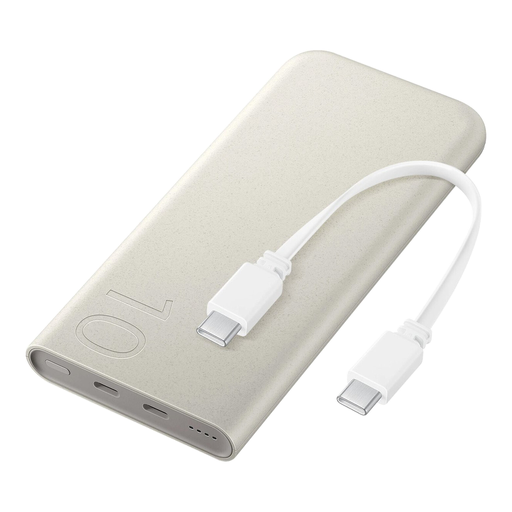 No image available
Worth comparing if you’re looking for a power bank with a stated capacity of 10.000 mAh and an output of 25 W; check that the connections suit your lantern.
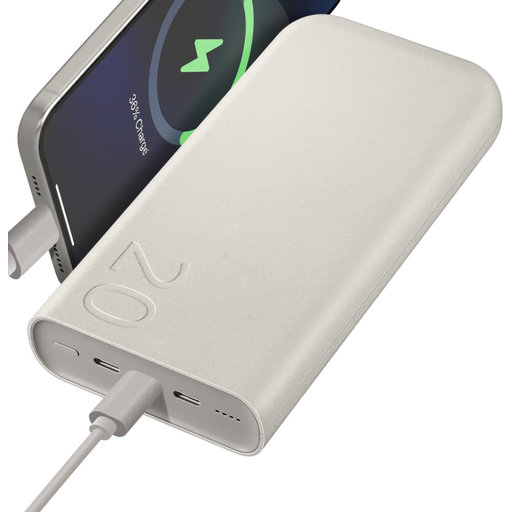 No image available
Worth considering if your lantern uses USB-C and you want to connect several USB-C devices while travelling. The stated capacity is 20.000 mAh; according to the product information, 45 W applies when one device is connected.
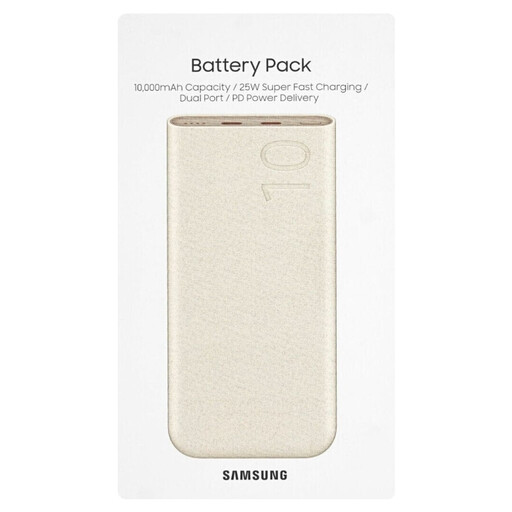 No image available
An option to compare if your lantern uses USB-C and you also want to charge a second device. Samsung specifies a maximum of 9 W per device when charging two devices at once.
 No image available
Worth comparing if your lantern uses USB-C. The product name gives a capacity of 10.000 mAh; before buying, check which output and cable will work with your lantern.
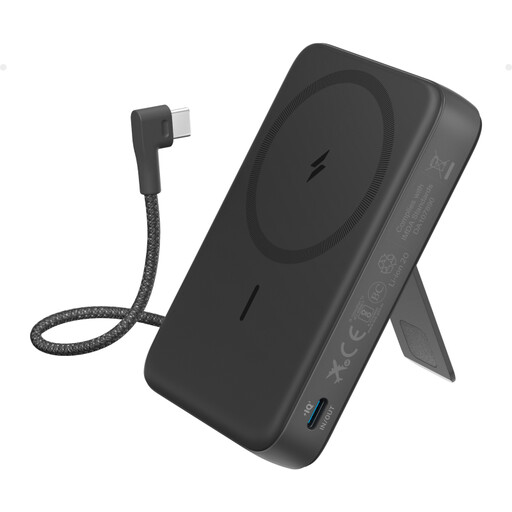 No image available
Worth comparing if your lantern charges via USB-C and you’re considering a built-in cable. The product name gives a capacity of 10K; check that the cable and connection are suitable for your lantern.
Check the charging port in your lantern’s user manual and use a compatible cable and output. Decathlon’s BL230 product page mentions both USB-C and micro-USB in different places, so check the connection on your own lantern.
Automatic shut-off may come into play when a device draws very little power. Anker Support describes a low-current mode for supported models, but also specifies a minimum current draw. Check the manual for your exact power bank and test the combination before you set off.
It depends on the operator and the journey. FlixBus describes power sockets and USB ports on its coaches, but that doesn’t guarantee a connection on another operator’s service or that a port will suit your lantern. Check your operator’s journey information.
If a product is faulty in the Netherlands, the seller is your point of contact. The Rijksoverheid says there is no fixed statutory warranty period of two years; any manufacturer’s warranty is in addition to your statutory rights.