First, choose a power bank with an output and cable that match your camping light’s charging port. Then work out how much reserve you need until you can reach the next mains socket. A lower capacity may be enough if you can recharge along the way, while a higher capacity could give you longer use or let you charge extra devices, but may be less compact. Comparing mAh figures alone won’t tell you how many full charges you’ll get.
Who is this relevant to?
Buyers who don’t know their light’s connection type yet
You want to avoid buying a new power bank that won’t connect to your light. Check the charging port and the cable you need. Decathlon lists different port types for its camping lights, and a cable isn’t always included.
People who want enough power for several evenings
You want to know whether the reserve will last until you can recharge the power bank. Compare your light’s energy needs with the usable capacity. Anker Support explains that the stated mAh figure isn’t the same as the energy your device receives.
People with more than one USB device
You may want to charge a phone as well as your light. Check the number and type of outputs, and find out what total power is available when you connect several devices at once. Trust and Belkin offer models with different connection options.
What should you look for?
| What to consider |
What to check before buying |
Who is this most relevant to? |
| Connection and cable |
Check your light’s charging port and whether the power bank has a suitable output or cable. If the port information isn’t clear, check what your light’s manual says. |
If I want to charge my light as soon as I arrive at the holiday cottage, I’ll first check that the cable fits. Around 36% of consumers say connection and cable compatibility is their main consideration. |
| Reserve until the next mains socket |
Think about how long and how often you use your light. Wh and information about usable output capacity are more useful for estimating energy needs than mAh without a voltage figure. |
If I want to get through several evenings without recharging, I need to know how much energy my light actually uses. Around 29% of consumers put this need for reserve power first. |
| Carrying and recharging |
Compare the weight and size if you’ll be carrying the power bank regularly. Also check which cable and adapter you’ll need to recharge it at the cottage. |
If I’ll be taking my power bank outdoors regularly, I want a reserve that’s easy to carry and can be recharged at the cottage. Around 21% of consumers prioritise portability and recharging. |
| Charging at low power consumption |
If the light stops charging while connected, check the cable and port first. Then check whether the exact power bank model has a suitable low-current mode. |
If my light might draw very little power, I want to know whether the power bank will keep charging it instead of switching off automatically. Around 14% of consumers say this is their main consideration. |
Common mistakes
-
Dividing two mAh figures to work out how many times you can charge your light
The mAh figure alone doesn’t tell you how much energy is available on a like-for-like basis. Voltage and losses during conversion and charging also matter, so a simple calculation may overestimate the number of charges.
Where possible, compare Wh and information about usable output capacity. Without details about both the light and the power bank, you can’t work out a reliable number of full charges.
-
Assuming a built-in cable will fit every light
A fixed USB-C cable is only useful if it matches your light’s charging port. Having a USB charging option doesn’t, by itself, confirm that the connection is compatible.
Check your light’s actual charging port and the power bank’s outputs before choosing a cable.
-
Assuming every small USB device will keep charging
Anker Support describes a low-current mode and automatic shut-off if the current draw is too low for specific power bank models. That doesn’t mean every camping light has this issue.
Check how your light charges, and consult the manual for the exact power bank model to see whether it has a suitable low-current mode.
-
Assuming a brand name is a complete safety check
On 15 July 2025, the Netherlands Food and Consumer Product Safety Authority issued a warning about four specific Anker models: A1257, A1647, A1681 and A1689. The warning applies to those models and isn’t a general judgement about the brand.
Check the full model number and current safety warnings. Don’t use a damaged battery or charging cable.
Brands to consider
Xtorm
According to Xtorm, the Fuel Series 5 FS5100 is a 10,000mAh model with two USB-C ports and one USB-A port. This may be useful if you’re still deciding which type of cable to use.
- Xtorm lists a USB-C output of up to 20 W.
- These specifications don’t tell you how many times a particular camping light can be charged or whether it needs a low-current mode.
Trust
The Avala 20,000 mAh has USB-C and two USB-A outputs, while the Fiera 10,000 mAh has a fixed USB-C cable and an extra USB-C port.
- Trust lists three connection options and a charge-level display for the Avala.
- The Fiera’s fixed cable is only useful if it fits your light’s charging port. Check how the output works for each model.
Belkin
According to Belkin, the BoostCharge BPB024hqBK is a 20,000mAh power bank with an integrated USB-C cable, a separate USB-C port and a USB-A port.
- This combination gives you the choice of an integrated cable or separate ports.
- The stated power and usage claims don’t prove how quickly or how often a particular camping light will charge.
Samsung
The EB-P4520XUEGEU is a 20,000mAh model with three USB-C ports, designed for people who want to use compatible USB-C cables.
- Samsung says it can connect three devices.
- Samsung notes that compatibility may vary by device. If your light only has a USB-A cable, you’ll need a suitable alternative cable.
Power banks at Joybuy
These products are possible power bank options if you want to charge a USB camping light in a holiday cottage. For each model, check that the stated cable or charging method is compatible with your light’s charging port.
 No image available
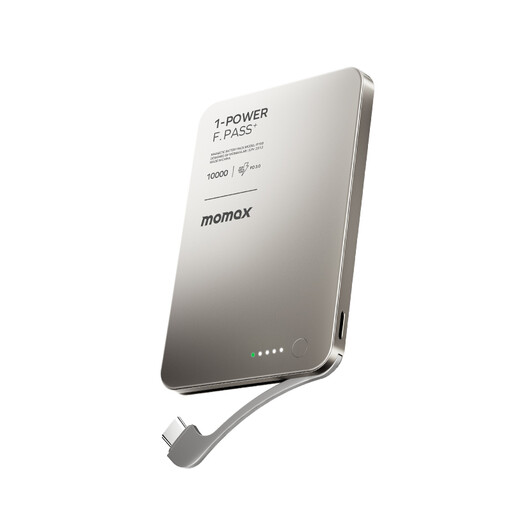
MOMAX 1-Power F.Pass+ Ultra-Slim, 10,000 mAh
An option if the built-in USB-C cable fits your light’s charging port.
The product name lists a capacity of 10,000 mAh and a built-in cable.
View at Joybuy
 No image available
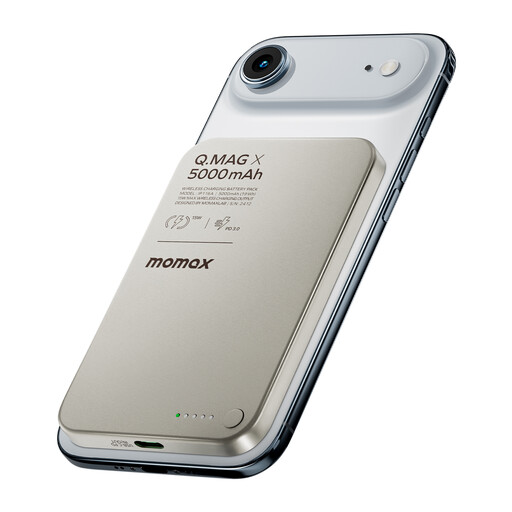
MOMAX Q.MAG Ultra-Slim, 5,000 mAh
The product name lists magnetic wireless charging. Choose this model only if your light supports this charging method; check the details for your exact light model.
The product name lists a capacity of 5,000 mAh.
View at Joybuy
 No image available
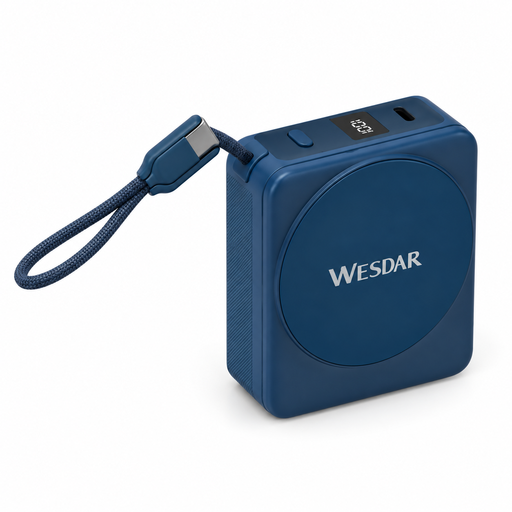
Magnetic power bank with integrated USB-C cable and display
A possible choice if the integrated USB-C cable fits your light’s charging port.
The product name lists 22.5 W fast charging and 15 W wireless charging. Check which charging method is relevant for your light.
View at Joybuy
 No image available
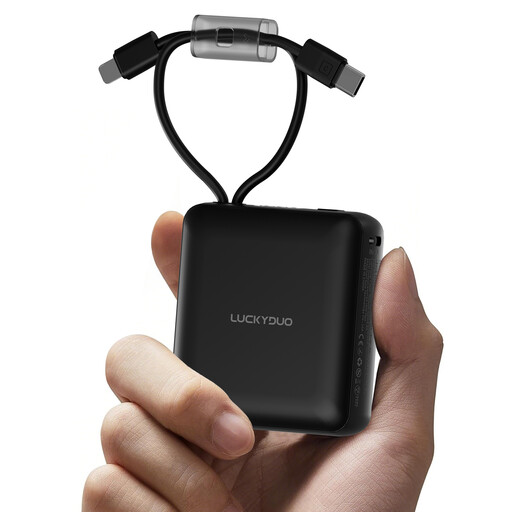
10,000 mAh power bank with two built-in cables
An option if one of the built-in cables matches your light’s charging port. Check the cable type before buying.
The product name lists a capacity of 10,000 mAh and an LED display.
View at Joybuy
Frequently asked questions
Can you work out in advance how many full charges your power bank will give your light?
Not reliably using only the two mAh figures. You need information about the energy in the light’s battery and the power bank, as well as the losses during conversion and charging. Wh gives you more useful information than mAh without a voltage figure.
Which cable should you take to the holiday cottage?
Check your light’s charging port and the power bank’s output. Decathlon lists USB-C for the BL200 and says that the cable isn’t included. The product information for the BL230 lists both USB-C and micro-USB, so check the light or its manual rather than relying on one port description.
How can you charge your power bank safely at the cottage?
Follow the instructions, don’t use a damaged cable or charger, and leave charging equipment uncovered rather than putting it under a pillow or duvet. The Fire Service advises charging devices with a battery in a room with a working smoke alarm.
What can you do if your power bank doesn’t work properly during normal use?
Contact the retailer. According to the Dutch government, you’re entitled to a product that works properly, and the retailer must provide a solution if it doesn’t. In the Netherlands, there’s no single fixed legal guarantee period for all products.


