What should you look for when choosing?
| What to consider |
What to look for |
Who should pay particular attention? |
| A safe place to charge |
Use a hard, dry, clear surface; check the battery and cable for damage. |
If you want to charge your lantern by the bed, it’s important to find a stable spot away from the bedding. Around 36% of consumers put safe charging by the bed first. |
| Connection and charging behaviour |
Check your lantern’s input, the power bank’s output and, if necessary, whether it supports a low current draw. |
If your lantern draws very little power or has stopped charging before, you’ll want to know whether the right port and any low-current mode are compatible with your model. Around 29% of consumers give top priority to a compatible connection and uninterrupted charging. |
| Usable capacity |
Compare capacity at the same voltage or in Wh, and take your lantern’s power consumption into account. |
If you need several charges without access to a mains socket, don’t assume that all the stated cell capacity will be available via USB. Around 21% of consumers prioritise having enough power for several charges. |
| Size and weight |
Compare the dimensions and weight of the exact version. |
If you’ll also be carrying the power bank in a small camping bag, portability matters. Around 14% of consumers give compact size top priority. |
Anker Support says its low-current mode requires a minimum current draw of 30–90 mA and recommends checking support for the exact model. A high maximum wattage doesn’t, by itself, tell you whether a power bank will keep charging when a lantern draws very little power.
Whether you choose a compact power bank, a model with a confirmed low-current mode or a more rugged outdoor model, the first step is the same: check that it’s compatible with your lantern’s connection and charging behaviour. More capacity can be useful for several charges, but usually makes the power bank less convenient to carry. Outdoor features are most relevant if you’ll also use it outside.
Power banks at Joybuy
The models shown are listed as 10.000 mAh. For each model, check that its wired output and cable are compatible with your lantern, and that its charging behaviour suits the lantern’s power draw.
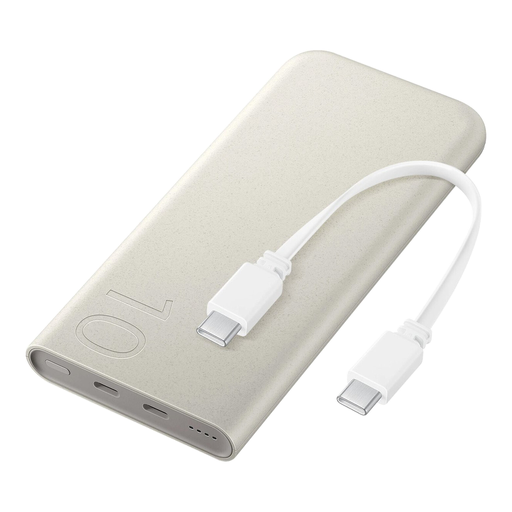 Image unavailable
Samsung 25W wireless power bank, 10.000 mAh, beige
Before use, check that the wired output and cable are suitable for your USB lantern.
10.000 mAh; 25 W wireless charging.
View at Joybuy
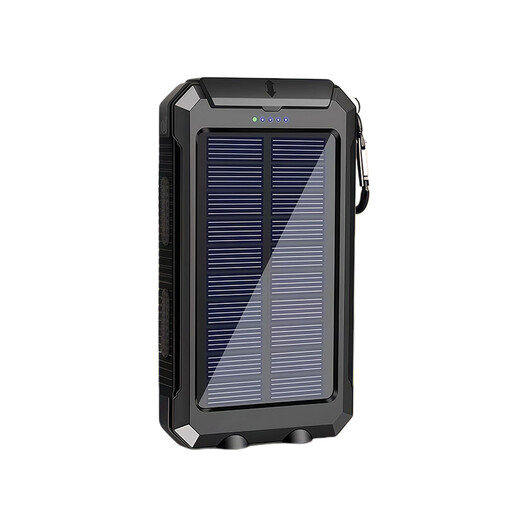 Image unavailable
XBJ T8 USB power bank, 10.000 mAh, black
The listed camping features may be useful if you’ll also use the power bank outdoors; check that its connection is compatible with your lantern.
10.000 mAh; solar charging, built-in torch, compass and wrist strap.
View at Joybuy
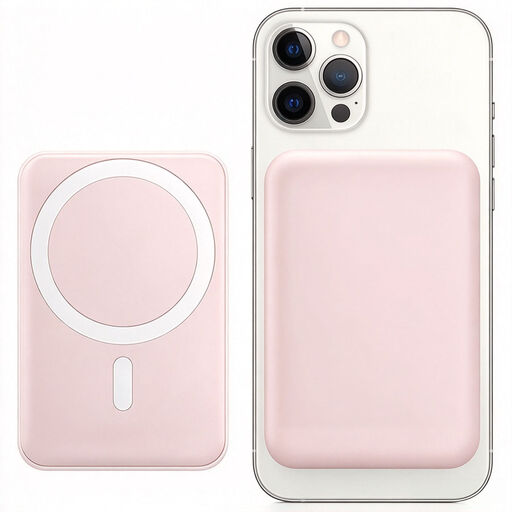 Image unavailable
10.000 mAh power bank with 15 W fast charging and magnetic phone stand
Check that this model’s wired output is compatible with your lantern’s input and cable.
10.000 mAh; 15 W fast charging; magnetic phone stand and wireless charging.
View at Joybuy
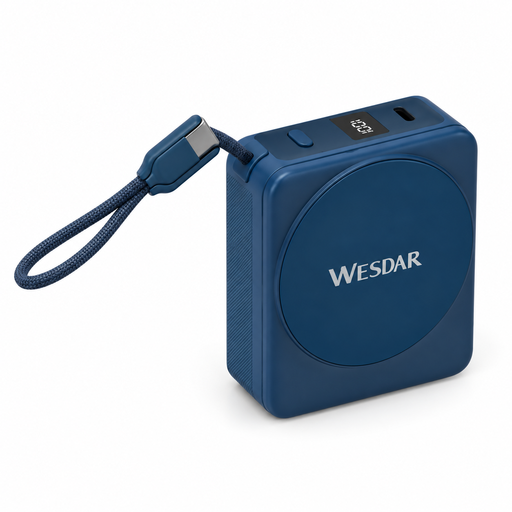 Image unavailable
10.000 mAh magnetic power bank with integrated USB-C cable, dark blue
The integrated cable could be useful if it’s compatible with your lantern’s input; check the output and charging behaviour too.
10.000 mAh; 22,5 W wired charging; 15 W wireless charging; digital display.
View at Joybuy
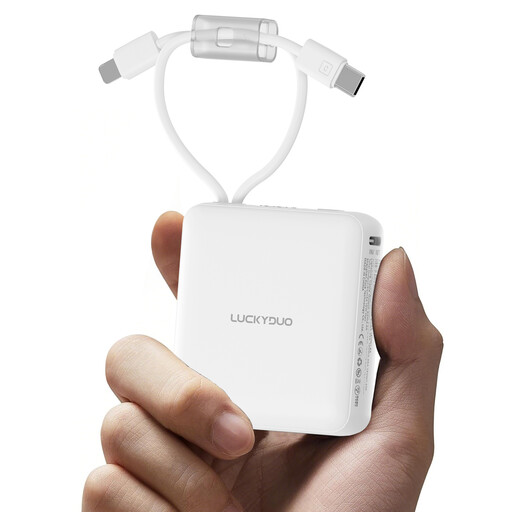 Image unavailable
Compact 10.000 mAh power bank with two built-in cables, white
The built-in cables could be handy if one is compatible with your lantern’s input; check the connection before choosing.
10.000 mAh; two built-in cables; LED display.
View at Joybuy
Frequently asked questions
Can I charge any USB camping lantern with a USB-C power bank?
You can’t tell from the plug shape alone. Check your lantern’s input and charging requirements, whether the relevant power bank port supplies power, and which cable you need. If charging stops when the lantern draws very little power, check whether the exact power bank model supports a suitable low-current mode.
Can I charge a power bank by my bed?
Brandweer Nederland recommends charging on a hard surface and warns about damage, short circuits and moisture; Brandweer Twente recommends charging during the day where possible, when you’re nearby. This is safety advice, not a specific legal ban on charging by the bed. Don’t put the power bank on bedding or under blankets.
How many times can I charge my lantern with a 10.000 mAh power bank?
You can’t work this out directly from the mAh rating. It may refer to the internal cells; voltage conversion and energy loss affect how much is available via USB. Anker Support explains this distinction. Compare capacity at the same voltage or in Wh, and take your lantern’s power consumption into account.
What should I check if the power bank stops charging?
First, check the cable, the output you’re using and the charging requirements of both devices. If the lantern draws very little power, check whether the manufacturer confirms low-current mode support for the exact power bank model and port you’re using; this feature isn’t available on every version.


