Who is this relevant for?

Campers without daily access to electricity

If you’re camping for several days without access to a mains socket, you can weigh the power bank’s capacity against your lantern’s charging needs. The Consumers’ Association points out that a power bank’s stated capacity isn’t the same as the amount of power it actually delivers.

Campers with several USB devices

If you also need to charge a phone, for example, check how many usable outputs there are and how much power is available when charging multiple devices at the same time.

Campers travelling light

If you’re carrying your own kit, weigh the stated capacity against the power bank’s weight and dimensions. For outdoor use, also check the protection rating for the specific model and the instructions for its cables and connections.

What should you look for?

What to consider What to look for Who it matters to
Charging capacity Check your lantern’s charging specifications and compare them with the stated capacity; mAh doesn’t guarantee a specific number of full charges. If I expect to spend several evenings without access to a mains socket, I want enough capacity for my lantern; around 36% of consumers put charging capacity first.
Charging multiple devices Check which outputs are available and how the power is shared if you connect several devices at once. If you want to charge other USB devices as well as your lantern, pay particular attention to the available outputs; around 29% of consumers prioritise this.
Portability Compare the stated weight and dimensions of the exact models with the capacity you need. If I’m carrying my own kit, weight matters when choosing between extra capacity and a lighter bag; around 21% of consumers prioritise travelling light.
Outdoor protection Check the protection rating for the exact model and the instructions for the power bank, lantern, cables and connections. If rain or dust is a possibility, I want to know which parts of my charging setup are protected; around 14% of consumers prioritise protection for outdoor use.

Common buying mistakes

  • Assuming mAh guarantees a certain number of charges

    The capacity printed on a power bank doesn’t tell you how many full charges your lantern will get. The Consumers’ Association measures the power actually delivered separately; your lantern’s charging needs and how you use it also make a difference.

    Use mAh as a starting point for comparison. Also check your lantern’s charging specifications, and don’t plan for an exact number of charges unless you have comparable data for both devices.

  • Assuming every port delivers maximum power at the same time

    The available power may change when you connect several devices. Belkin states that the BoostCharge BPB011btBK delivers a maximum of 15 W in total when all three ports are in use; Anker explains that power is shared across the ports on another model.

    Check the specifications for simultaneous use of the exact model you’re considering.

  • Assuming an outdoor rating protects your entire charging setup

    The IP65 rating listed by Xtorm for the XR202 applies to that model. It doesn’t automatically cover a connected lantern, cables or exposed connections. The Netherlands Fire Service identifies moisture as a risk to batteries.

    Follow the instructions for both the power bank and the lantern, and protect the cables and connections as directed.

Brands to consider

Belkin

The BoostCharge BPB011btBK is a 10.000mAh model with USB-A and USB-C outputs.

  • Belkin lists two USB-A outputs, one USB-C output and a USB-A/USB-C cable included in the box.
  • Belkin states that the total output is a maximum of 15 W when all three ports are used at the same time. Check that the cable is compatible with your lantern.

Xtorm

The FS5201 offers multiple outputs, while the XR202 is a separate model with an IP65 rating listed by Xtorm.

  • Xtorm lists a capacity of 20.000 mAh and three outputs for the FS5201. For the XR202, Xtorm lists an IP65 rating and a weight of 540 g.
  • These are manufacturer specifications, not charging results measured with your lantern. Protection for the power bank doesn’t automatically make a connected cable and lantern suitable for exposure to rain.

Anker

The 10.000 mAh Nano Power Bank with retractable USB-C cable is worth considering if cable convenience and multiple outputs matter to you.

  • For this 45W model, Anker states that power is shared across the outputs when they’re used at the same time.
  • Check the specifications for the exact version and make sure the USB-C cable matches your lantern’s charging port.

Power banks at Joybuy

This selection includes mainly compact 10.000 mAh power banks, as well as one 20.000 mAh model. For each product, check that the cable or output is compatible with your lantern’s charging port.
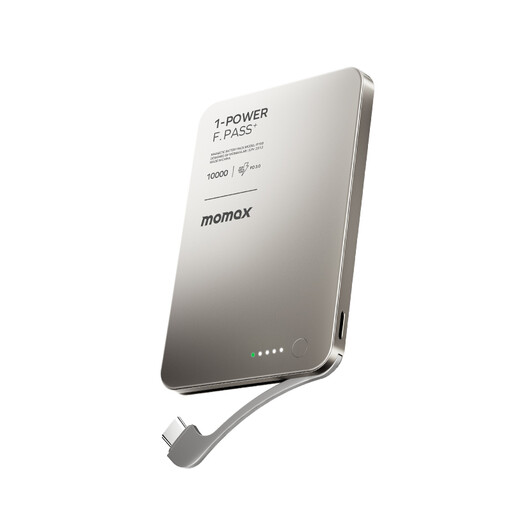
MOMAX 1-Power F.Pass+ power bank, 10.000 mAh

MOMAX 1-Power F.Pass+ power bank, 10.000 mAh

A compact option if your lantern charges via USB-C and the built-in cable is compatible; check your lantern’s manual to be sure.

10.000 mAh; built-in USB-C cable; the product description says it can charge up to three devices at once.

View at Joybuy
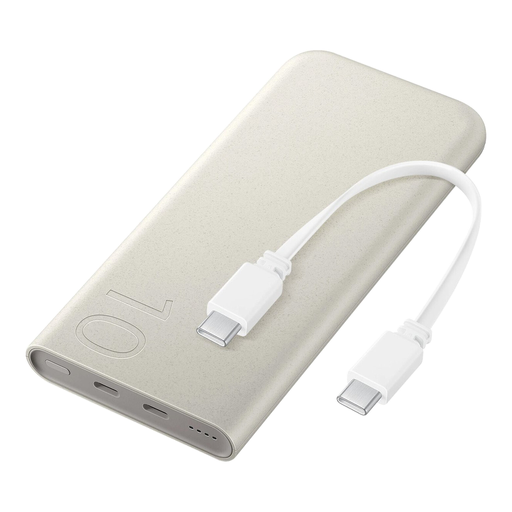
Samsung 25W Inductive Power Bank, 10.000 mAh, Beige

Samsung 25W Inductive Power Bank, 10.000 mAh, Beige

This may suit you if you’re looking for an integrated USB-C cable and your lantern charges via USB-C; check the lantern’s connection and instructions.

10.000 mAh; stated output of 25 W; integrated USB-C cable; stated weight of 210 g. The product description warns against water, excessive heat and direct sunlight.

View at Joybuy
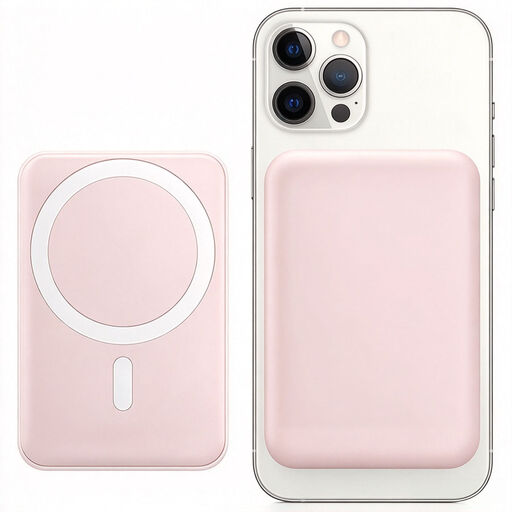
10.000 mAh power bank with 15 W wireless charging and magnetic phone stand, Pink

10.000 mAh power bank with 15 W wireless charging and magnetic phone stand, Pink

Only consider this if your lantern can charge through a compatible wired USB output; the stated wireless charging feature alone doesn’t prove it’s compatible with a USB lantern.

10.000 mAh; the product title lists 15 W wireless charging and a magnetic phone stand. Check whether the exact model has a wired USB output that’s compatible with your lantern.

View at Joybuy
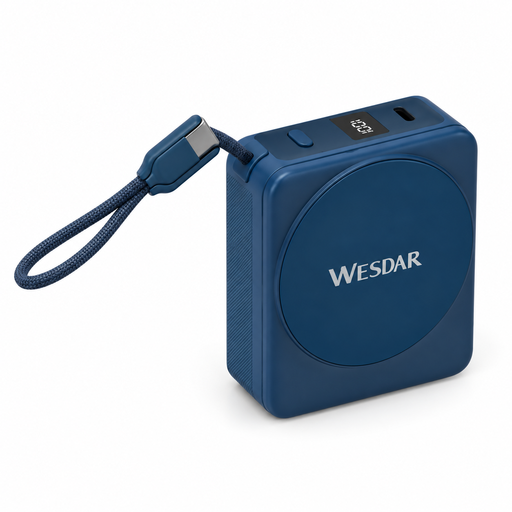
10.000 mAh power bank with integrated USB-C cable and digital display, 22,5 W

10.000 mAh power bank with integrated USB-C cable and digital display, 22,5 W

The integrated USB-C cable could be handy if your lantern charges via USB-C; check that the connection and cable match the lantern’s instructions.

10.000 mAh; the product title lists 22,5 W fast charging, 15 W wireless charging and a digital display.

View at Joybuy
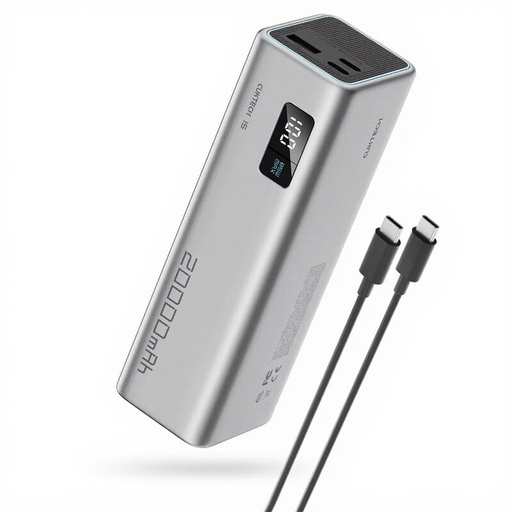
CUKTECH 15 SE PB200 power bank, 20.000 mAh, grey

CUKTECH 15 SE PB200 power bank, 20.000 mAh, grey

A higher stated capacity and multiple outputs may suit you if you’ll be away from mains sockets for longer or want to charge other USB devices as well as your lantern.

20.000 mAh; the product title lists 65 W. The product description mentions two USB-C outputs and one USB-A output. A cool, dry place is recommended for long-term storage.

View at Joybuy

Frequently asked questions

How can you tell if a power bank will charge your camping lantern?

Check your lantern’s manual for its charging port, then use a cable that fits an actual output on the power bank. A lantern with USB-C shows why you need to check the connection for each lantern; don’t assume every model uses the same type.

How many times can you charge your lantern with a power bank?

You can’t work this out reliably from the power bank’s mAh rating alone. Compare your lantern’s charging specifications with those of the power bank, and allow for how you use it. Don’t plan for an exact number of full charges based only on the stated capacity.

Can you charge your lantern and other devices at the same time?

Only if the power bank has enough compatible outputs, and the available power may be shared between connected devices. Check the specifications for simultaneous use of the exact model.

How can you use a power bank safely at a campsite?

Follow the instructions and keep the battery and connections away from moisture. Don’t continue charging if the battery or cable is damaged. The Netherlands Fire Service advises placing chargers in an open space so heat can escape. If a battery is swollen or deformed, or you notice smoke or a chemical smell, the Fire Service advises leaving the area and calling 112.

Can you take a power bank on a plane to your camping destination?

Schiphol says power banks aren’t allowed in checked baggage and must be carried in your hand luggage. Before you travel, also check your airline’s rules for your power bank and journey.
