
Cyclists with limited access to plug sockets
You want to charge your bike light between rides without having to find a free plug socket every time. Focus on usable reserve capacity and how the power bank itself is recharged.


First, choose a power bank with an output and cable that are compatible with your bike light. Then decide whether you mainly need extra capacity, a compact size or multiple outputs. If your light has a low power draw, check that the model you choose keeps charging. Only compare mAh figures on a like-for-like basis: the Consumers’ Association tests how much power banks actually deliver, while VARTA lists different capacity figures for one model at different voltages. A power bank is no substitute for working bike lights used in accordance with the regulations while you’re riding.
You want to charge your bike light between rides without having to find a free plug socket every time. Focus on usable reserve capacity and how the power bank itself is recharged.
You use a compact light with a specific USB connector or a low power draw. The connection type and whether the power bank can keep charging are important things to check.
You may want to charge two lights when plug sockets are scarce. Compare the number of compatible outputs with the size and the available power when charging both at once.
| What to consider | What to look for | Who is this important for? |
|---|---|---|
| Reserve capacity | Compare capacity figures at the same voltage and check the output capacity or independent test results. Also check how the power bank itself is recharged. | If you need enough reserve for your light between infrequent charging opportunities, make this your priority. Around 33% of consumers put reserve capacity first. |
| Connection and continuous charging | Check your light’s instructions, the cable you need and the outputs on the exact model. If charging stops, check whether the model supports a mode for low-power devices. | If your light has a specific USB connector or a low power draw, check that it can be connected and will keep charging. Around 27% of consumers prioritise compatibility with their light. |
| Charging two lights at once | Count the compatible outputs and check the stated total power when using multiple ports at once. | If you want to connect your front and rear lights during the same charging session, compatible outputs and shared power are important. Around 20% of consumers prioritise charging devices simultaneously. |
| Portable size | Once you’ve checked the connection and capacity you need, compare the dimensions and weight with the space where you plan to carry the power bank. | If you like to carry the power bank in a bag or coat pocket, it needs to fit without compromising on the connection or reserve capacity you need. Around 20% of consumers put portability first. |
The stated cell capacity doesn’t automatically match the amount of power a light receives over USB. For the Energy Powerbank 10.000 type 57976, VARTA lists 10.000 mAh at 3,7 V and a rated capacity of 5.920 mAh at 5 V. The Consumers’ Association tests how much power a power bank actually delivers.
Only compare figures when the voltage and measurement basis match. Don’t assume you’ll get a set number of charges for a light if you don’t know its model and power consumption.
If a device has a low power draw, automatic shut-off may interrupt charging. Not every power bank model has a separate mode for low-power devices.
Check the instructions for your light and the exact power bank model. If possible, test whether the charging indicator stays on.
Some small bike lights have a USB connector that plugs straight into a port; others, for example, charge with a micro-USB cable. So a cable supplied with a power bank won’t necessarily fit every light.
Make a note of the connection for each light and compare it with the available outputs and the cable actually supplied.
In February 2026, the NVWA issued a warning about specific power banks due to a potential risk of overheating and fire. Such a warning does not automatically apply to every product from the same brand.
If you’re looking at a specific product, check its model number against relevant safety warnings.
The Go2 XG2051 is a compact 5.000 mAh power bank with one USB-A port and one USB-C port.
The Primo 24678 has a capacity of 10.000 mAh, two USB-A ports and one USB-C port.
According to VARTA, the Energy Powerbank 10.000 type 57976 has two USB-C outputs and one USB-A output.
According to Belkin, the BoostCharge BPB011btBK has two USB-A ports and one USB-C port.
Anker’s documentation says that supported power bank models have a mode for low-power devices.
These power banks are included to help you choose a power bank for charging a USB bike light. For each light, check the connection it needs and whether the model you choose keeps charging.
 No image available
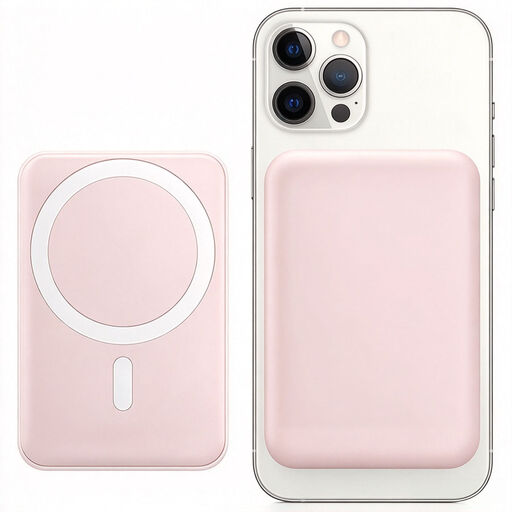
If your light charges via a cable, check that the power bank has the output you need.
The product title lists 10.000 mAh, 15 W fast charging and magnetic wireless charging.
 No image available
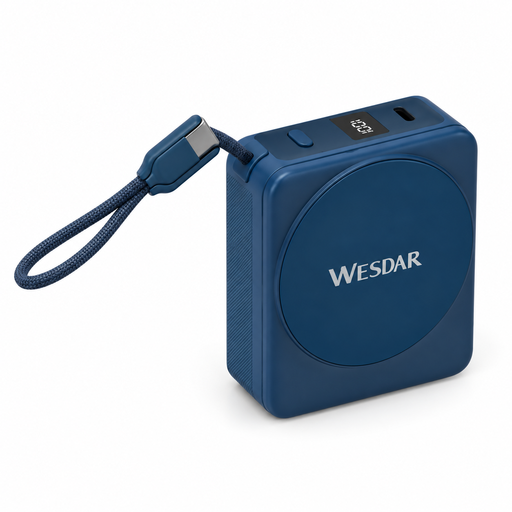
The built-in USB-C cable may be useful if it’s compatible with your light. Check the light’s charging instructions.
The product title lists 10.000 mAh, 22,5 W wired fast charging and 15 W wireless charging.
 No image available
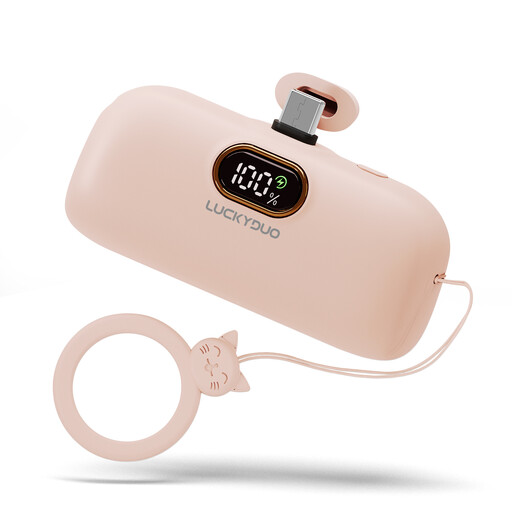
This model may suit you if you’re looking for a compact USB-C power bank. Check that its connection matches your light.
The product title lists a capacity of 5.000 mAh.
 No image available
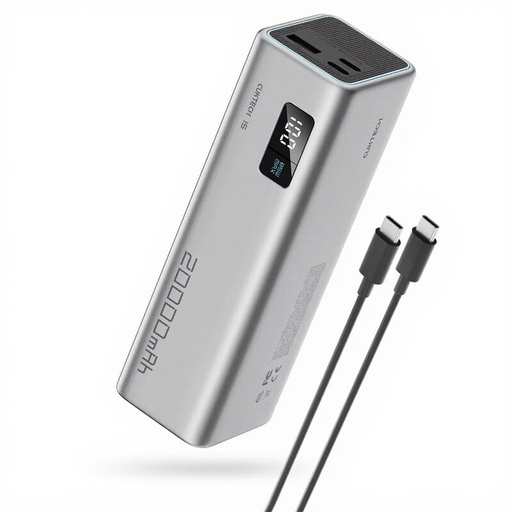
The three outputs may be useful if you want to connect several devices. Check the shared power available when they’re used at the same time.
The product information lists 20.000 mAh, 65 W and three outputs: two USB-C and one USB-A.
 No image available
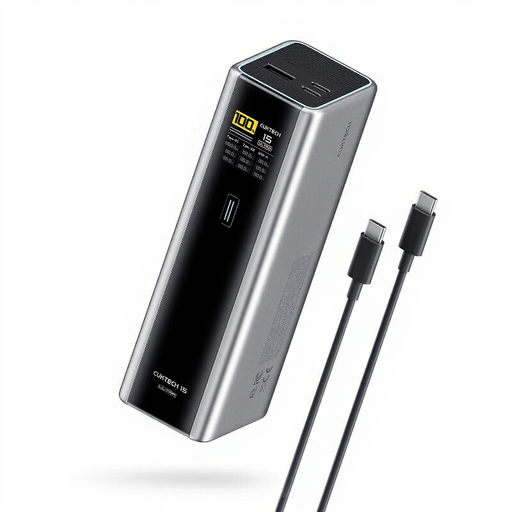
The three USB-C ports may be useful if you want to connect several devices with that connection type. Check that they’re compatible with your light and cable.
The product title lists 20.000 mAh and 140 W.
Compare your light’s connection and charging instructions with the power bank’s output and cable. Some small Lezyne lights have a USB connector that plugs straight into a port; others, for example, use micro-USB. Don’t assume all bike lights use the same connection.
Automatic shut-off can interrupt charging for a device with a low power draw. Anker says a special mode may help on models that support it. Check the specifications for the exact model and whether your light keeps charging.
Don’t assume that you can. The CatEye TL-LD700-R/F manual warns against exposing the light to vibration while it’s charging. Follow the instructions for your own light and make sure it works while you’re on the road.
According to ACM ConsuWijzer, online purchases generally come with a statutory 14-day cooling-off period from delivery, with some exceptions. The seller must also offer a solution if a product used normally doesn’t meet what you could reasonably expect; the statutory guarantee isn’t automatically limited to two years.
Yes, separate lights are permitted. According to the Dutch government, cyclists must use a front and rear light in the dark and when visibility is poor; the required reflectors are also still needed. How you charged the lights doesn’t change those rules.