First, choose a power bank with an output and cable that match your USB bike light. If the light draws very little power and may stop charging prematurely, check whether the power bank manufacturer specifies a low-current mode. Extra capacity or ports are most useful if you also want to use the power bank on the go or charge other devices. Leave your equipment uncovered while it charges.
Who is this relevant to?
The cyclist working from home with one USB light
Wants to charge the light before setting off and is mainly looking for a suitable output, cable and clear space on the desk. The Cateye manual specifies a USB-C cable for one particular light model; check the connection on your own light.
User of a small USB light
Wants to avoid a light with low power consumption stopping charging prematurely. Anker specifies a low-current mode for the 313 Power Bank, but this is no guarantee that it will work with every bike light.
Cyclist who also wants to charge devices on the go
Weighs up extra capacity and connections against size if the power bank needs to be carried or used to charge another device too. Which? highlights performance, portability and ease of use as factors to consider when comparing power banks.
What should you look for when buying?
First, check that the light, cable and output are compatible. Then decide whether you mainly need a suitable place to charge, extra capacity or a second connection.
| What to consider |
What should you check? |
Who is this most relevant to? |
| Connection and charging behaviour |
Compare your light’s charging port and required cable with the power bank’s output. Only look for a low-current mode if your light does not keep charging. |
If I want to charge my light before setting off, I first need to know whether the plug and output really match. Around 36% of consumers prioritise compatibility. |
| Safe charging on your desk |
Follow the instructions, check the cable and casing for damage, and choose a clear space with no paper or fabric around it. |
If you leave your equipment charging while working from home, you’ll want a clear space where heat can escape. Around 29% of consumers prioritise safe indoor charging. |
| Capacity and size |
Decide how much reserve you need between charges, then compare capacity, dimensions and weight. Don’t use the mAh figure alone to estimate a set number of charges for your light. |
If I also want to carry the power bank, I weigh up extra capacity against its size. Around 21% of consumers prioritise capacity and portability. |
| Two devices and charging status |
Check the number of outputs, which cables you need and what the manufacturer says about charging devices simultaneously. |
If you want to charge another device as well as your light, look for an extra output and a visible charging status. Around 14% of consumers put these features first. |
Common buying mistakes
-
Assuming every USB-C port supplies power
According to Anker, the USB-C port on the Anker 313 Power Bank is input-only. So just because the plug fits, it doesn’t automatically mean you can charge your light through that port.
Check whether each port is marked as an output, and compare it with the connection on your light.
-
Assuming 10,000 mAh means a set number of charges
The stated capacity doesn’t tell you how many times it can charge an unspecified bike light. The usable energy also depends on conversion losses and the light itself.
Use the mAh figure to compare models in general, not as a guarantee of a specific number of charges.
-
Assuming the supplied USB-C cable fits every light
The Belkin BoostCharge BPB027hqWH comes with a USB-C/USB-C cable. It won’t connect directly to a light with, for example, a Micro-USB port or an integrated USB-A plug.
Check both ends of the connector before buying. If your light has a different connection, you may need another suitable cable.
-
Charging among papers or underneath fabric
The Fire and Rescue Service advises placing chargers in a clear space so heat can escape, and warns against damaged cables and misshapen batteries.
Set up a clear charging space, and don’t use a damaged cable or misshapen battery.
Brands to consider for this choice
Anker
The Anker 313 Power Bank (PowerCore 10K) is worth considering if you’re looking for a power bank whose manufacturer specifies a low-current mode.
- Anker specifies a trickle-charging mode for this model, for devices with low power consumption.
- According to Anker, the USB-C port is input-only. The manufacturer does not guarantee that the mode will work with bike lights.
Trust
According to Trust, the Trust Primo 24678 offers different types of output for anyone using cables for several USB devices.
- Trust specifies two USB-A outputs and one USB-C connection.
- Trust specifies up to 15 W via USB-C and 12 W via USB-A. Charging speed varies by device, so check the exact model.
Xtorm
The Fuel Series 5 FS5100 is worth considering if you want to connect several wired devices.
- For this version, Xtorm specifies 10,000 mAh, two USB-C ports and one USB-A port.
- The stated maximum of 20 W on the USB-C-PD port does not mean that a bike light draws 20 W.
Belkin
According to Belkin, the BoostCharge BPB027hqWH combines USB-C connections, a detachable cable and a display.
- Belkin specifies up to 20 W through one port and a display showing charging status.
- When both ports are in use, Belkin specifies a maximum shared output of 15 W. The supplied USB-C/USB-C cable won’t connect directly to every bike light.
Samsung
The Galaxy 25W Battery Pack EB-P3400XUEGEU is an example of a model with two charging ports.
- Samsung specifies 25 W when one device is connected.
- When two devices are connected, Samsung specifies up to 9 W per device.
Power banks at Joybuy
These power banks have a range of connections and features. Always check that the output and cable you choose match the exact model of your bike light.
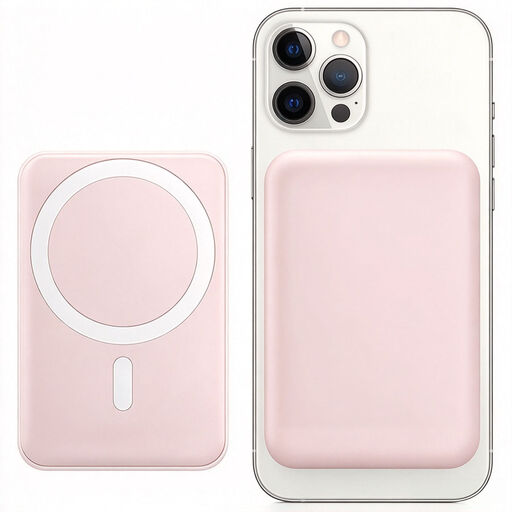 Image unavailable
10,000 mAh power bank with 15 W and wireless charging
This power bank offers wired and wireless charging. Check that its wired output and cable are compatible with your bike light.
10,000 mAh; 15 W; wireless charging; magnetic phone stand.
Joybuy
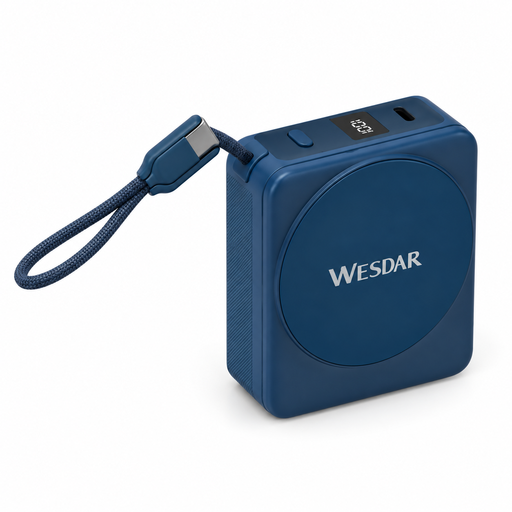 Image unavailable
10,000 mAh magnetic power bank with integrated USB-C cable
The integrated USB-C cable may be suitable if it matches your light’s connection. Check this for the exact light model.
10,000 mAh; up to 22.5 W wired charging; 15 W wireless charging; digital display.
Joybuy
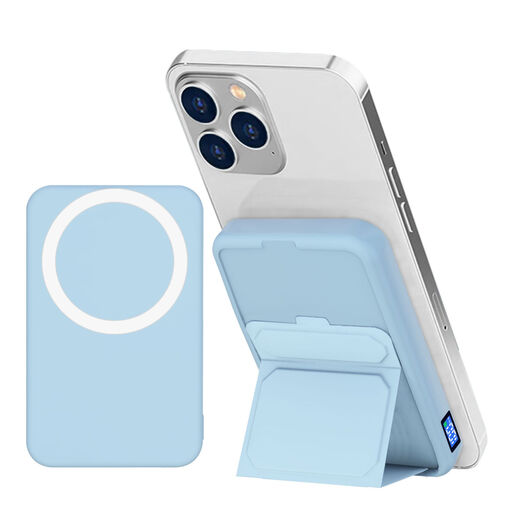 Image unavailable
10,000 mAh magnetic wireless power bank, PD 22.5 W
This model offers wireless charging and a folding phone stand. Check separately whether its wired connection is suitable for your light.
10,000 mAh; PD 22.5 W; wireless charging.
Joybuy
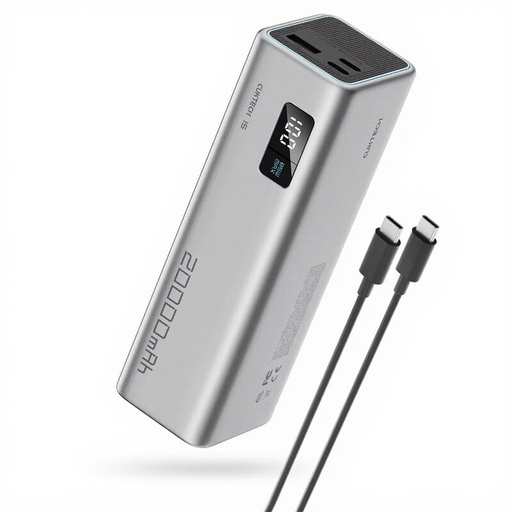 Image unavailable
CUKTECH 15 SE Power Bank, 20,000 mAh, 65 W, grey
Worth considering if you want to connect other devices as well as your bike light. Check which ports and cable your light requires.
20,000 mAh; 65 W; three ports.
Joybuy
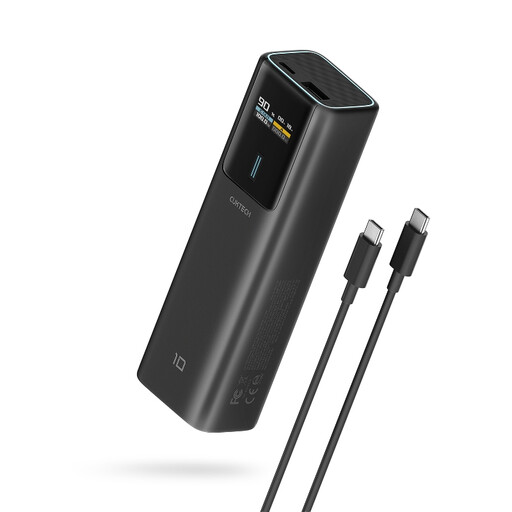 Image unavailable
CUKTECH 100W Power Bank, 10,000 mAh with TFT display
The display is an extra feature to consider. For your light, check that the output and charging cable are compatible.
10,000 mAh; up to 100 W via USB-C; TFT display; black.
Joybuy
Frequently asked questions
How can you tell if your bike light can be charged with a power bank?
Check the charging port, cable and charging instructions for your exact light. The manual for one specific Cateye model specifies a USB-C cable and a charging time of around four hours at 1 A. These details won’t necessarily apply to other lights.
Do you always need to use a special low-current mode?
No, only look for one if your light doesn’t keep charging. Anker specifies this mode for the 313 Power Bank, but that doesn’t guarantee compatibility with every bike light.
How many times can a 10,000 mAh power bank charge your light?
You can’t work this out from the nominal capacity alone. The number of charges also depends on the usable energy and the exact light model, so use the mAh figure to compare models in general.
Where should you place the light and power bank while they’re charging?
Follow the instructions and leave the equipment uncovered so heat can escape. The Fire and Rescue Service advises against charging underneath a pillow or blanket, and warns against damaged cables and misshapen batteries.


