
Student with a USB bike light
You want to charge your light before setting off. The light’s connection determines which port and cable will work.


Start by checking that your bike light works with the power bank’s wired USB port and cable. If the light stops charging prematurely, a low-current charging mode may help, but only if it’s confirmed for the power bank model you choose. Then compare the usable energy reserve with the size and weight, and charge the power bank in your room in line with Fire and Rescue Service safety advice. The stated mAh capacity alone won’t tell you how many times you can recharge it.
You want to charge your light before setting off. The light’s connection determines which port and cable will work.
You want to know whether the power bank will keep charging when the light draws very little power. A low-current charging mode is only relevant if the model you choose supports it.
You want to charge safely using undamaged cables and leaving enough space around the charger, and work out how much reserve you really need.
| What to consider | What should you check? | Who is this important for? |
|---|---|---|
| Compatible port and cable | Check your light’s charging port and recommended power supply, the power bank’s port and the cable supplied. | I want to make sure the cable and port work with my light before setting off. Around 33% of consumers prioritise this connection. |
| Safe charging in your room | Use undamaged cables and chargers. Keep the charger uncovered and don’t charge it under a pillow or duvet. | I want to charge my power bank somewhere the charger can release heat. Around 27% of consumers prioritise safe charging. |
| Low-current charging | Check whether the light keeps charging from a standard USB port. If charging stops, consult the power bank’s manual. | I want to stop a small light switching off while it charges. Around 27% of consumers prioritise uninterrupted charging for a small light. |
| Energy reserve and size | Where possible, compare Wh or output capacity on the same basis, and take weight and dimensions into account. | I want to recharge less often or charge another device too. Around 13% of consumers prioritise energy reserve. |
Energy is lost when the internal battery voltage is converted to the USB output. So the stated mAh capacity doesn’t tell you how many full charges you’ll get.
Where possible, compare Wh or stated output capacity on the same basis. Don’t calculate an exact number of charges without information about both the light and the power bank.
Power banks vary in their port layouts and the cables supplied. A USB-C connection alone doesn’t confirm that you can charge your light with it.
Check your light’s connection and charging instructions, what the power bank port is designed for, and which cables are included with the exact model.
The Fire and Rescue Service advises placing a charger somewhere uncovered so it can release heat.
Don’t charge it under a pillow or duvet, and don’t use damaged cables or counterfeit chargers.
A full battery doesn’t mean your lights are being used correctly. The Dutch Government says your front and rear lights must be on when cycling in the dark or in poor visibility.
Before setting off, check that your front and rear lights work, and consult the Dutch rules on bike lights.
One example to compare when checking model-specific support for small USB devices.
The BoostCharge 10.000mAh BPB011btBK is a model you can use to compare USB-A and USB-C connections.
The Fuel Series 5 FS5103U is an example with both USB-A and USB-C.
The Galaxy 25W Battery Pack EB-P3400XUEGEU is an example to compare if you also want to charge another device via USB-C.
These Joybuy products are power banks you can compare by capacity, ports and connections. Check whether the specific model works with your bike light.
 No image available
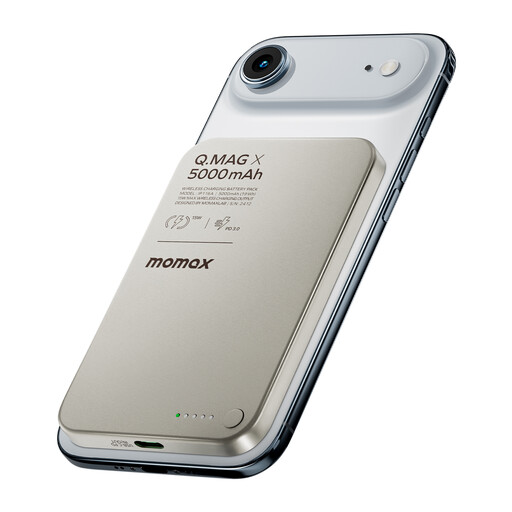
The product name mentions wireless charging; check whether this model also has a wired USB output that works with your bike light.
Stated capacity: 5000mAh.
 No image available
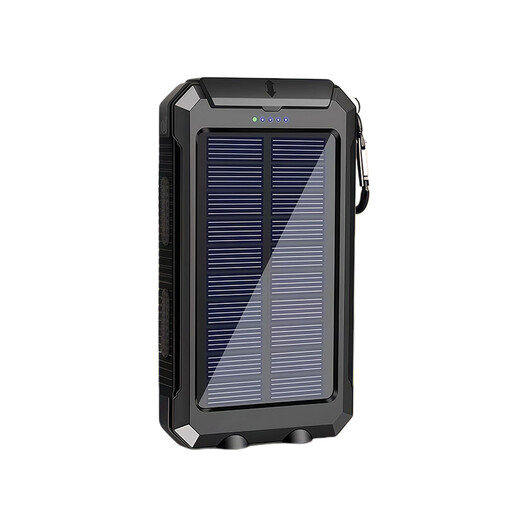
This model is listed as a USB power bank. Check which port and cable will work with your bike light’s connection.
Stated capacity: 10.000 mAh.
 No image available
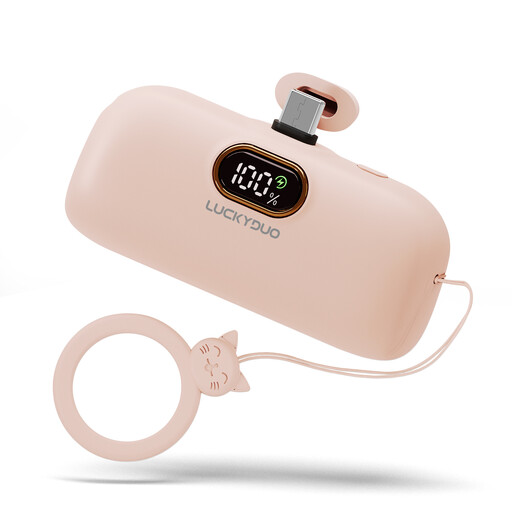
The product name mentions USB-C; check whether the connection and cable are suitable for your bike light.
Stated capacity: 5000 mAh.
 No image available
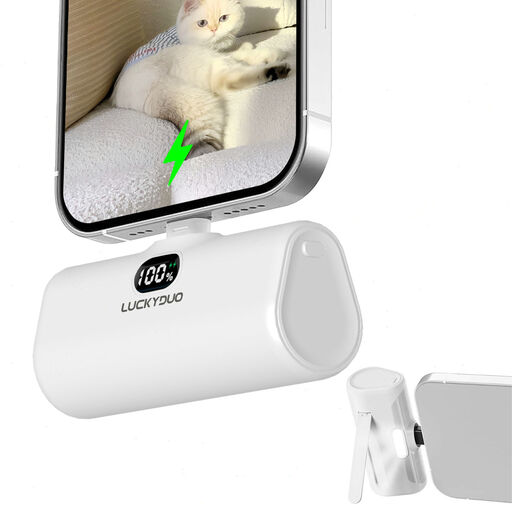
The product name mentions a built-in Lightning cable. Check whether it also has a port that works with your bike light’s cable.
Stated capacity: 5000mAh.
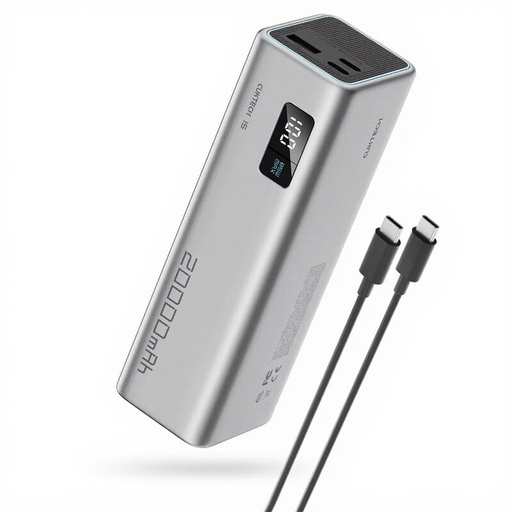 No image available
This model is designed to offer a larger energy reserve; check which port and cable will work with your light.
Stated capacity: 20.000 mAh. The product name mentions 65 W and three ports.
Don’t choose based on maximum wattage alone. First check your light’s connection and charging instructions. If charging stops when the light draws very little power, a low-current charging mode confirmed for the exact power bank model may be useful.
The Fire and Rescue Service advises placing the charger somewhere uncovered so it can release heat. Don’t charge it under a pillow or duvet, don’t use damaged cables or counterfeit chargers, and follow your power bank’s manual.
No. The mAh capacity doesn’t directly show how much energy is available via USB, because energy is lost during conversion. To work it out, you also need the light’s energy requirements and the power bank’s usable output specifications.
The charging method isn’t what matters: the Dutch Government says your front and rear lights must be on when cycling in the dark or in poor visibility. It also says you’re allowed to use separate lights.
Under Dutch consumer law, you’re entitled to a legal guarantee if a product doesn’t perform as you could reasonably expect under normal use. The seller must then offer a solution in line with the applicable terms, according to ACM ConsuWijzer. Online purchases also generally come with a 14-day cooling-off period from delivery, subject to legal exceptions, according to the Netherlands Authority for Consumers and Markets.