Who is this choice relevant to?

Student who wants to charge without a mains socket

You use your portable speaker in different places and want to check first that the charging connection is compatible. For example, Sony states that the USB-C port on the SRS-XB100 is for charging only.

Student who needs power for longer

You want to charge your speaker, and possibly a second device too, before you can plug the power bank back into the mains. A stated mAh figure won’t tell you how many times it will charge a particular speaker.

Student who wants an easy choice

You’re weighing up a compact power bank against charging from an available mains socket. The Consumentenbond compares power banks on factors including the energy they actually deliver, charging speed and portability.

What should you look for when choosing?

Charging from a mains socket

Best for: you usually use your speaker in one place and can charge it there.

The trade-off: you don’t need an extra battery, but you’re tied to the location of the mains socket.

Compact wired power bank

Best for: you want to charge occasionally without a mains socket, and portability matters.

The trade-off: a lower stated capacity than larger models doesn’t, by itself, tell you how many speaker charges you’ll get.

Power bank with greater capacity or more ports

Best for: you want to charge for longer without a mains socket or connect another device as well as your speaker.

The trade-off: check the output when using multiple devices at once; the stated maximum may only apply when one device is connected.

What to consider What should you look for? Who should pay particular attention?
Charging connection Check the charging input and requirements of your exact speaker model, then compare them with the power bank’s output and cable. If you want to charge your speaker without a mains socket, you’ll want to check first that the plug and output are compatible. This is the top priority for around 36% of consumers.
Usage time Compare the capacity of different models and, where available, look at measurements of the energy they actually deliver. Don’t use these to calculate an exact number of speaker charges. If you want to charge your speaker for longer or more often without a mains socket, look at the energy reserve without assuming a particular number of charges. Usage time is the main concern for around 29% of consumers.
Cost First work out how often you’ll need to charge without a mains socket. Then consider how many ports you need and whether you’ll need a separate cable. If a mains socket is usually available, you’ll want to know whether an extra battery will make a difference for the way you use your speaker. This is the main consideration for around 21% of consumers.
Portability Compare the dimensions and weight of different models, and check whether a suitable cable is built in or easy to take with you. If you’ll also take the power bank away from your usual spot in your room, portability matters. Around 14% of consumers put portability first.

Common pitfalls

  • Assuming the mAh figure tells you how many times it will charge your speaker

    The energy actually delivered can differ from the stated figure, and charging requirements vary from one speaker to another. The Consumentenbond measures how much energy power banks actually deliver.

    Use mAh to compare specific models, but don’t count on a set number of charges unless you have suitable figures for both the power bank and your speaker.

  • Assuming a built-in USB-C cable will fit every speaker

    A fixed cable will only work if its connector matches your speaker’s charging input.

    Check the connection on your exact speaker model before choosing between a built-in cable and separate ports.

  • Assuming the highest wattage guarantees faster charging

    The maximum output can depend on how many devices are connected. Samsung states that the EB-P4520’s 45 W maximum only applies when one device is connected.

    Compare your speaker’s charging requirements with the output available from the port you plan to use and in your chosen setup.

  • Leaving a power bank charging unattended on your bed overnight

    Brandweer Nederland warns of fire risks from issues including damage, moisture and short circuits. Charging while you sleep makes it harder to keep an eye on it.

    Follow the manufacturer’s instructions and charge it somewhere safe where you can keep an eye on it. Don’t use a damaged or wet battery without care.

Brands to consider

Trust

Trust describes two wired options: the Fiera, with a fixed USB-C cable and an extra USB-C port, and the Avala, with USB-C and two USB-A ports.

  • The listed connections give you a useful starting point if you’re looking for cable convenience or multiple ports.
  • Check that the fixed connector fits and see what output is available from each port when charging multiple devices at once. Manufacturer specifications don’t tell you how many times a speaker will charge.

Fresh 'n Rebel

The manufacturer describes the Powerbank 12000 mAh Storm Grey as having a USB-C port that can also be used as an output, as well as a USB port.

  • The listed connections provide a wired charging option for compatible devices.
  • The manufacturer lists 20 W Power Delivery; this doesn’t establish the charging speed for any particular speaker.

Samsung

Samsung describes the EB-P4520XUEGEU as a 20,000 mAh Battery Pack with three ports.

  • The three ports may be useful if you want to connect other compatible devices as well as your speaker.
  • Samsung states that the 45 W maximum only applies when one device is connected. Check that it’s compatible with the way you plan to use it.

Anker

Anker lists the PowerCore 10000 as having a capacity of 10,000 mAh, 36 Wh and an output of 5 V/2,4 A.

  • The stated capacity and output give you specific points to compare with other models.
  • Anker warns that a device requiring an input above 2,4 A may charge slowly or not at all. This limit applies to this model, not all Anker power banks.

Joybuy products for wired charging

These products are portable power banks for wired charging. Check that each model’s connection and charging requirements are compatible with your speaker.
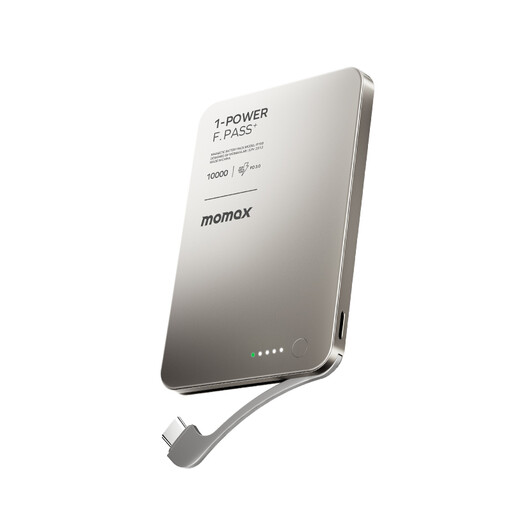
MOMAX 1-Power F.Pass+ power bank, 10,000 mAh

MOMAX 1-Power F.Pass+ power bank, 10,000 mAh

Could suit you if you want to charge without a mains socket. Check that the fixed USB-C cable fits your speaker’s input.

10,000 mAh; built-in USB-C cable; additional USB-C and USB-A outputs.

View at Joybuy
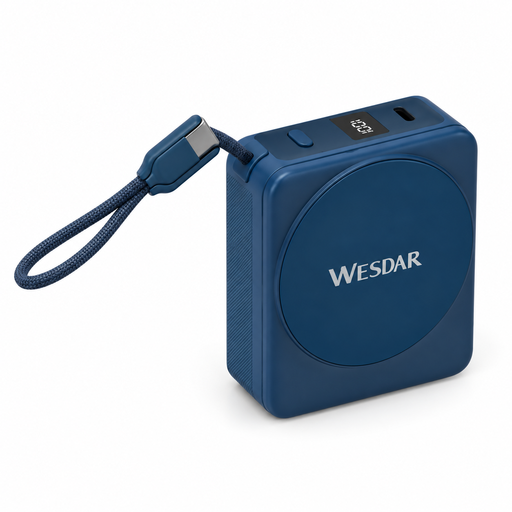
Magnetic power bank with built-in USB-C cable, 10,000 mAh, dark blue

Magnetic power bank with built-in USB-C cable, 10,000 mAh

An option to compare if you’re looking for a built-in cable. Check that the USB-C connection fits your speaker.

10,000 mAh; wired charging up to 22,5 W; wireless charging listed up to 15 W; dark blue.

View at Joybuy
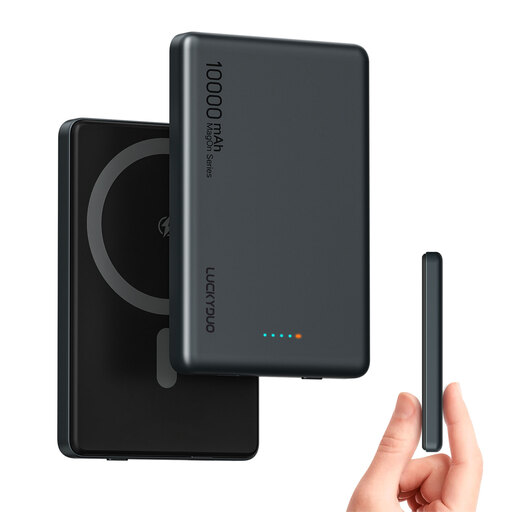
Magnetic power bank, 10,000 mAh, with two USB-C PD ports

Magnetic power bank, 10,000 mAh, dual USB-C PD 20 W

Could suit you if you want to charge via USB-C. Check your speaker’s charging requirements and how the port you choose performs.

10,000 mAh; two 20 W USB-C PD ports.

View at Joybuy
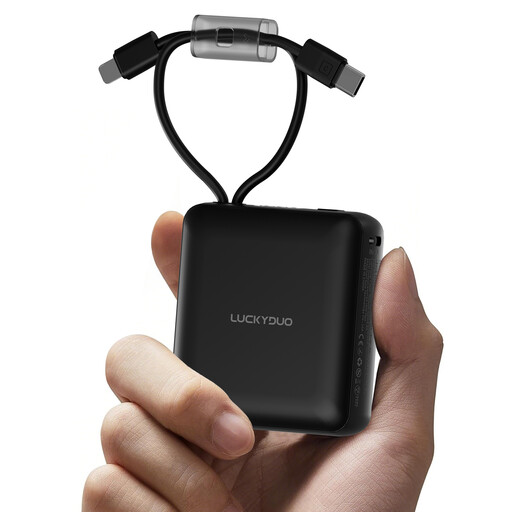
Ultra-compact power bank, 10,000 mAh, with two built-in cables

Ultra-compact power bank, 10,000 mAh, 2 built-in cables

Could suit you if you want to take cables with you without packing them separately. Check that the built-in Type-C cable fits your speaker.

10,000 mAh; two built-in cables, including a Type-C cable; LED display.

View at Joybuy
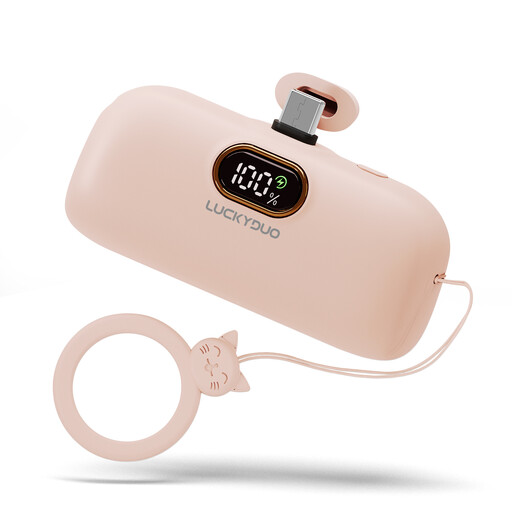
Mini USB-C power bank, 5,000 mAh

Mini USB-C power bank, 5,000 mAh

Could be worth considering if portability matters. Check that the USB-C connection and charging requirements are compatible with your speaker.

5,000 mAh; USB-C connection.

View at Joybuy

Frequently asked questions

Can any power bank charge my portable speaker?

No. Check your exact speaker model first. Compare its charging input and requirements with a suitable output and cable. For example, Sony states that the USB-C port on the SRS-XB100 is for charging only.

How can I charge a power bank safely in my student room?

Follow the manufacturer’s instructions and charge it somewhere safe where you can keep an eye on it. Brandweer Nederland warns of fire risks from issues including damage, moisture and short circuits. Charging while you sleep makes it harder to keep an eye on it.

What if the power bank doesn’t work properly after I buy it?

If there’s a fault, contact the seller: according to the Dutch Government, they must provide a solution. There is no set statutory guarantee period for all products in the Netherlands. For an online consumer purchase covered by the rules, you’ll usually also have a 14-day cooling-off period. Check the terms that apply to your purchase.

Can I put an old power bank in my general waste?

No. The Dutch Government says batteries must not go in the bin. If your power bank has a built-in battery, ask your local collection point how to dispose of it if needed.

Does the new European USB-C rule for chargers already apply to this power bank?

The European Commission gives 14 December 2028 as the start date for the new requirements described for external power supplies and USB-C cables, among other things. That date and description don’t prove that every provision applies to every standalone power bank. Check the rules that apply to the specific product.
