
Speaker owners who want to be sure they can recharge
You’ll want to check first that the power bank’s output and cable meet your speaker’s power requirements.


First, check your speaker’s manual to see which connection and power supply it needs, then compare these with the power bank’s output and cable. Next, choose the capacity and size based on how often you want to recharge and whether you’ll be carrying the power bank with you. The Consumentenbond notes that larger power banks can generally charge devices more often, but are also bigger and heavier.
You’ll want to check first that the power bank’s output and cable meet your speaker’s power requirements.
You want to recharge your speaker more often during your stay and are weighing up extra capacity against size and weight.
You’re looking for a bit of extra power for the patio or a day out, without automatically choosing the biggest battery.
First, check that the connection and power supply are suitable for your speaker. Then work out how much extra capacity you need and how much weight you’re happy to carry.
| What to consider | What to look for | Who should pay particular attention? |
|---|---|---|
| Connection and charging compatibility | Compare the specified connection, power supply and cable for your exact speaker model with the power bank’s output. | If my speaker has specific power requirements, I want to be sure the combination is suitable; around 36% of consumers prioritise compatibility. |
| Usable capacity | Use capacity as a point of comparison, but don’t assume that the mAh figure translates directly into a guaranteed number of speaker charges. | If I want to charge my speaker more often during my stay, extra capacity matters more than having the smallest possible power bank; around 29% of consumers prioritise charging capacity when choosing. |
| Size and portability | Compare the weight and dimensions with the capacity you need, particularly if you’ll be taking the power bank outdoors. | If I’m taking my speaker to the patio or on a day out, I don’t want to carry more weight than necessary; around 21% of consumers prioritise portability. |
| Charging multiple devices | Check the number and type of outputs, as well as the available power, when connecting several devices at once. | If I want to connect another device as well as my speaker, I check the specifications for simultaneous use; around 14% of consumers prioritise charging multiple devices. |
The stated capacity doesn’t tell you directly how many times you can charge your speaker. The Consumentenbond also looks at the amount of power banks actually deliver.
Use capacity to compare models in broad terms, and check independent test results and your speaker’s battery specifications where available.
Power requirements vary by speaker model. The stated peak power may also depend on how many devices are connected.
Compare your speaker’s manual with the power bank’s individual output specifications, and check which cables are included.
A larger power bank may offer more capacity, but it generally takes up more space and weighs more. That can be inconvenient if you’re taking your speaker with you.
First decide how often you want to recharge, then compare the weight and dimensions.
The Primo range includes examples with 10,000 mAh and 20,000 mAh, making it useful for comparing capacity and connections.
The EB-P4520XUEGEU is a useful point of comparison if you also want to connect other USB-C devices.
Anker is another brand to consider when comparing wired charging options.
This selection includes power banks with a range of capacities and connection options. Always check your speaker’s charging connection, power requirements and the cable supplied.
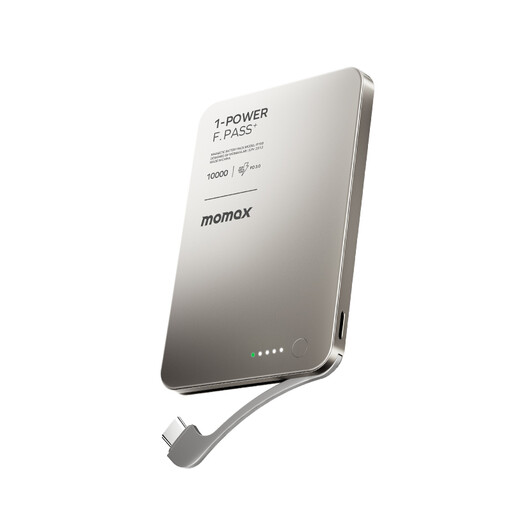 No image available
A compact option to take with you. Check that the built-in USB-C cable is compatible with your speaker’s charging connection and power requirements.
10,000 mAh; built-in USB-C cable; 20 W PD via the cable and charging for up to three devices at once, according to the product description.
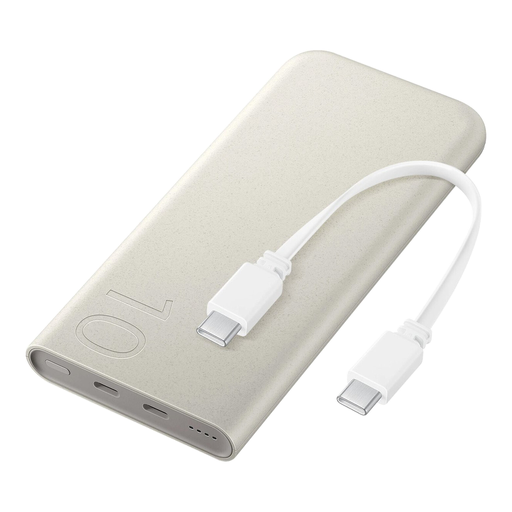 No image available
An option to compare if you want to connect other devices as well as your speaker. Check the wired output for your speaker.
10,000 mAh; integrated USB-C cable; up to 25 W wired, 7.5 W wireless and support for up to three devices at once, according to the product description.
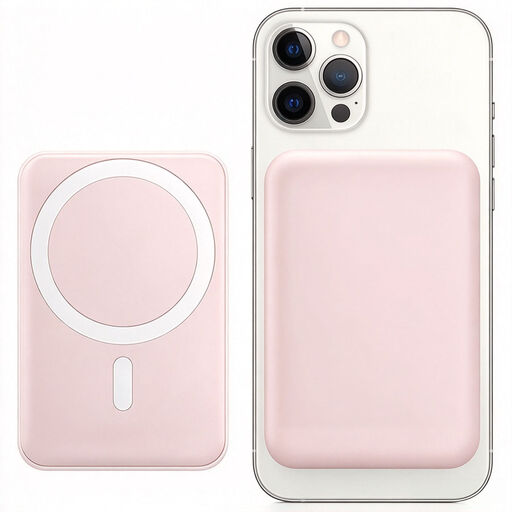 No image available
If you’re considering this model for a speaker, compare its wired output only. Wireless phone charging doesn’t determine whether it will work with your speaker.
10,000 mAh; 15 W fast charging; wireless charging and a magnetic phone stand, according to the product title and description.
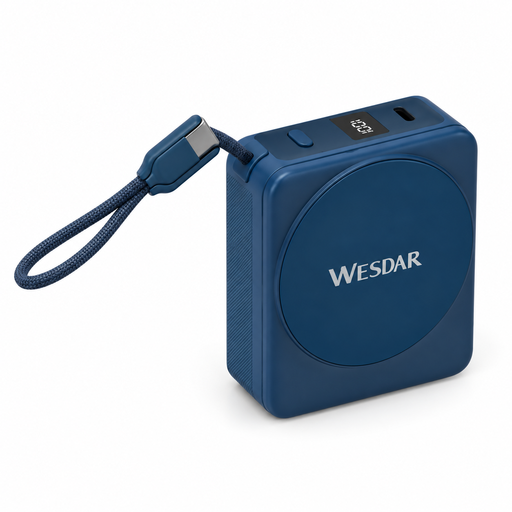 No image available
A compact capacity option to compare. Check that the built-in USB-C cable and output are suitable for your speaker.
10,000 mAh; 22.5 W fast charging; 15 W wireless charging; integrated USB-C cable and digital display, according to the product title.
 No image available
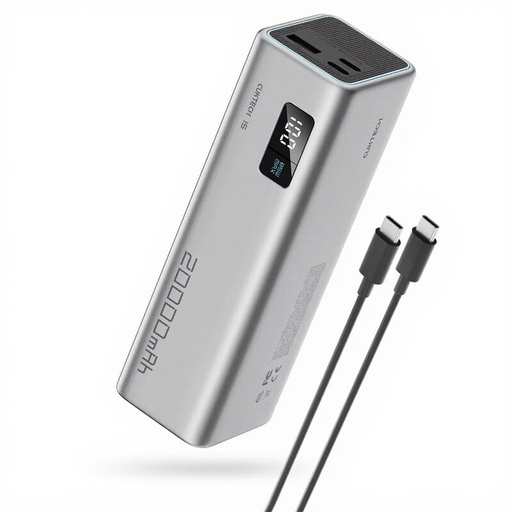
A higher-capacity option if you want to recharge more often. Bear in mind its size too if you’ll be taking the power bank with you.
20,000 mAh; three ports: two USB-C outputs and one USB-A output, according to the product description.
No. Matching connector shapes alone don’t prove that the combination is suitable. Check your speaker model’s power requirements and the power bank’s output. Sony lists specific conditions for the SRS-XB501G, including circumstances in which the supplied mains adapter is required. These conditions don’t automatically apply to other speakers.
Follow the instructions for use, and avoid damage and exposure to moisture. The Dutch Fire Service highlights the risk of fire from issues including short circuits, damaged batteries and batteries exposed to moisture.
If a product breaks down sooner than expected under normal use, you may be entitled to a remedy under your statutory guarantee. ACM ConsuWijzer says the retailer must then provide a solution free of charge; there isn’t one fixed statutory guarantee period that automatically applies to every product.
No. A CE mark doesn’t confirm that the output is suitable for your speaker. The Netherlands Food and Consumer Product Safety Authority (NVWA) states that testing isn’t mandatory for most consumer products, so also check your speaker’s power requirements and the power bank’s output specifications.
Don’t put the battery in your general waste. The Dutch government lists places including shops that sell batteries and local authority collection points. If in doubt, ask whether the collection point accepts your complete power bank.