
Vandaag of morgen in huis

Kwaliteit gegarandeerd

Welkomstaanbiedingen ontgrendelen: GRATIS bezorging | Tot 80% korting | Gratis 30 dagen JoyPlus-proefperiode
Download de app
A dead battery always strikes at the worst moment. Whether you're on your way to an important meeting, travelling, or just having a long day, a reliable power bank is no longer a luxury. But the market is flooded with models promising the world, and many of these promises lead to buyer's remorse. Before you invest in a new portable battery, it's helpful to know the most common pitfalls.
This guide will help you cut through the marketing jargon and choose a portable charger that actually delivers on its promises.
To avoid a bad purchase, focus on a few concrete specifications. These determine whether a power bank is right for your needs.
The capacity of a power bank, expressed in milliampere-hours (mAh), indicates how much energy it can store. But as mentioned, the effective capacity is lower. A good rule of thumb is to multiply the advertised capacity by about 0.65 for a realistic estimate.
Charging speed is expressed in Watts (W). The higher the wattage, the faster your device will charge, provided it supports it. Look for the following standards for fast charging power banks:
Always check that the output wattage and protocol of the power bank match what your device can handle.
The right ports are crucial. A model with both USB-C and USB-A ports offers the most flexibility. Additionally, there are other useful extras:
Based on clear specifications and practical use cases, we have selected a few models that suit different needs.
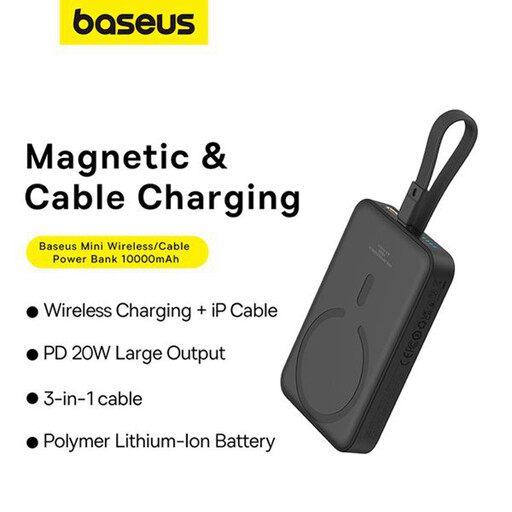
Why This Fits Their Persona: Perfect for those seeking a compact, cable-free solution. The 10,000mAh capacity is more than enough for a day on the go, and the MagSafe feature makes charging an iPhone effortless. Fits easily in a jacket pocket or small bag.
This power bank is specifically designed for MagSafe, with a clear 15W output for wireless charging. No vague claims, just a targeted feature that works as expected.
Magnetic and wireless charging for compatible iPhones. Compact and lightweight design.
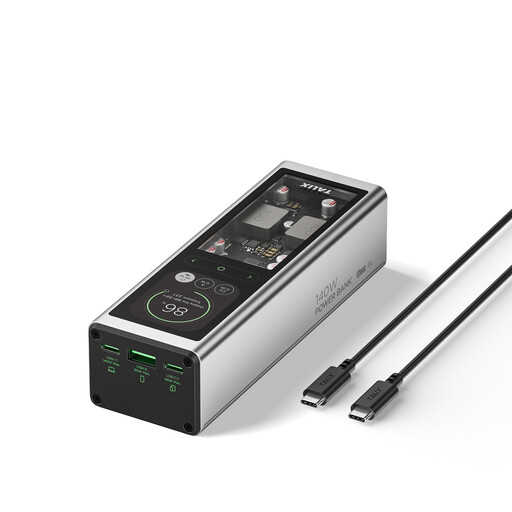
Why This Fits Their Persona: For professionals, students, or travellers who need to power their laptop, tablet, and phone on the go. The 20,000mAh capacity and extremely high 140W output make this a powerhouse for demanding devices.
This power bank precisely specifies the 140W PD 3.1 standard, the latest in fast-charging technology. Its smart display shows real-time power information, which eliminates guesswork.
Charges high-end laptops (like a 16-inch MacBook Pro) at high speed. Three ports to charge multiple devices simultaneously.
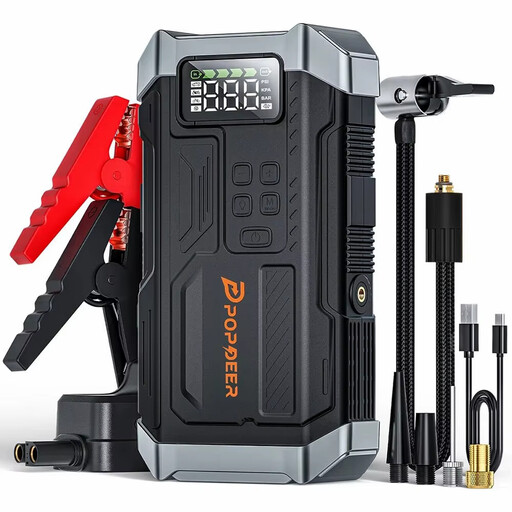
Why This Fits Their Persona: This is more than a power bank; it's a complete emergency kit for your car. Ideal for anyone who wants to be prepared for a dead battery or a flat tyre without cluttering the trunk with separate gear.
This device clearly positions itself as a jump starter with a power bank function, not the other way around. The specifications are focused on automotive use (5000A peak current, 150PSI compressor) and are not vague.
Four-in-one functionality: jump starter, air compressor, power bank, and flashlight. Powerful enough for large petrol and diesel engines.
We have compiled a complete, up-to-date list of products that fully meet these strict selection criteria and safety regulations.
This depends on your phone's battery capacity. Expect an efficiency loss of about 30-40%. In practice, a 10,000mAh power bank delivers around 6,000 to 7,000 mAh. If your phone has a 4,000mAh battery, you can charge it about one and a half times.
Yes, modern fast charging power bank technologies like Power Delivery are designed to communicate with your device. The power bank and your phone or laptop negotiate the safest, maximum power output. Your device will never draw more power than it can handle.
Yes, but there are strict rules. Power banks must be carried in your carry-on luggage, not in checked luggage. Most airlines have a limit of 100 Wh (watt-hours), which is equivalent to about 27,000 mAh. Always check your airline's specific rules before you fly to avoid any issues at the airport.
