What should you look for when buying?
Start by checking your speaker’s connection and power requirements. Then work out how much energy you need, and only after that consider extra outputs or portability. The Consumers' Association compares factors including the power a power bank actually delivers and its charging speed.
| What to consider |
What should you check? |
Who is this important to? |
| Connection and compatibility |
Check the charging port, cable and power requirements for your exact speaker model. |
I want to make sure my speaker can charge through the port and cable I choose. Around 33% of consumers put compatibility first. |
| Usable energy reserve |
Match the reserve you need to your speaker and the time you’ll be away from a socket; a mAh figure doesn’t guarantee a set number of charges. |
If I’ll be away from a socket for a long time, I want enough reserve without relying solely on the figure on the packaging. Around 33% of consumers prioritise a long-lasting energy reserve. |
| Multiple devices |
Check the number of outputs and the total power available when charging multiple devices at once. |
I want to connect my speaker and phone at the same time when sockets are limited. Simultaneous charging is the top priority for around 25% of consumers. |
| Portability and cables |
Consider the size and weight, and whether a built-in cable is compatible with your speaker. |
If I carry my power bank around often, I want a compact model and, ideally, no unnecessary loose cables. Portability comes first for around 9% of consumers. |
Power banks at Joybuy
The products below are portable power banks. For each model, check that the available wired output and cable are compatible with your speaker’s charging port.
 No image available
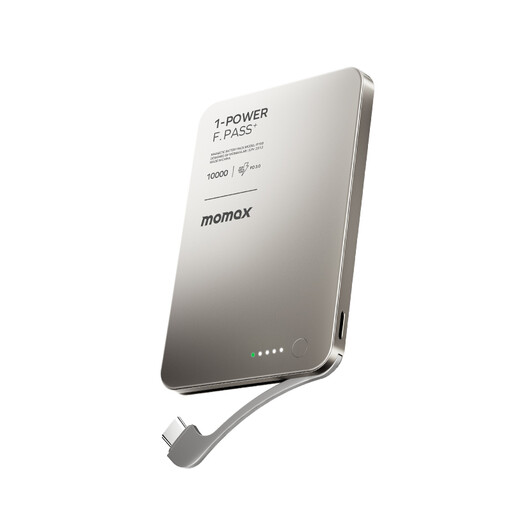
MOMAX 1-Power F.Pass+ Ultra-Slim Power Bank, 10,000 mAh
The built-in USB-C cable can save you carrying a separate cable if your speaker has a compatible USB-C input.
Capacity: 10,000 mAh.
View at Joybuy
 No image available
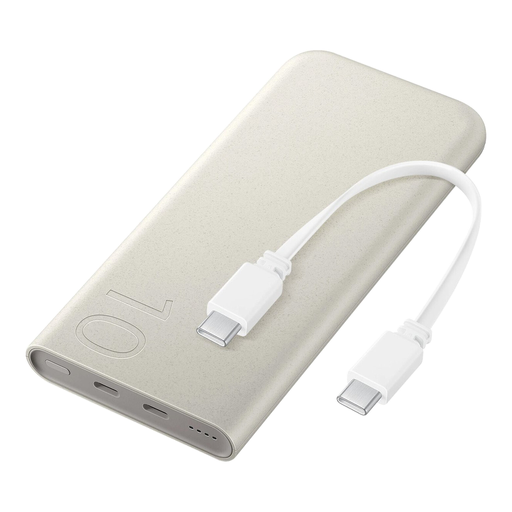
Samsung 25W Inductive Power Bank, 10,000 mAh, beige
The integrated USB Type-C cable may be useful if it’s compatible with your speaker’s charging port.
Capacity: 10,000 mAh. The product name specifies inductive charging.
View at Joybuy
 No image available
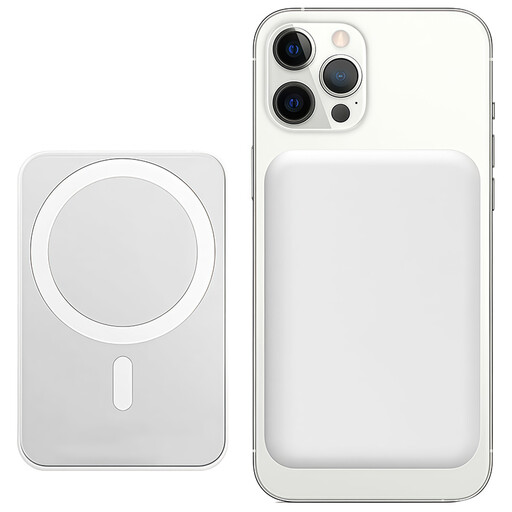
10,000 mAh Power Bank, 15 W, with magnetic phone stand
For a speaker, check whether this power bank can charge it via a compatible cable; the product name also mentions magnetic wireless charging for phones.
The product name specifies 10,000 mAh and 15 W.
View at Joybuy
 No image available
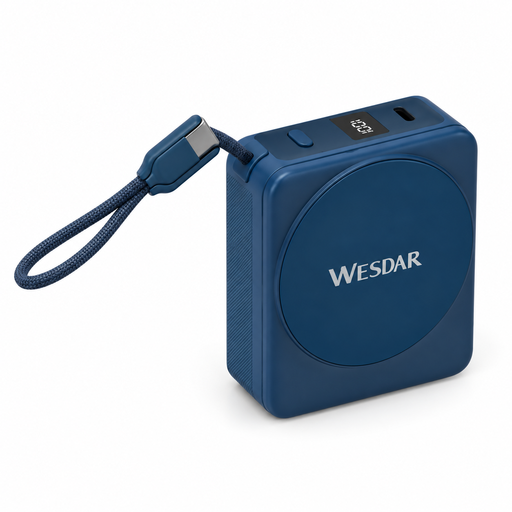
Magnetic Power Bank, 10,000 mAh, with integrated USB-C cable
The built-in USB-C cable is only suitable for direct use if your speaker has a compatible USB-C charging port.
The product name specifies 22.5 W, 15 W wireless charging and a digital display.
View at Joybuy
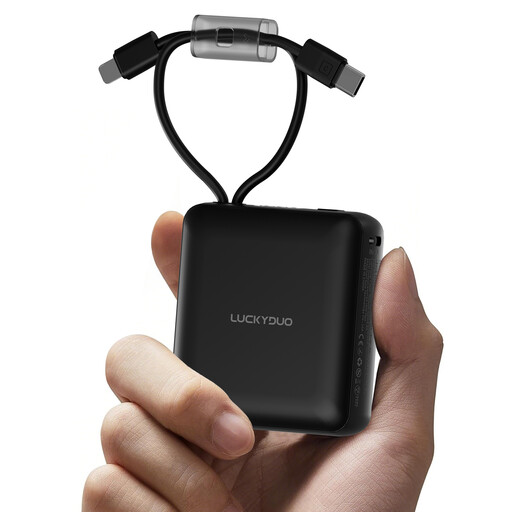 No image available
10,000 mAh Ultra-Small Power Bank with two built-in cables
A built-in cable can save you carrying a separate one if either cable is compatible with your speaker’s charging port.
Capacity: 10,000 mAh. The product name specifies two built-in cables.
View at Joybuy
Frequently asked questions
Is USB-C on a power bank enough to charge my speaker?
No. Check the charging port, cable and power requirements for your exact speaker model too. For example, Sony specifies USB-C for charging only on the SRS-XB100, with a power supply of DC 5 V. These details don’t automatically apply to other speakers.
How do you know how much capacity your speaker needs?
Match the reserve you need to your speaker and how long you’ll be away from a socket; the mAh figure alone doesn’t tell you how many charges you’ll get. The Consumers' Association also compares how much power power banks actually deliver.
Do new portable speakers in the Netherlands always have USB-C?
The European Commission states that the common charger rules have applied to the relevant category of portable speakers since 28 December 2024. Even so, check the connection on your own speaker, especially if it’s an older model. The rules don’t automatically set requirements for the connection on every power bank.
How can you use a charging cable safely?
Don’t use a damaged cable, and don’t charge a device under a pillow or blanket. VeiligheidNL gives this advice for using batteries and charging cables.
Can you take a power bank on a plane?
The Dutch government allows a maximum of two power banks per person in hand luggage and advises contacting the airline if you’re unsure. KLM doesn’t allow power banks in checked baggage. Before you fly, also check the rules of the airline you’re travelling with and the energy capacity of your model.


