
Countertop user with a USB fan
Wants to know whether their existing fan can charge using a power bank’s port and cable. Duux describes USB-C charging for its Misty fan; check your own fan’s manual.


First, check your fan’s manual to find out which charging port, cable and electrical input it requires, then compare these with the power bank’s output. Next, choose a capacity that suits the number of extra charging sessions you want, and charge your devices in a dry place away from splashes and heat. A USB-C connection or high quoted wattage alone does not prove that a power bank is compatible with your fan.
Wants to know whether their existing fan can charge using a power bank’s port and cable. Duux describes USB-C charging for its Misty fan; check your own fan’s manual.
Wants to charge their fan more often and weigh up extra capacity against size and weight. The Consumentenbond compares how much power banks actually deliver.
Wants a tidy charging spot away from moisture and heat, and pays attention to the condition of the battery and cable. The Dutch Fire Service warns about battery risks related to moisture, damage and short circuits.
Start with your fan’s manual: its connection and required input determine which power banks may be suitable. Then choose a capacity that suits how you use it, and decide where you can charge it safely.
The Consumentenbond compares how much power banks actually deliver; this can differ from what you might expect based on the manufacturer’s stated figures.
| What to consider | What to look for | Who is this important for? |
|---|---|---|
| Compatible output and cable | Compare the port, cable and required input in your fan’s manual with the output specifications of the exact power bank model. | I want to make sure my fan can charge through this connection first. Around 33% of consumers prioritise compatibility. |
| Power for extra charging sessions | Where possible, compare the energy actually delivered with your fan’s requirements; the nominal mAh rating alone won’t tell you how long it will run. | If I want to charge my fan more often before the power bank itself needs recharging, usable energy matters. Around 27% of consumers prioritise extra charging sessions. |
| A dry charging spot | Choose a spot away from splashes and heat, and don’t use a visibly damaged battery or cable. The Dutch Fire Service warns about risks from moisture, damage and short circuits. | On a busy worktop, I want to keep the charging spot away from water and heat. Around 20% of consumers prioritise safe positioning. |
| Cable convenience | Check that an integrated cable is suitable for your fan and that you also have the right connection for recharging the power bank itself. | I want fewer loose cables on the worktop, but only if the built-in cable is suitable for my fan. Around 20% of consumers prioritise easy cable use. |
The nominal capacity doesn’t tell you how much energy your fan can actually use. Without information about the fan’s power consumption and charging requirements, it’s not possible to calculate its running time reliably.
Compare your fan’s manual with information on the power bank’s actual energy output, if available.
An integrated cable is only useful if its connection and output are suitable for the fan’s charging input.
Check the manual and the specifications of the exact power bank version before choosing between a built-in and a separate cable.
The Dutch Fire Service warns that contact with moisture, damage or a short circuit can create a fire risk with batteries.
Clear a dry spot away from the sink and heat sources, and check the battery and cable for visible damage.
According to Xtorm, its 10,000 mAh Fuel Series 5 model is designed for people who want USB-C and USB-A connections.
According to Belkin, the BoostCharge BPB021hqPK is a 10,000 mAh model with a built-in USB-C cable.
According to Trust, the 10,000 mAh Trust Primo 25029 has USB-C and USB-A outputs for use with a suitable separate cable.
According to Anker, the Nano A1259 has a built-in USB-C cable and is worth considering if your fan can charge through this connection.
These product picks are power banks for a cable-connected charging setup. Before choosing, check that your fan’s connection and required input match the product specifications.
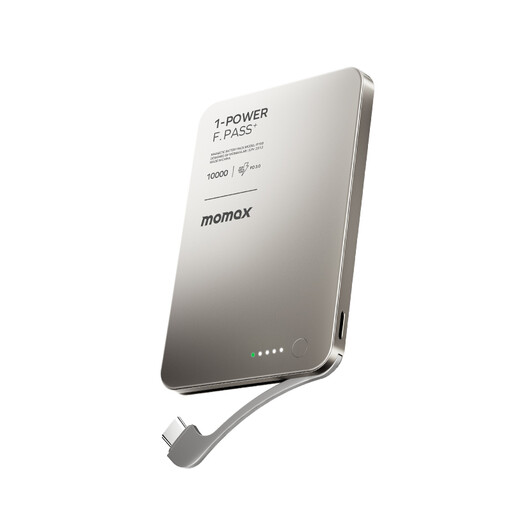 No image available
An option to consider if your fan can charge via USB-C and you want a built-in cable.
The product name lists a capacity of 10,000 mAh and a built-in cable.
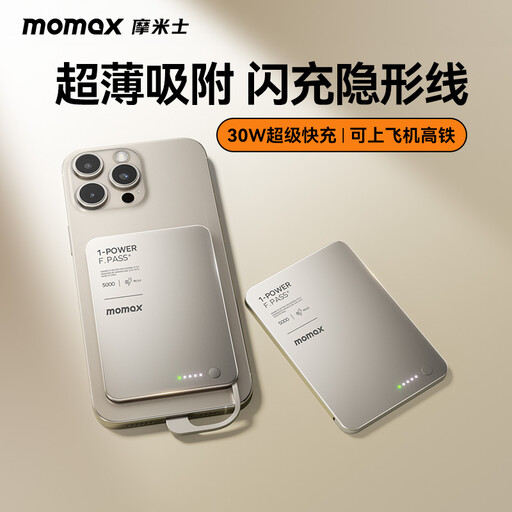 No image available
An option if your fan can charge via USB-C and you’re looking for a power bank with a built-in cable.
The product name lists a capacity of 5,000 mAh and a built-in cable.
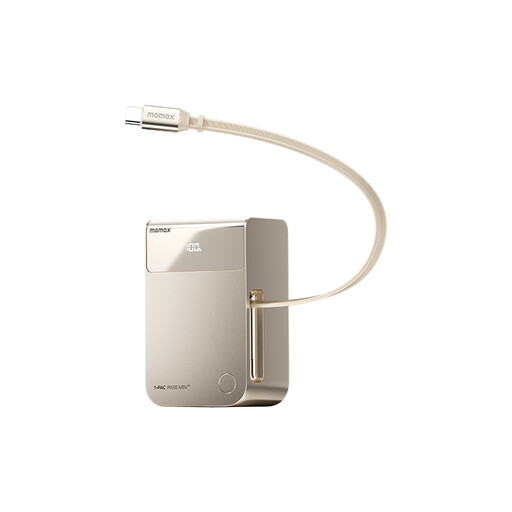 No image available
Consider this version only if the built-in cable is suitable for your fan’s charging input.
The product name lists a retractable built-in cable and a capacity of 10,000 mAh.
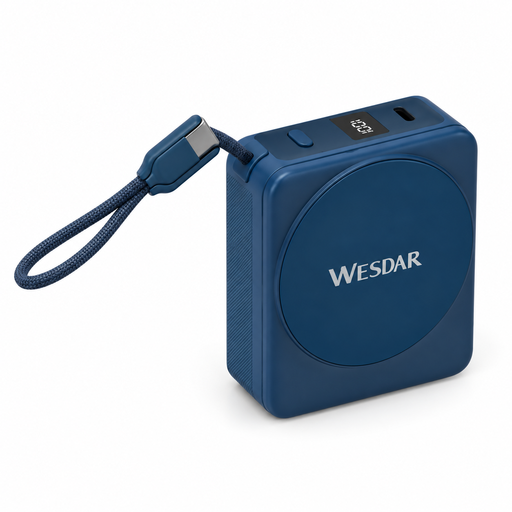 No image available
A possible choice if your fan charges via USB-C; check its required input before choosing based on the stated output.
The product name lists 10,000 mAh, 22.5 W wired charging, 15 W wireless charging and an integrated USB-C cable.
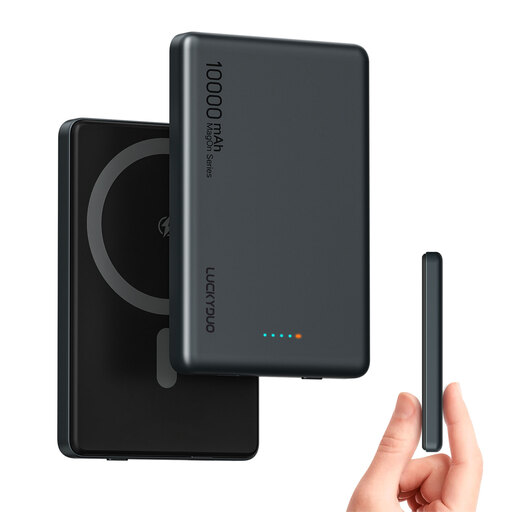 No image available
Check that the USB-C charging option matches your fan’s required input before choosing this version.
The product name lists 10,000 mAh, 20 W PD, two USB-C PD ports and USB-C wired charging.
No, not without checking first. Compare the charging port, cable and required electrical input in your fan’s manual with the output specifications of the exact power bank model.
It’s not possible to work this out reliably without information about your fan’s power consumption and charging requirements. The Consumentenbond compares how much power banks actually deliver in different conditions; this still won’t tell you how long your particular combination will run.
Choose a dry spot on the worktop, away from splashes and heat, and don’t use a visibly damaged battery or cable. The Dutch Fire Service warns about risks involving moisture and damaged batteries; this advice doesn’t mean that any particular model is waterproof.
Electronic products sold in the EU must meet applicable product safety requirements and carry the required CE marking; check this for the specific product. ACM ConsuWijzer states that if a product breaks sooner than expected under normal use, the seller must put it right free of charge.
Take an old power bank to a suitable collection point for small electrical appliances. Milieu Centraal lists collection bins for small appliances at shops and DIY stores.