
Vandaag of morgen in huis

Kwaliteit gegarandeerd

Welkomstaanbiedingen ontgrendelen: GRATIS bezorging | Tot 80% korting | Gratis 30 dagen JoyPlus-proefperiode
Download de app
A dead battery always strikes at the worst possible moment. Whether you're trying to catch a train, expecting an important call, or navigating an unfamiliar city, a reliable powerbank is no longer a luxury. But the market is flooded with models that promise the world, and many of those promises lead to buyer's remorse. Before you invest in a new portable charger, it's wise to know what to look for.
As a Joybuy Product Recommendation Officer, I see the challenges consumers face every day. These are the three most common pitfalls:
This guide will help you avoid these mistakes and choose a model that truly fits your lifestyle.
Marketing terms can be confusing. Instead, focus on the objective specifications that determine whether a power bank will perform as expected.
A power bank's capacity is expressed in milliampere-hours (mAh). In theory, a 10000mAh powerbank could charge a smartphone with a 5,000mAh battery twice. In practice, however, this is never the case.
During the energy transfer from the power bank to your device, there is always energy loss, typically around 30%. This is due to heat generation and voltage conversion. A good rule of thumb is to multiply the advertised capacity by 0.7 to get a realistic estimate.
Fast-charging powerbank is a term you see everywhere, but the details are crucial. The speed is determined by the power output, expressed in Watts (W). The higher the wattage, the faster your device will charge, provided your device supports it.
Also, pay attention to the charging protocols. The two most important are:
Check which protocol and maximum wattage your device supports to find the right match.
A power bank's functionality extends beyond just capacity and speed.
Below are some popular choices, matched with specific user profiles.
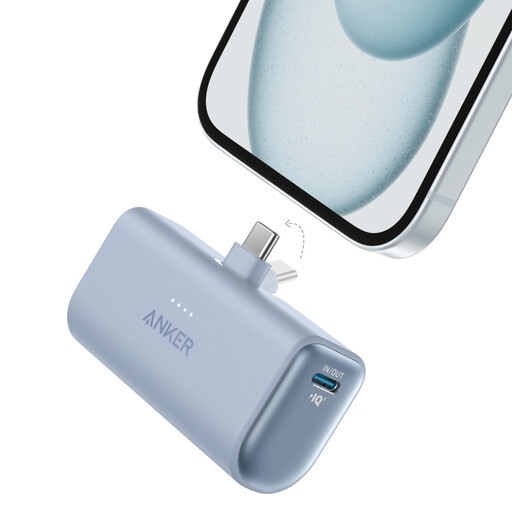
Why This Fits Their Persona: Ideal for those who are always on the go and need a compact, hassle-free solution. It's small enough for your pocket, and the built-in USB-C connector means you'll never forget your cable again.
This model tackles the pitfall of awkward sizes and forgotten cables. Its ultra-compact design and integrated connector make it practical and user-friendly.
22.5W fast charging: Quickly charges modern phones. Foldable USB-C port: No loose cables and protects the connector.
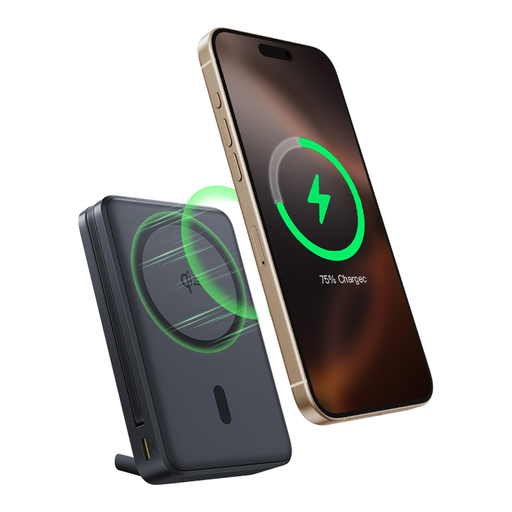
Why This Fits Their Persona: Perfect for the iPhone user seeking maximum convenience. The magnetic connection and built-in stand make it ideal for video calls or watching media while charging, without the hassle of cables.
This model bypasses the pitfall of slow and clumsy wireless charging. According to the manufacturer, its Qi2 certification guarantees a fast 15W wireless charging speed, a significant improvement over older standards.
Qi2 wireless charging (15W): Efficient and fast for compatible devices. Built-in 45W USB-C cable: Powerful enough for a MacBook Air.
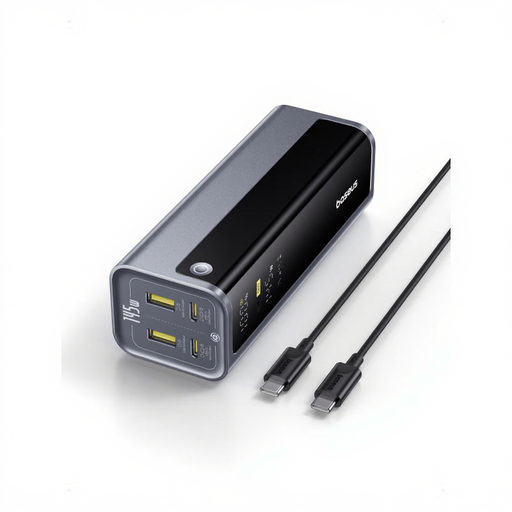
Why This Fits Their Persona: For the user who needs to charge everything: phone, tablet, earbuds, and laptop. With high capacity and a very powerful output, this is an all-in-one solution for long trips or intensive use.
This model solves the 'insufficient power' pitfall. Where many power banks fall short for a laptop, this model's 145W output delivers enough power to efficiently charge even demanding devices.
145W total output: Simultaneously fast-charges multiple devices, including laptops. Digital display: Shows remaining battery and charging status in real-time.
We have compiled a complete, up-to-date list of products that fully meet these strict selection criteria and UK/EU safety regulations.
As mentioned earlier, you lose about 30% of the capacity. A 10,000mAh power bank effectively delivers around 7,000 mAh. If you have an iPhone 15 (approx. 3,350 mAh battery), you can fully charge it about twice. For a Samsung Galaxy S24 (approx. 4,000 mAh battery), that's about 1.7 times.
Yes, modern power banks and smartphones are equipped with smart chips that regulate the power flow. A power bank with Power Delivery (PD) communicates with your device to deliver the correct voltage and power. Your phone will never draw more power than it can handle. It is advisable to use power banks that comply with the European CE marking.
Yes, in fact, power banks must be in your carry-on luggage. They are not allowed in checked baggage. Most airlines have a limit of 100 Watt-hours (Wh) per battery. A 20,000mAh power bank (approx. 74 Wh) or even a 27,000mAh model (approx. 99 Wh) typically falls well within this limit. Always check your airline's specific rules before you fly.
