Vandaag of morgen in huis

Kwaliteit gegarandeerd

Welkomstaanbiedingen ontgrendelen: GRATIS bezorging | Tot 80% korting | Gratis 30 dagen JoyPlus-proefperiode
Download de app
A dead battery at an inconvenient moment is a familiar problem. Whether you're on the move for work, facing a long travel day, or simply want to ensure you have power, a power bank is an indispensable accessory. But the market is flooded with options. Buying a power bank that doesn't meet your expectations—too slow, too heavy, or with the wrong ports—is a waste of your money.
This guide will help you make an informed choice. We'll focus on the specifications that truly matter, so you can find a model that fits your devices and usage.
To avoid making the wrong choice, it's important to look beyond just aesthetics. The following four parameters are crucial for performance and ease of use.
A power bank's capacity is expressed in milliampere-hours (mAh). This number indicates how much energy the battery can store. A higher value means you can charge your devices more times before the power bank itself runs out.
The power output, measured in Watts (W), determines how quickly a power bank can charge your devices. Many modern devices support fast charging, but only if the power bank delivers it. Check your smartphone or laptop's specifications to see what wattage is needed for optimal charging.
Protocols like Power Delivery (PD) and Quick Charge (QC) are standards for fast charging. A power bank with USB-C PD is the current standard for rapidly charging most smartphones, tablets, and laptops.
Most new power banks are equipped with USB-C ports. These ports are often used for both charging your devices (output) and recharging the power bank itself (input). Some models still include traditional USB-A ports for older devices. Pay close attention to which ports you need.
A high-capacity power bank is typically larger and heavier. Consider what you'll be using it for. For a daily commute, a compact model might be more practical than a heavy 20,000mAh power bank.
Some models offer added convenience, like a power bank with a built-in cable. This saves you from carrying loose cables. A digital display showing the remaining battery percentage can also be a useful feature.
Based on the criteria above, we've selected models with distinct, functional features for different users.
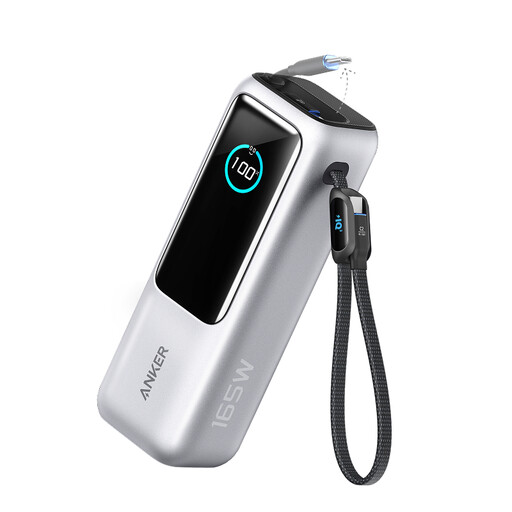
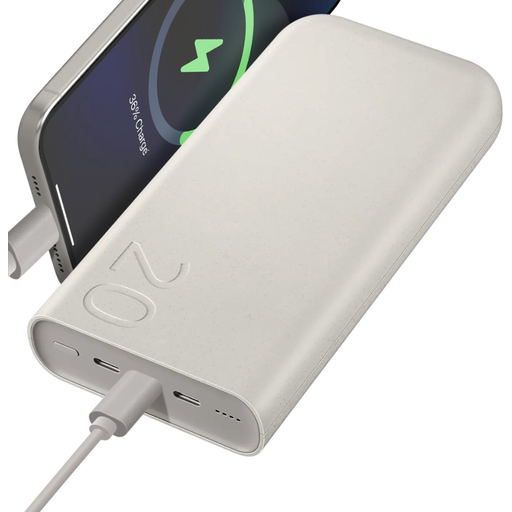
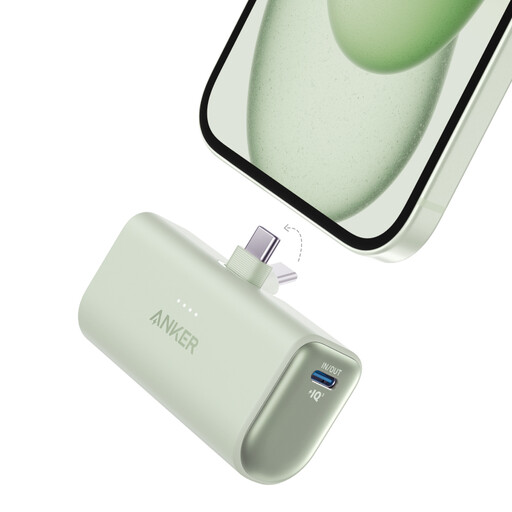
The world of power banks is diverse, with models for every specific need. You might be looking for a model with a different capacity, a specific colour, or extra features like wireless charging.
For a broader overview of available models, you can browse our full collection. Compare specifications and find the power bank that perfectly matches your devices and lifestyle.
? Explore all portable USB power bank charger models
1. How many times can I charge my phone with a 20,000mAh power bank? This depends on your phone's battery capacity. An average smartphone has a battery of around 4,000-5,000 mAh. In practice, accounting for energy loss during the transfer, you can fully charge a phone about 3 to 4 times with a 20,000mAh power bank.
2. What is the difference between USB-C Power Delivery (PD) and Quick Charge (QC)? Both are fast-charging protocols. Power Delivery is a universal standard used by many brands, including Apple and Google, and is primarily focused on USB-C. Quick Charge was developed by Qualcomm and is mainly found in devices with a Snapdragon processor. Many modern power banks support both standards for broad compatibility.
3. Can I take a power bank on an airplane? Yes, power banks are allowed on airplanes, but only in your carry-on luggage. There is a capacity limit, which is typically 100Wh (Watt-hours). This corresponds to about 27,000 mAh. Most power banks, including 20,000mAh and 25,000mAh models, fall well within this limit. Always check your airline's specific rules before you fly.
Written by: Joybuy Product Recommendation Officer