
Vandaag of morgen in huis

Kwaliteit gegarandeerd

Welkomstaanbiedingen ontgrendelen: GRATIS bezorging | Tot 80% korting | Gratis 30 dagen JoyPlus-proefperiode
Download de app
A dead battery at the wrong moment is more than just an inconvenience. It can mean a missed opportunity, a lost connection, or a moment of unnecessary stress. A good power bank or external battery is the solution, but the market is flooded with models that promise more than they can deliver. Before you invest in a new portable charger, it's crucial to recognise the common pitfalls.
Many consumers fall for marketing claims that lead to disappointment. These are the three most common mistakes:
To choose a power bank that truly suits your needs, focus on the specifications that actually matter. Don't get distracted by marketing jargon.
The capacity, expressed in milliampere-hours (mAh), determines how many times you can charge a device. Choose based on your daily routine:
The actual charging speed is determined by the power output (Watts) and the supported charging protocols.
Functionality always trumps empty specs. Think about how you will use the power bank.
Based on these objective criteria, we have selected a number of models that suit different user profiles.
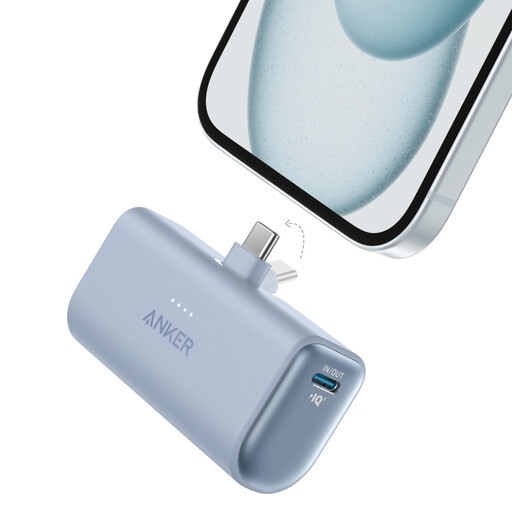
Why This Fits Their Persona: Perfect for those who are on the move daily and need a compact, reliable charging solution. It's as small as a lipstick and fits effortlessly into any pocket or small bag. No more fussing with loose cables.
This power bank tackles the pitfall of impractical design. The built-in, foldable USB-C connector means you can never forget your cable. It's designed for maximum convenience, not for maximum, unnecessary capacity.
Built-in USB-C connector: plug in directly without a cable. 22.5W fast charging: delivers power quickly to compatible devices. Extremely compact and lightweight.
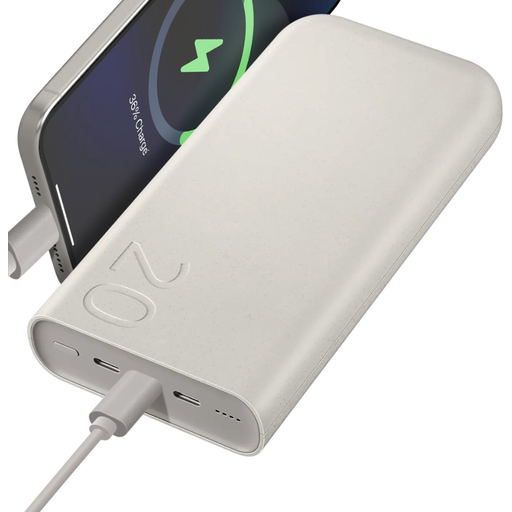
Why This Fits Their Persona: For those who depend on multiple devices, including a laptop. The high capacity and powerful output make this a workhorse for long trips, workdays out of the office, or for anyone who simply wants the security of ample extra power.
This model sidesteps the "vague fast charging" pitfall. With a specified output of 45W Super Fast Charging via Power Delivery 3.0, it actually delivers the speed needed to charge even a laptop, something many other power banks fail to do.
45W power output: suitable for charging compatible laptops. 20,000mAh capacity: charges a smartphone multiple times. Three USB-C ports: charge multiple devices simultaneously.
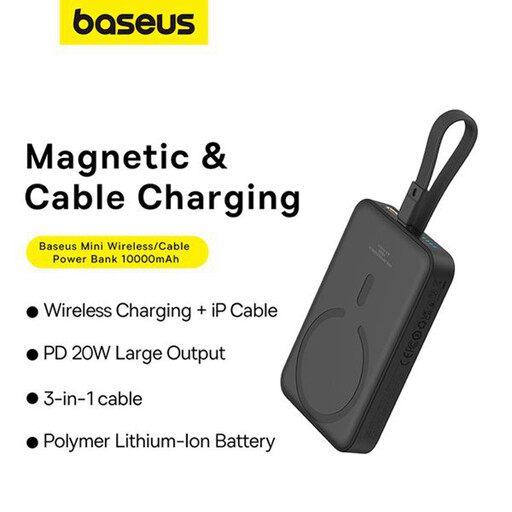
Why This Fits Their Persona: For the iPhone user who values convenience and a seamless experience. The MagSafe compatibility means the power bank magnetically attaches to the back of the phone for stable, wireless charging without cables or hassle.
This model combines a practical 10,000mAh capacity with the convenience of wireless charging. It avoids the pitfall of a clumsy, bulky design that plagued many early wireless power banks. It's compact enough to be used comfortably while it's charging.
MagSafe compatibility: snaps onto iPhone 12 and newer. Wireless and wired: offers both 15W wireless and 20W wired charging via USB-C. 10,000mAh capacity: a great balance between size and power.
We've compiled a complete, up-to-date list of products that fully meet these strict selection criteria and safety regulations.
This depends on your phone's battery capacity. An average smartphone has a battery of about 4,000-5,000mAh. Factoring in energy loss (around 30%), a 10,000mAh power bank effectively delivers about 6,000-7,000mAh. Therefore, you can fully charge your phone about 1.5 times.
No, modern smartphones and power banks are equipped with smart charging circuits. The device and the charger communicate to determine the maximum safe charging power. The charging speed automatically decreases as the battery gets fuller to protect its lifespan. Therefore, using a certified fast charger is not harmful.
Yes, power banks must be carried in your carry-on luggage and are not allowed in checked baggage. Most airlines have a limit of 100Wh (Watt-hours). A 20,000mAh power bank (at 5V) is approximately 100Wh, so it's usually right at the limit. A 10,000mAh model is almost always allowed. To be safe, always check the specific rules of your airline.
