
Vandaag of morgen in huis

Kwaliteit gegarandeerd

Welkomstaanbiedingen ontgrendelen: GRATIS bezorging | Tot 80% korting | Gratis 30 dagen JoyPlus-proefperiode
Download de app
A dead phone battery at the wrong moment is more than just annoying; it can throw your entire day's schedule into disarray. Whether you're commuting to work, attending a lecture, or travelling, a reliable power bank is not a luxury but a necessity. However, the market is flooded with models that promise the world. As a Joybuy Product Recommendation Officer, I'm here to help you separate fact from marketing fiction, so you can choose a portable charger that actually delivers.
Before you make a choice, it's crucial to recognise the most common pitfalls. Many people make a purchase they later regret because they focus on the wrong specifications.
To avoid a bad purchase, focus on these three objective criteria. They determine whether a power bank is right for your needs.
The capacity (mAh) determines how many times you can charge a device.
The output in Watts (W) is crucial. Check which charging technology your smartphone or laptop supports.
Think about how you will use the power bank.
Below are some popular choices, linked to specific needs. These aren't "winners," but practical solutions for different situations.
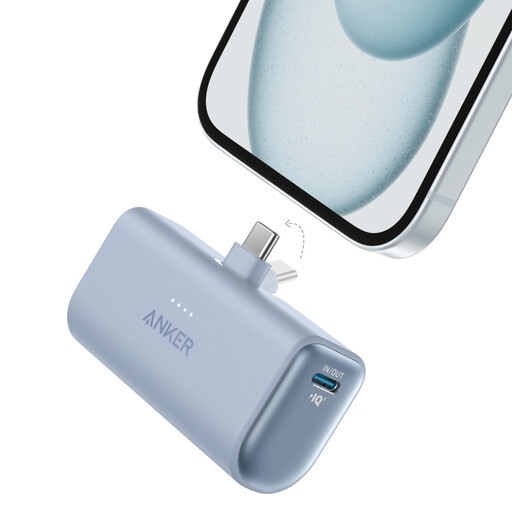
Why This Fits Their Persona: Perfect for those who travel light. This power bank is extremely compact, and the built-in, foldable USB-C connector means you'll never need a separate cable again. Ideal for your jacket pocket or bag for a quick top-up on the train or between lectures.
Tackles the slow charging pitfall with a 22.5W output, which quickly charges a modern phone. The built-in connector solves the problem of forgotten or broken cables.
Advantage: Ultra-compact size with an integrated USB-C connector. Pro: Supports 22.5W fast charging via PowerIQ 3.0 technology.
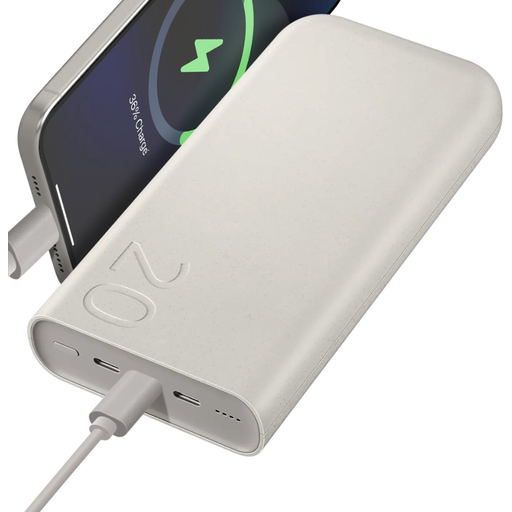
Why This Fits Their Persona: For those who depend on multiple devices, including a laptop. With 20,000 mAh and a powerful 45W output, this power bank can charge a laptop while still having enough power left for a phone and earbuds. The three USB-C ports make it a versatile workhorse for travel or long workdays.
Bypasses both the capacity and speed myths. The 20,000 mAh is a realistic capacity for heavy use, and the 45W output is genuinely fast enough for a laptop, not just a phone.
Advantage: Very high 45W output, suitable as a power bank for a laptop. Pro: Three USB-C ports for simultaneously charging multiple devices.
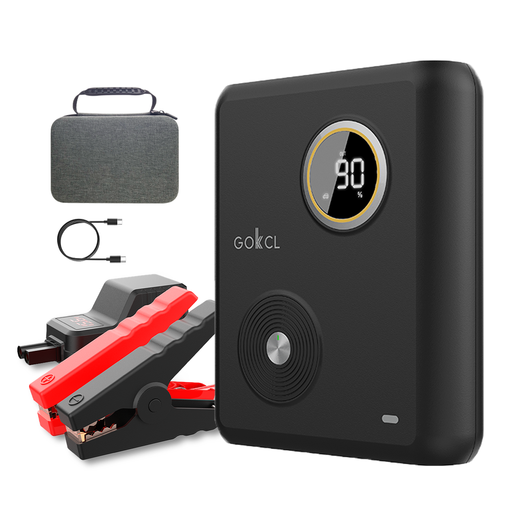
Why This Fits Their Persona: This is more than a power bank; it's an emergency kit for your car. This jump starter can start a car with a dead battery and simultaneously functions as a powerful power bank with PD60W fast charging. Ideal for those who want peace of mind on the road or while camping, far from a power outlet.
Solves a specific, urgent problem that a standard power bank cannot: a dead car battery. It combines the functionality of a jump starter with that of a high-end power bank, so you don't need to buy two separate devices.
Advantage: Dual function as a 1500A jump starter and a 27,500 mAh power bank. Pro: According to the manufacturer, the sodium-ion battery is more stable at extreme temperatures and has a longer lifespan.
We have compiled a complete, up-to-date list of products that fully meet these strict selection criteria and European safety regulations.
This depends on your phone's battery capacity and the power bank's efficiency. A rule of thumb is to multiply the power bank's capacity by 0.65 to estimate the real-world output (approx. 6,500 mAh for a 10,000 mAh model). Therefore, you can charge a smartphone with a 4,500 mAh battery about 1.4 times.
Yes, power banks must be carried in your carry-on luggage and are not allowed in checked baggage. Most airlines have a limit of 100 Wh (watt-hours). A 20,000 mAh power bank (at 3.7V) is approximately 74 Wh, which is well within the limit. To be safe, always check the specific rules of your airline.
A standard power bank (or portable charger) is designed to charge electronics like phones and tablets via USB. A jumpstarter is a specialised power bank that can deliver a very high peak current (measured in Amperes, A) to start a vehicle's engine with a dead battery. Most jump starters also have USB ports, allowing them to function as a regular power bank.
