
Cyclists with a bike computer that needs specific charging
Before choosing, check which cable and power source your exact model requires. Wahoo Fitness Support sets out model-specific charging instructions, including guidance for early BOLT 2 units.


If there’s a suitable socket in your hotel room, and you have a charger and cable that are compatible with your bike computer, you won’t need a power bank for that charging session. If you want to charge without access to a socket, first check your model’s instructions and connection type. Then consider portability, usable charging capacity and any extra ports. Charge your devices in an open area, away from bedding, and don’t use damaged cables. The Dutch Fire Service advises placing chargers in an open space so heat can dissipate.
Before choosing, check which cable and power source your exact model requires. Wahoo Fitness Support sets out model-specific charging instructions, including guidance for early BOLT 2 units.
A power bank is extra weight that you’ll also have to carry when you’re away from your hotel room. The Consumers’ Association notes that smaller, lighter power banks generally provide fewer charges than larger, heavier models.
Compare the number and type of ports, as well as the power output when charging several devices at once. Manufacturers such as Belkin, Anker and Xtorm list specifications for each power bank model.
First, ask yourself whether you really need to charge away from a socket. With a suitable mains charger and cable, you can charge a bike computer directly, but requirements vary by model.
| What to consider | What to look for when buying | Who is this important for? |
|---|---|---|
| Connection and compatibility | Check the exact bike computer model, the recommended cable and the suitable port or power source. | I want to be sure my bike computer can be charged according to its model instructions, even if the connection looks like it fits. Around 33% of consumers put compatibility first. |
| Safe charging in your room | Check the cable and connection for damage or moisture, and choose an open charging spot away from bedding. | I want to charge my device in a suitable place and check the cable and charging setup. Around 27% of consumers prioritise safe charging in a hotel room. |
| Portability and charging capacity | Compare the weight and, where available, the usable output capacity on a like-for-like voltage basis. | I’m taking the power bank on a cycling trip and want to weigh its charging capacity against the extra weight. Around 20% of consumers put portability first. |
| Charging several devices | Check which USB-A and USB-C ports you need, and the total power output when charging several devices at once. | I want to connect another device as well as my bike computer, so I’m looking for suitable ports and enough combined power. Around 20% of consumers choose mainly based on the ability to charge several devices. |
The recommended charging setup can vary between bike computer models. For example, Wahoo Fitness Support lists specific requirements for early BOLT 2 units.
Check the instructions for your exact model, then choose a cable, port and power source to match.
The stated capacity of a power bank’s internal cells isn’t the same as the capacity available through its USB port. Anker Support explains that the cell capacity is based on a different voltage, and some energy is also lost during conversion.
Where possible, compare output capacity or Wh on a like-for-like basis. Don’t assume a fixed number of charges without information about both devices.
When charging several devices at once, the total power output may differ from the maximum output of an individual port. Belkin and Anker list separate figures for combined use for the models described here.
Check the specifications for simultaneous use if you also want to charge a phone or another device.
A covered charging setup can trap heat. The Dutch Fire Service advises placing chargers in an open space and not using damaged cables.
Charge your devices in an open area, not under a pillow or duvet, and replace any damaged cables before charging.
According to Anker, the Nano A1259 combines a built-in USB-C cable with separate USB-C and USB-A ports.
According to Belkin, the BoostCharge BPB011btBK has two USB-A ports and one USB-C port.
According to Xtorm, the Fuel Series 5 FS5103U has two USB-C ports and one USB-A port.
According to Nitecore, the NB10000 Gen4 is a portable power bank with two USB-C ports.
These Joybuy products are portable power banks for cycling travellers who want to match the connection, cable and capacity to their bike computer and any other devices.
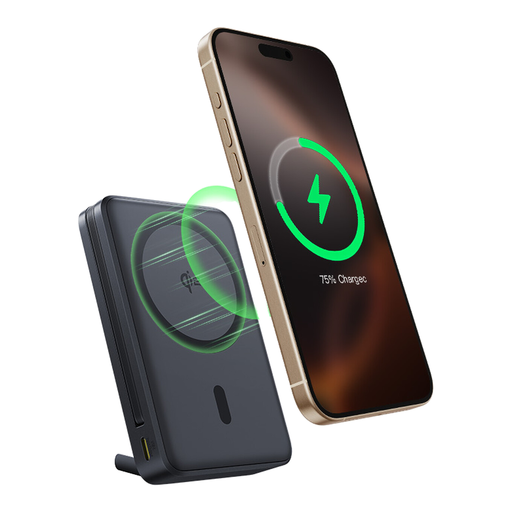 No image available
The built-in USB-C cable gives you a wired connection option, provided it’s compatible with your bike computer’s charging requirements.
Listed capacity: 10,000 mAh. Listed power output: 45 W.
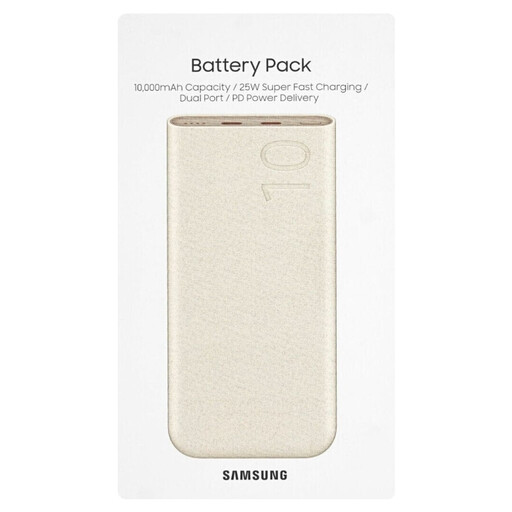 No image available
The two USB-C ports are useful if you want to connect another device as well as a compatible bike computer.
The product information lists two USB-C ports, simultaneous charging for two devices and a weight of 210 g. The title lists 25 W and 10,000 mAh.
 No image available
The USB-C port gives you a wired option, provided it’s compatible with your bike computer’s cable and charging requirements.
The product information lists a USB-C interface, up to 30 W and a charging-level indicator. The title lists 10,000 mAh.
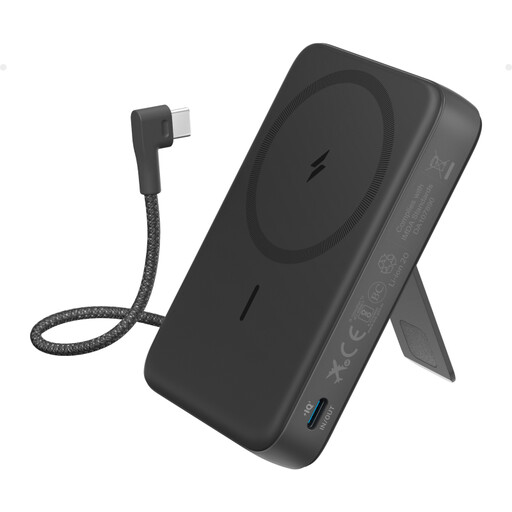 No image available
The built-in USB-C cable gives you a wired charging option if your bike computer supports this charging setup.
The product information lists 10,000 mAh, wired charging up to 30 W and wireless charging up to 7.5 W.
Yes, as long as the charger, cable and connection are suitable for your bike computer model. Garmin Support Center describes how to use a suitable mains charger, while Wahoo Fitness Support provides charging instructions for each ELEMNT generation. You won’t need a power bank just for that charging session.
According to Wahoo Fitness Support, early BOLT 2 units have a limitation that may mean you need a USB-A to USB-C cable with a USB-A mains charger or a suitable smart power source. Wahoo distinguishes between early and later units, so check the instructions for your model.
Check the charging port and cable for moisture and dirt, and don’t charge the device if either is present. Wahoo advises checking and drying the connection according to the device instructions. If there’s a protective cover, put it back in place after charging.
No. The Dutch Fire Service advises placing chargers in an open space so heat can dissipate, and not charging devices under a pillow or duvet.
No. The stated 10,000 mAh capacity may refer to the internal battery cells, and isn’t the same as the capacity available via USB. Anker Support explains that the cell capacity is based on a different voltage, so compare output capacity or Wh on a like-for-like basis.