What should you look for?
Start by checking your bike computer’s connector and charging instructions. Then compare protection, power reserve and how easy it is to carry.
| What to consider |
What should you look for? |
Who is this important for? |
| Connector and charging |
Check the full computer model, along with the specified cable and power source. For early Wahoo BOLT 2 units, Wahoo specifies a USB-A-to-USB-C cable with a suitable USB-A power source or a smart power source. |
If you want to be sure your particular computer can charge with your chosen cable and power source during a stop, check they work together first. Around 36% of consumers put compatibility at the top of their list of buying concerns. |
| Connecting in dry conditions |
Follow your bike computer’s instructions, and don’t connect anything if the port, cable or plug is damp. The power bank’s IP rating doesn’t mean the charging connection is dry. |
If you stop in changeable weather, you’ll want to keep the connection sheltered and dry. Around 29% of consumers prioritise protection from wet conditions. |
| Power reserve |
Compare capacity at the same voltage or in Wh, and check the stated output capacity. Don’t assume a set number of charges without model-specific information. |
If you have a long ride ahead after your stop, or want to charge another device too, consider how much power will be left. Around 21% of consumers make power reserve their top buying priority. |
| Weight and cable |
Compare the stated weight and the cable length you need, and check whether an integrated cable is compatible with your bike computer. |
If you have limited space in your bike bag, you’ll want to carry less weight or fewer loose parts without compromising on a suitable connection. Around 14% of consumers prioritise compactness. |
Joybuy products
These products are power banks with a built-in USB-C cable; check whether your bike computer can charge using that cable.
 No image available
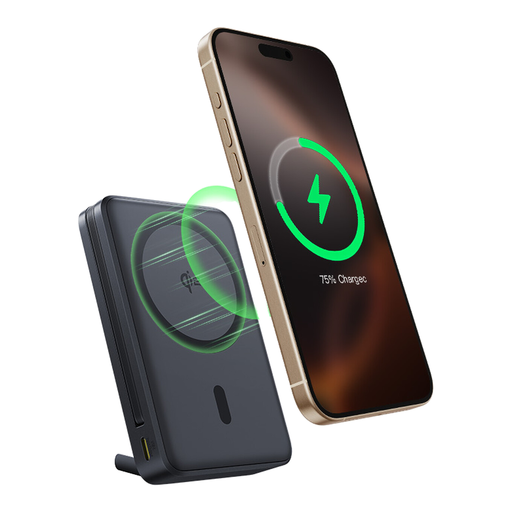
Baseus Nomos Qi2 power bank with built-in USB-C cable and magnetic stand, 10,000 mAh, 45 W, Interstellar Black
May suit you if you want a built-in USB-C cable; first check whether your bike computer can charge using that cable.
The product name lists 10,000 mAh, 45 W, a Qi2 design and a magnetic stand.
Joybuy
 No image available
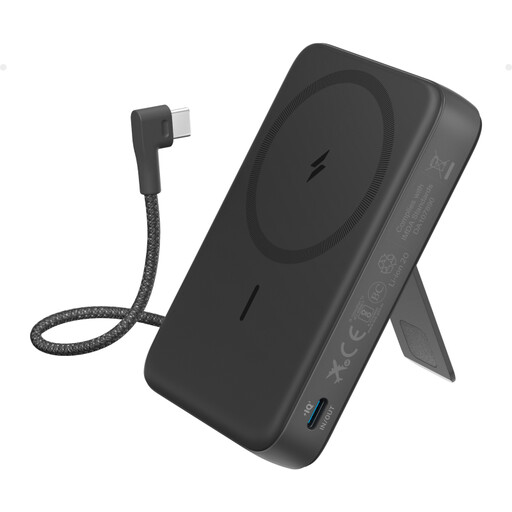
Anker 10K magnetic power bank with built-in USB-C cable, black
May suit you if you want a built-in USB-C cable, provided your bike computer can charge using that cable.
The product information lists 10,000 mAh, wired charging up to 30 W, wireless charging and an adjustable stand. According to this information, the product is intended for dry indoor environments. Check the exact model number and the relevant safety information.
Joybuy
Frequently asked questions
Can I charge a Wahoo BOLT 2 with any USB-C power bank?
Not without checking the production unit and charging setup. According to Wahoo, early BOLT 2 units need a USB-A-to-USB-C cable with a suitable USB-A power source or a smart power source; later units don’t have this limitation.
Can I connect the charging cable when it’s raining?
Don’t connect the cable if it or the charging port is damp. Wahoo warns against moisture or dirt in the connection; Garmin says to dry the USB port and the area around the Edge 1050 thoroughly before charging. The power bank’s IP rating doesn’t change these instructions.
Do I need anything else for the Garmin Charge Power Pack?
That depends on your Edge model and the accessories you already have. Garmin says the bike mount is sold separately or included with certain Edge products. Check your model’s compatibility and what’s included in the box.
Who can help if a power bank breaks too soon during normal use?
According to ACM ConsuWijzer, the seller is responsible for the statutory guarantee in the Netherlands. If a product doesn’t perform as you could reasonably expect during normal use, the seller must resolve the issue free of charge under the applicable terms, by repairing or replacing it, or refunding your money. A manufacturer’s guarantee doesn’t replace this right.
Does every power bank need a CE mark, and where can I take an empty power bank?
The Netherlands Food and Consumer Product Safety Authority’s guidance doesn’t establish a general CE requirement for every low-voltage model: the Low Voltage Directive described there starts at 75 V DC, and other safety rules may apply to products outside its scope. A CE mark alone therefore doesn’t prove that a product is suitable. The Dutch Government says that empty batteries must not go in general waste and can be taken to collection points; ask a collection point how to dispose of a complete power bank.


