
Workshop host who keeps the work lights on
Wants several participants to be able to see the video without completely darkening the room. Brightness and image size are important considerations.


Start with the lighting in the workshop and the screen size everyone needs to see. Then check whether the projector can produce that image from the available position. To follow the hands and tools, the projector’s native resolution also matters. Check the connections and sound separately: a suitable projection distance tells you nothing about whether everyone can hear the instructions.
Wants several participants to be able to see the video without completely darkening the room. Brightness and image size are important considerations.
Wants participants to be able to follow the movements of hands and tools. Pay attention to resolution, screen size and viewing distance.
Needs to connect the projector in a different position each time. Measure the available distance and check the video connection and sound setup.
Start with the lighting during the video and the image size you want, then measure the distance to the screen. Epson Netherlands and BenQ Netherlands describe brightness, image size and projection distance as relevant factors when choosing and positioning a projector.
| Consideration | What should you check? | Who should pay particular attention? |
|---|---|---|
| Visibility with the work lights on | Note whether the windows and lights will remain on, and compare the stated brightness with the screen size you want. | If the work lights need to stay on, I want viewers at the back to be able to follow the image too. Around 36% of consumers say visibility with the work lights on is their top priority. |
| Demonstration details | Check the projector’s native resolution and the video source; choose a screen size that works from the rearmost viewing position. | I need hands and tools to remain recognisable from where I’m sitting too. Around 29% of consumers put demonstration details first. |
| Distance and positioning | Measure the distance from the lens to the screen and compare it with the distance specifications for the exact model. | If the room has no fixed projection position, I want to be able to place the projector at the distance available. Around 21% of consumers put flexible positioning first. |
| Connections and sound | Check whether you can connect the video source to the projector and how the sound will reach the whole group. | When the video includes instructions, I want everyone to hear them and the source to connect properly. Around 14% of consumers make this their top buying priority. |
More ambient light and a larger projection area can reduce visibility. So the maximum image size alone doesn’t tell you how clear the video will look in your room.
Compare the stated brightness with the screen size and the lighting that will remain on during the video.
You may need to darken the room or adjust the projection setup.
The required projection distance depends on the model and the image size you want. As a result, a projector may not suit the position you had in mind.
Measure the room and screen position, then compare those measurements with the projection distance for the exact model.
Lamp life may depend on specific operating conditions. ViewSonic states that the PX701HDH lasts up to 20,000 hours under SuperEco+ conditions.
Compare the conditions behind any lifespan claim and check the maintenance information for the exact model.
Allow for possible maintenance or lamp replacement over the product’s lifetime.
The CO-FH01 is a Full HD model worth considering if you want to compare larger images using an HDMI video source.
The TK705STi is a model to compare if the projector needs to be close to the screen.
The PX701HDH is a Full HD lamp model to consider when comparing options for a room with ambient light.
These projectors are suited to showing videos in a workshop, with different options for short throw or rooms with ambient light. Check that the exact version has the required CE marking, and make sure its stated resolution is suitable for the details participants need to see.
 No image available
The short throw may be suitable if the projector needs to be close to the screen.
WXGA resolution; 3800 ANSI lumens; throw ratio 0.52:1; HDMI; built-in 10 W speaker. The resolution is not native Full HD.
 No image available
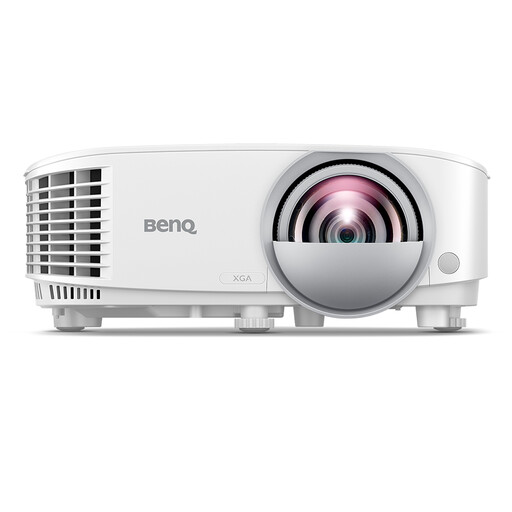
The short-throw version may be worth considering if there’s limited space between the projector and the screen.
XGA resolution (1024 × 768); 3600 ANSI lumens; HDMI; built-in 10 W speaker. This model doesn’t have native Full HD resolution.
 No image available
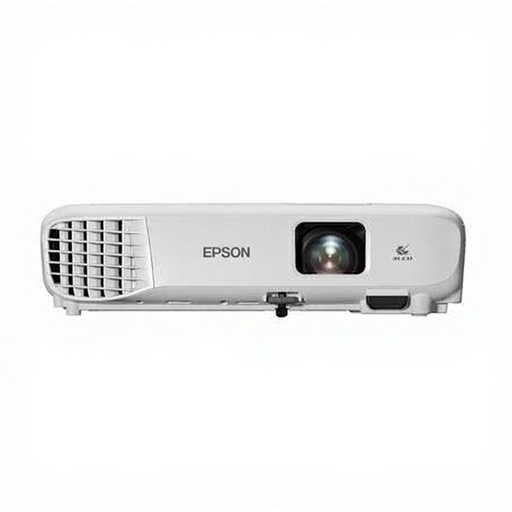
The short-throw version is an option to compare if the projector needs to be close to the screen.
XGA resolution (1024 × 768); 3500 ANSI lumens; DLP. The resolution is not native Full HD.
 No image available
The stated brightness and two HDMI ports are useful points to compare for a workshop video played from an external source.
WXGA resolution (1200 × 800); 4000 ANSI lumens; two HDMI ports; weight 2.5 kg. Not native Full HD resolution.
 No image available
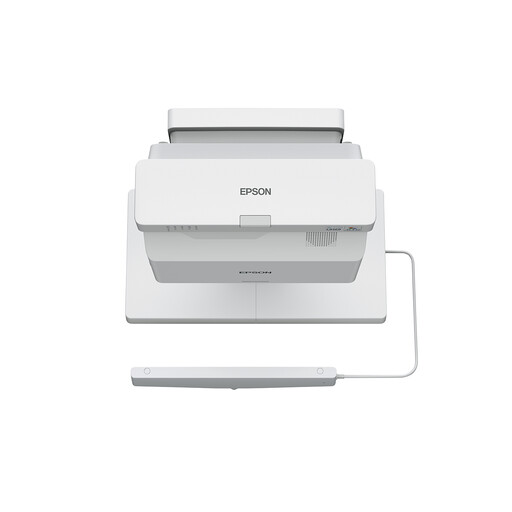
The ultra-short-throw version may be suitable if the projector needs to be close to the screen.
WXGA resolution (1280 × 800); 4100 ANSI lumens; HDMI. This model doesn’t have native Full HD resolution.
Measure the distance to the screen and work out what image size you need from the viewing positions. Compare those measurements with the projection distance for the exact model; the maximum stated screen size alone won’t tell you this.
Check that an output on the video source matches an input on the projector, and work out separately how the sound will reach the group. According to Epson, the Epson CO-FH01 has an HDMI input; according to ViewSonic, the ViewSonic PX701HDH has two HDMI inputs. Check the sound setup from the rearmost viewing position too.
Not necessarily. According to ACM ConsuWijzer, statutory guarantees in the Netherlands don’t have a fixed two-year duration; it also matters how long you could reasonably expect the product to last under normal use. The retailer is your point of contact, and the outcome depends on the circumstances.
Not necessarily. The Dutch government states that you need the creator’s permission to use a film protected by copyright, and that a private copy may not be made available to the public. Whether you need additional permission for a particular screening depends, among other things, on the rights holder and how the workshop is organised.
According to the Dutch government, electronic devices placed on the EU market must carry the required CE marking. Check the marking and product information for the exact version on offer; a brand name or model specification alone doesn’t confirm that the version meets the requirement.