What should you consider when choosing?
Compact camera with fixed zoom lens
Good for: a shared workbench where you want to switch between pots and wider shots with one camera. Sony lists a 24–200 mm full-frame equivalent range for the RX100 VII.
The trade-off: the lens cannot be changed. For the Sony RX100 VII, Sony lists a focusing distance of around 8 cm at the wide-angle end and around 100 cm at the telephoto end, measured from the front of the lens.
Mirrorless camera with your chosen lens
Good for: anyone who regularly photographs both whole pots and smaller details, and wants to match the lens to those tasks. Canon lists RF and RF-S support for the EOS R50; Nikon offers a macro lens for the Z DX system.
The trade-off: the camera body or standard zoom is not automatically a macro setup, and an extra lens takes up space too.
Compact camera with macro mode
Good for: anyone who values fine texture details and wants to carry a camera between market stalls. OM SYSTEM lists a microscope macro mode for the Tough TG-7.
The trade-off: also check that the fixed lens and framing work for photographing a whole pot; macro mode will not automatically take care of composition and lighting.
Measure the available distance between the camera and the pot, then check the framing and focusing distance at the lens or zoom setting you actually plan to use.
| What to consider |
What should you check? |
Who is this important for? |
| Fitting a whole pot in the frame |
Measure the available distance between the camera and the pot, and check whether the angle of view of your chosen lens or zoom setting will fit the whole pot in the frame. |
If I want to frame a whole pot from my usual spot, I want to know whether the angle of view will work without blocking the workbench. Around 29% of consumers put available workspace first. |
| Colour and reflections |
Check the white balance settings and whether there is room for a plain backdrop and directed or reflected light. |
If I want to capture glaze colours accurately, I also consider how I can direct the light onto the glossy pot. Around 29% of consumers give colour and lighting the highest priority. |
| Focusing on small details |
Compare the focusing distance, including the point from which it is measured, and the magnification at the lens or zoom setting you will actually use. |
If I want to photograph fine textures or maker’s marks, I want to know how close the camera can focus. Around 24% of consumers prioritise these details. |
| Repeating a setup |
Check whether the camera and backdrop can stay in a stable position outside other people’s workspace, and which components you need to bring each time. |
If I’m photographing several pots in a row, I want to be able to repeat the framing and backdrop easily. Around 18% of consumers consider a repeatable workflow the most important factor. |
Cameras at Joybuy
This selection features compact, portable cameras. For each model, check that the framing and focusing distance work for both a whole pot and the details you want to photograph.
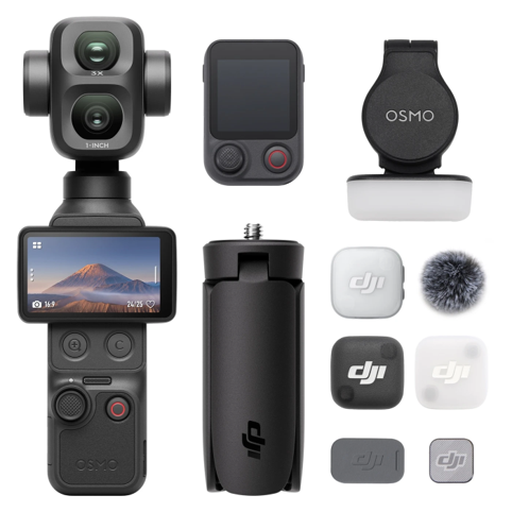 Image unavailable
Osmo Pocket 4P Vlog Combo, black
The product name describes this as a pocket vlog camera; check that the working distance and framing suit the pots and details you want to photograph.
View at Joybuy
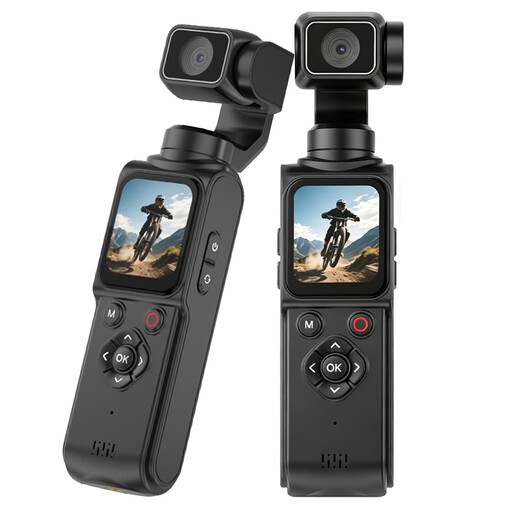 Image unavailable
KINSI Mini Vlog Camera 4K, 64 MP
The product name describes this model as a mini vlog camera; check the focusing distance before choosing it for fine ceramic details.
The product name lists a 330° rotating lens, a 1.72-inch touchscreen, face recognition, a tripod and Type-C.
View at Joybuy
 Image unavailable
DJI Osmo Pocket 4 Standard Combo
The product name describes this as a pocket gimbal camera; consider whether the working distance and framing suit your pottery photography.
The product name lists a 1″ CMOS sensor, 4K/240fps, 3-axis stabilisation, 2× lossless zoom, 107GB of built-in storage and a 2″ rotating screen.
View at Joybuy
 Image unavailable
KOMERY G7-A 4K camera, pink
The product name describes this as a portable digital camera; check that the framing and focusing distance suit your available workspace.
The product name lists 80 MP and 18× zoom.
View at Joybuy
 Image unavailable
KOMERY G7 5K camera, white
The product name describes this as a portable point-and-shoot camera; check the focusing distance before considering this model for small details.
The product name lists 80 MP, 18× zoom and 5K video.
View at Joybuy
Frequently asked questions
Should you mainly zoom in further to capture small glaze details?
Not without checking the focusing distance at that zoom setting. Sony lists a distance of around 8 cm at the wide-angle end and around 100 cm at the telephoto end for the RX100 VII, measured from the front of the lens. If you choose a mirrorless camera, a suitable macro lens is another option.
How can you make a series of pot photos look consistent?
Try to return the framing and backdrop to the same positions each time, and check the white balance again if the light changes. A tripod can help you keep the framing consistent, but it needs to fit in the space you share with others.
Does every mirrorless camera come with a standard zoom or lens?
No, it depends on the version you choose. Fujifilm lists the X-M5 as a body with a separate kit option, while Nikon lists several Z50II kits. Check the exact product contents and whether you need an extra lens for your working distance.
What are your rights regarding camera warranties in the Netherlands?
When you buy as a consumer, you are entitled to a product that is fit for purpose. According to the Government of the Netherlands, there is no fixed statutory warranty period in the Netherlands. If a product is faulty, contact the seller. Check separately which terms apply if you are buying for business use.
Can you publish commercial photos featuring identifiable market visitors?
According to the Dutch Data Protection Authority, the GDPR applies to photos taken and published by a business or organisation at an event if people are identifiable. You need a lawful basis for doing so; consent may be appropriate, but it is not the only possible lawful basis. A photo showing only the pottery, and a situation involving personal use only, should be assessed separately.


