If you mainly take quick photos on a busy stall, a compact camera with a documented close-up mode is a practical option. If you want to capture small details more precisely and fill the frame, compare mirrorless cameras with a suitable lens. Whichever you choose, check the working distance, which lens is actually included, and whether you can light glaze softly and capture consistent colours under the available light.
Who is this camera guide for?
Stallholder who takes quick photos
You want to photograph both whole pieces and small display items between sales, without filling your stall with equipment. The Dutch Consumers’ Association highlights size and ease of use as factors to consider when choosing a camera; OM Digital Solutions’ manual describes a close-up mode for the TG-7.
Maker who takes detailed shots
You want to bring out texture, maker’s marks or small decorations, so you’re comparing the magnification and working distance of different lenses. Nikon Netherlands, Canon Netherlands and Sony Netherlands publish specifications for their individual macro lenses.
Seller looking for consistent colour
You regularly photograph glazed pottery and want to manage reflections and colour variations under changing market lighting. Orbitvu Netherlands discusses soft lighting for ceramics, while Canon Netherlands explains how white balance helps correct colour casts caused by ambient light.
What should you look for when choosing?
Compact camera with close-up mode
Choose this option if: you want to take quick overview shots and close-ups on a small stall without changing lenses.
Keep in mind: close-up mode won’t automatically give you the framing, lighting or colour you want. OM SYSTEM says the TG-7 can shoot from 1 cm away in microscope mode; check whether there’s enough room for lighting at that distance.
Mirrorless camera with standard zoom
Choose this option if: you mainly photograph whole pots, bowls and changing stall displays, and may want to add a macro lens later.
Keep in mind: the supplied zoom lens isn’t automatically a macro lens. Canon Netherlands specifies a maximum magnification of 0.16× with autofocus at 45 mm for the RF-S 18-45mm.
Mirrorless camera with macro lens
Choose this option if: you need to fill the frame with texture, stamps or miniature objects and can carefully adjust your lighting setup.
Keep in mind: a macro lens isn’t automatically included, and a short working distance can make it harder to position lights around glossy ceramics. Nikon Netherlands lists 1:1 magnification for the NIKKOR Z MC 50mm f/2.8; Sony Netherlands gives an approximate working distance of 2 cm for the E 30mm F3.5 Macro at its closest focusing distance.
| What to consider |
What should you check? |
Who is this important for? |
| Overview and framing |
Check the focal lengths and what’s included in the exact kit. See whether you can frame both the whole piece and its display from the space available. |
If I want to photograph pots, bowls and stall displays with different framing, I look at the zoom range and working space. Around 31% of consumers prioritise capturing an overview of the pottery and stall. |
| Small details |
Compare the maximum magnification and the working distance in front of the lens; these aren’t the same as the minimum focusing distance. |
If I want to capture maker’s marks, texture or miniatures in detail, both magnification and room for lighting matter. Around 25% of consumers give small details top priority. |
| Glaze and colour |
Check whether you can adjust white balance and exposure, and whether there’s room to soften the light around the object. |
When taking repeated photos of glazed pottery, I want to assess reflections and colour variations under market lighting. Around 25% of consumers start with colour and reflection control. |
| Size of the equipment |
Check which lens is included in the kit and compare the complete setup you plan to use on your stall. |
If I want to take quick photos between sales, I want to know how much equipment I need to bring and whether I’ll have to change lenses. Around 19% of consumers prioritise portability and ease of use. |
What to watch out for when buying
-
Confusing a kit zoom with a macro lens
A kit zoom and a separate macro lens can differ considerably in magnification. Canon Netherlands’ specifications for the RF-S 18-45mm and Nikon Netherlands’ specifications for the NIKKOR Z MC 50mm f/2.8 relate to different lenses and systems.
First decide how large you need the smallest detail to appear in the frame. Then check the magnification and mount of the exact combination on offer.
You may need to buy a separate compatible macro lens to capture small details.
-
Looking only at the closest focusing distance
At a short working distance, there may not be enough space between the lens and the subject to position the lighting well. Glossy glaze can also reflect the camera and photographer.
Check the working distance from the front of the lens and test the lighting angle with a glossy sample piece.
-
Comparing a camera body with a complete kit
With a mirrorless camera, the lens also affects how much detail you can capture. An offer that includes a body and lens isn’t the same as one for a body only.
Compare offers only after checking the exact camera model and every lens included.
Camera brands to consider
OM SYSTEM
The TG-7 offers a compact camera option with an integrated zoom and a documented microscope mode.
- According to OM Digital Solutions’ manual, the TG-7 can shoot from 1 cm away in this mode and capture focus stacks.
- This focusing capability doesn’t guarantee that the lighting will work at close range or that you’ll get the framing you want.
Canon
The EOS R50 with RF-S 18-45mm is a mirrorless camera kit for a variety of shots; you can choose a suitable RF lens separately.
- Canon Netherlands specifies a maximum magnification of 0.16× with autofocus for the kit zoom at 45 mm.
- The RF 35mm F1.8 Macro IS STM is a separate lens; Canon Netherlands lists magnification of up to 1:2 for this model. It’s not the same lens as the kit zoom.
Sony
The ZV-E10 II is an E-mount mirrorless camera for anyone who wants to make product videos as well as take photos, and is happy to choose a separate lens.
- Sony Netherlands lists an E PZ 16-50mm zoom in the kit; the brand specifies 1:1 magnification for the separate E 30mm F3.5 Macro.
- Sony Netherlands gives an approximate working distance of 2 cm for this macro lens at its closest focusing distance. Bear in mind that there’s limited room for lighting around glossy pottery.
Nikon
Nikon Z offers a mirrorless camera option where choosing a compatible macro lens can be a key consideration.
- Nikon Netherlands lists 1:1 magnification for the separate NIKKOR Z MC 50mm f/2.8 and states that it’s compatible with Z cameras in DX format.
- Check whether the macro lens is actually included with each camera kit; the name of a body or zoom kit won’t tell you this.
Panasonic
The LUMIX G100D with 12-32mm kit lens is an example of a Micro Four Thirds mirrorless camera with a macro lens available separately.
- Panasonic Netherlands lists the 12-32mm kit lens and a separate 45mm macro lens within the system.
- For every combination, check which lens is included and whether it suits the detail you want to capture.
Cameras at Joybuy
This selection includes portable cameras and zoom models for photography on the go. For pottery and small details, check the macro magnification, working distance and included accessories separately; zoom alone doesn’t tell you how much detail will fill the frame.
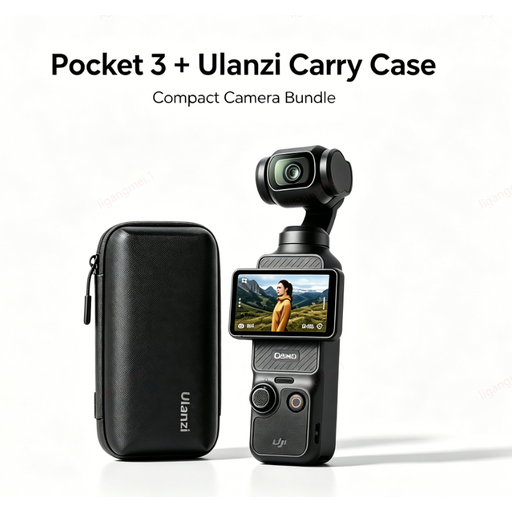 Image unavailable
DJI Pocket 3 camera with Ulanzi storage case
The bundle includes a handheld camera and a case for carrying the camera and accessories.
View at Joybuy
 Image unavailable
DJI Osmo Pocket 4 Standard Combo
The product name describes a pocket camera with a rotating screen and zoom.
According to the product name: 1″ CMOS, 4K/240fps, 3-axis stabilisation, 2× lossless zoom, 107GB of built-in storage and a 2″ rotating screen.
View at Joybuy
 Image unavailable
KOMERY G7-A 4K digital camera, pink
The product name describes a portable digital camera with zoom; check the macro magnification and working distance if small details matter.
According to the product name: 80MP UHD and 18× zoom.
View at Joybuy
 Image unavailable
KOMERY G7 5K digital camera, white
The product name describes a portable digital camera with zoom; check the macro magnification and working distance if small details matter.
According to the product name: 80MP UHD and 18× zoom.
View at Joybuy
 Image unavailable
KOMERY W6 digital camera
The product name mentions optical zoom; check separately whether the working distance and magnification suit the small objects you want to photograph.
According to the product name: 12× optical zoom, 4K, 64MP and Wi-Fi.
View at Joybuy
Frequently asked questions
Is the closest focusing distance the same as the working distance?
No. The working distance is the space between the subject and the front of the lens; the minimum focusing distance is measured from the sensor. Sony Netherlands gives an approximate working distance of 2 cm and a minimum focusing distance of 9.5 cm for the SEL30M35. Pay particular attention to the working distance if you need to position lights around small ceramic objects.
How do you get started photographing glossy pottery under market lighting?
Start by taking a test shot of the glaze and checking the white balance. If necessary, adjust the lighting angle or soften the light. Orbitvu Netherlands discusses reflections from lamps and windows when photographing ceramics. Canon Netherlands explains how white balance helps you assess colour casts caused by ambient light.
What if the camera or lens turns out to be faulty after purchase?
For a consumer purchase in the Netherlands, the Dutch government says that the seller must supply a product that works properly and resolve any problems; there’s no fixed statutory warranty period. These consumer rules don’t necessarily apply when you buy as a business owner for your company. In that case, check the terms and conditions for your business purchase.
Can you include recognisable visitors in photos of your market stall and publish them?
Not without further consideration. The Dutch Data Protection Authority regards recognisable people as personal data; commercial photography and publication require an applicable legal basis under the GDPR. Where possible, photograph your pottery without recognisable visitors and check which legal basis applies before publishing images for business purposes.


