
Making several dishes
You want to make enough portions without assuming that a stated capacity in litres translates directly into space for your oven dish.


First, measure your oven dish and compare it with the usable internal dimensions of the exact model. The capacity in litres alone won’t tell you whether your dish will fit. Then choose between a freestanding oven and a built-in model based on your kitchen space and how many batches you expect to bake. For a school fundraiser, you’ll also need to plan how to transport and store the dish safely, and provide allergen information. An oven doesn’t take care of those things for you.
You want to make enough portions without assuming that a stated capacity in litres translates directly into space for your oven dish.
You’re looking for a freestanding oven that fits on your worktop, and are prepared for the possibility of baking in several batches.
As well as baking, you’re arranging transport, storage and allergen information for the sale.
Choose this option: if you don’t have a built-in housing unit and expect to use larger dishes or bake several batches.
Bear in mind: a stated capacity doesn’t guarantee that your dish will fit. Check how much worktop space you’ll need, too.
Choose this option: if worktop space is a priority and you can bake the dish in smaller portions if necessary.
Bear in mind: check the dish dimensions and plan for extra batches if needed. A smaller capacity alone won’t tell you how many portions will fit at once.
Choose this option: if you have a suitable housing unit and will use the oven outside the school fundraiser as well.
Bear in mind: check the housing dimensions and installation instructions. Extra features aren’t automatically necessary for this dish.
Measure your largest oven dish, including its handles, then check that your chosen oven has enough room and the heating settings you want.
| What to consider | What to look for when buying | Who is this important for? |
|---|---|---|
| Dish size and baking batches | Measure the dish, including its handles, and compare it with the internal dimensions, shelf positions and included baking tray of the exact model. | I want to make enough portions and check that my dish will fit before planning how many batches to bake. Around 28% of consumers choosing an oven for this school fundraiser prioritise suitable dish space and baking batches. |
| Heating settings | Check whether the model has fan-assisted cooking, conventional top and bottom heat, or both, and follow your recipe’s instructions. | If I want to know which setting suits my recipe, I look at the functions available rather than assuming that more settings mean better results. Around 22% of consumers give the cooking method top priority. |
| Safe serving | Agree how the dish will be transported and stored, who will manage the sale, and how ingredients and allergens will be listed. | I want to store and sell the dish safely, with allergen information available to buyers before they purchase. For around 22% of consumers, practical and safe serving arrangements come first. |
| Kitchen space | First choose between a freestanding and built-in model. Then check the external dimensions and, for a built-in oven, the required housing dimensions. | If my worktop or kitchen housing unit has limited space, the appliance needs to fit there. Space is the main consideration for around 17% of consumers. |
| Purchase and running costs | Compare energy consumption on the same basis, and factor in potential installation costs and the expected number of baking batches. | I want to weigh up the purchase, any installation and running costs for a school fundraiser that may only happen occasionally. Around 11% of consumers prioritise total costs. |
Components and shelf positions can limit the usable space, so a high stated capacity doesn’t prove that your dish will fit.
Measure your oven dish, including its handles, and check the internal dimensions of the exact model before choosing.
Safe storage and allergen information still matter once the dish comes out of the oven. An oven function won’t arrange transport, temperature checks or information at the point of sale.
Agree with the school who is responsible for what, and how you’ll transport and store the dish. Suitable separate equipment may be needed to check the temperature or transport it.
Milieu Centraal states that a large oven uses around 20% more energy than a medium-sized oven to cook one dish. The number of batches you need and how you use the oven also matter when comparing models.
Compare energy consumption on the same basis and choose a size that suits the dishes and quantities you expect to bake.
The features listed are model specifications as described by the manufacturers; they don’t prove that one oven cooks better than another.
Freestanding models to consider if you don’t have a built-in housing unit. Inventum lists a 60-litre capacity, fan-assisted cooking, and top and bottom heat for the OV607B.
A freestanding option if you’re considering using several dishes or baking batches. Tristar lists a 60-litre capacity, convection and five settings for the OV-3640.
A more compact freestanding option. According to Severin, the TO 2058 has a capacity of 42 litres, and fan-assisted cooking can be used on its own or together with top and bottom heat.
A built-in option with mechanical controls. Beko lists a capacity of 66 litres and a fan-assisted function for the BBIE12100BD.
Built-in models offer a range of features. Bosch lists 3D Hotair, top and bottom heat, and pyrolytic cleaning among the features of the HBG7741B1.
These Joybuy picks are built-in ovens for those with a suitable housing unit. Measure the housing unit and your oven dish before choosing a model.
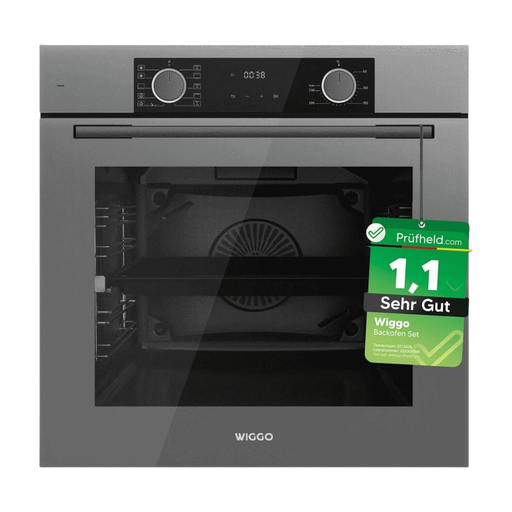 No image available
An option if you’re looking for a built-in oven with fan-assisted cooking, top and bottom heat, and a grill.
The product information lists five shelf positions and a maximum temperature of 250 °C. Check that the housing unit and oven dish will fit.
 No image available
A built-in option with 3D Hotair, if that feature suits the cooking method you’re looking for.
The product information states that you can bake on up to three levels. Check the housing dimensions and whether your oven dish will fit.
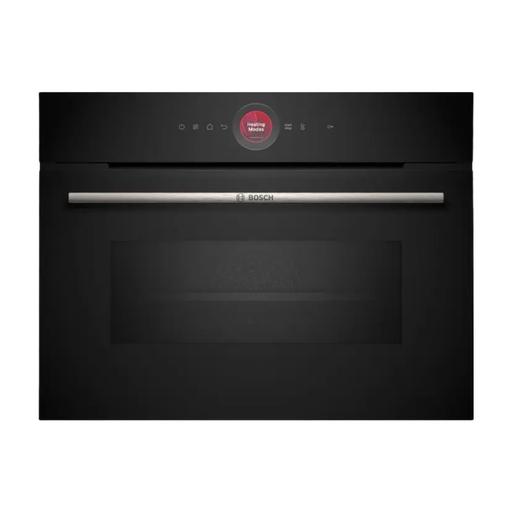 No image available
A combination oven for those looking for a microwave function as well as an oven, and with a suitable built-in housing unit.
The product name lists a microwave output of 900 W; the product information mentions convection and a grill. Check the housing and dish dimensions.
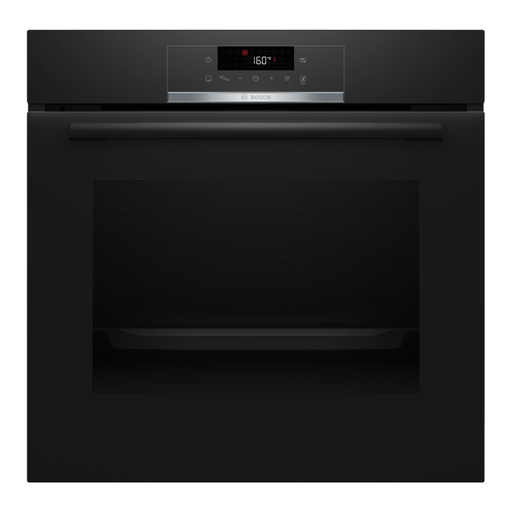 No image available
A built-in option with fan-assisted cooking and top and bottom heat, if those settings suit your recipe.
The product information states that you can bake on up to three levels and mentions pyrolytic cleaning. Check the housing dimensions and whether the extra features suit your needs.
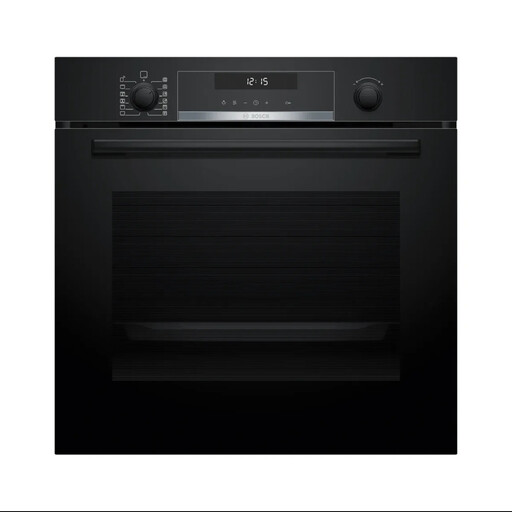 No image available
A built-in oven with 3D Hotair and top and bottom heat, for those looking for these cooking settings.
The product information states that you can bake on up to three levels and mentions pyrolytic cleaning. Check the housing dimensions and the space available for your oven dish.
You can’t tell from the capacity in litres alone. Measure your dish, including its handles, and compare it with the usable internal dimensions and shelf positions of the exact model. The Consumentenbond recommends checking the internal dimensions and the largest oven dish you use; plan to bake in several batches if necessary.
The Netherlands Food and Consumer Product Safety Authority (NVWA) advises storing unwrapped perishable food in a fridge at 7 °C or below, or keeping it hot at 60 °C or above using suitable equipment. Check the temperature with a digital probe thermometer and plan transport and serving accordingly; the oven’s set temperature doesn’t measure the temperature of the food.
Yes. When selling unpackaged food, consumers must be able to get information about the allergens it contains before they buy. The NVWA says this information can be provided in writing or verbally, as long as there’s a visible notice telling customers they can ask for it. Check all the ingredients you’ve used, and don’t assume that milk is the only allergen.
According to the NVWA, anyone who prepares and sells food several times a year must have a HACCP food safety plan. That doesn’t mean you can skip safe and hygienic practices for a one-off sale. Agree the arrangements with the school.
Don’t assume that you can do this without making arrangements first. Check with the school and follow the placement and connection instructions for the appliance you choose. If you bake at home and transport the dish afterwards, make separate arrangements for storing and serving it safely.