
Vandaag of morgen in huis

Kwaliteit gegarandeerd

Welkomstaanbiedingen ontgrendelen: GRATIS bezorging | Tot 80% korting | Gratis 30 dagen JoyPlus-proefperiode
Download de app
After breast surgery, liposuction or another procedure, suitable clothing can help make recovery more manageable. Post-operative compression garments for women need to offer more than a snug fit. The right size, fastening, compression and fabric all affect whether you can wear the garment comfortably every day.
A medical compression bra or women’s shaping bodysuit is not automatically suitable for every stage of recovery. Always follow the advice of your doctor or healthcare professional, especially after a recent operation.
A very tight garment can become uncomfortable, dig into your skin or be difficult to put on. The level of pressure you need depends on the procedure and stage of recovery. Check the stated compression class or level, and discuss it with your healthcare professional.
Some products use terms such as “medical compression”. This is wording from the product information, not a substitute for a prescription or professional advice.
A bra that can only be pulled on over your head may not be practical after breast surgery. A front-fastening compression bra with several rows of hooks may be easier to put on. Check that the fastening lies flat and does not press directly on a sensitive area.
An S, M or XL doesn’t tell you enough. Bust, underbust, waist and hip measurements, as well as garment length, can vary between styles. Measure yourself using the brand’s size guide, and allow for swelling or dressings. Choosing a smaller size doesn’t automatically provide better breast support after surgery.
When choosing a post-operative compression bra, check what the product description says the style is designed for. Some styles focus on breast support, while a bodysuit also covers the abdomen, back and hips.
A compression garment for use after liposuction may fit differently from a bra worn after breast surgery. Only wear a style for the period and in the way advised by your doctor or surgeon. Product descriptions that mention a recovery period are not personal medical advice.
Check how many rows of hooks the garment has. A style with several rows may give you more room to adjust the fit. Also check:
An adjustable compression bra can be especially useful when your fit changes during recovery.
Many styles in this selection use nylon and spandex. Nylon usually feels smooth, while spandex adds stretch. Always check the exact fabric composition and care instructions.
Breathable compression garments may feel more comfortable when worn for longer periods, but “breathable” doesn’t mean that heat or perspiration will disappear completely. Look for mesh panels, smooth seams and wide bands. Hand washing and drying flat are common care instructions; washing a garment incorrectly can affect its elasticity.
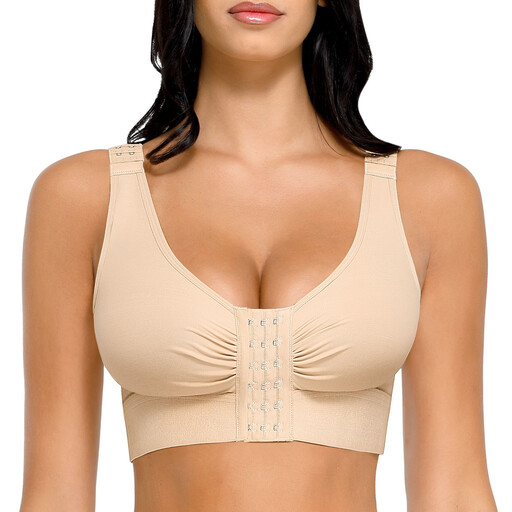
Why it suits this profile: This style is a practical choice if you’re looking for a supportive bra without wearing a full-body garment. The front fastening may make it easier to put on.
The product description specifies a front fastening with 8 rows of hooks, so the fit doesn’t depend on just one fixed fastening position.
53% nylon and 47% spandex; moulded cups and a breast-support construction described as supportive in the product information.
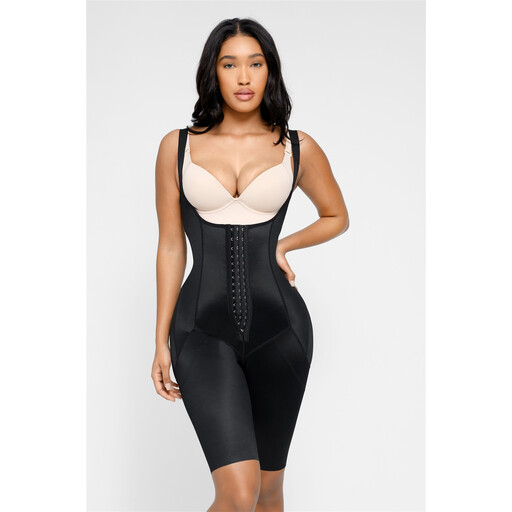
Why it suits this profile: This bodysuit is designed for anyone looking for support around the abdomen and back as well as the breasts. Its longer shape covers more areas than a separate compression bra.
The three rows of fastenings at the front and adjustable shoulder straps give you more ways to tailor the fit than a bodysuit with no adjustability.
Double layers around the abdomen and back, U-shaped breast support, a long gusset zip and adjustable 2.5 cm straps.
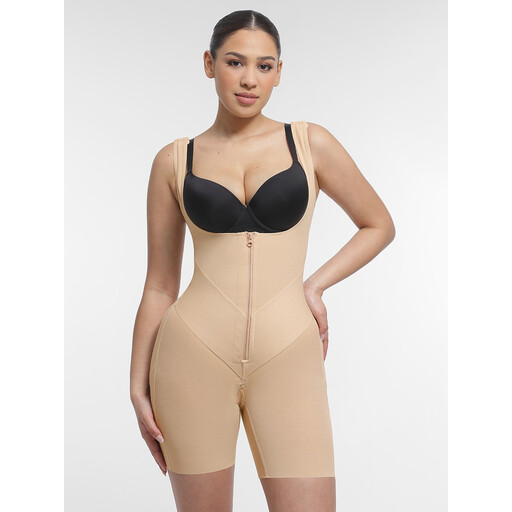
Why it suits this profile: This full-body shapewear style is suited to anyone looking for several adjustment points and medium compression for everyday wear or supervised recovery.
The front combines a zip with a hook fastening, so you don’t have to rely on a narrow opening to get the garment on.
An 11 cm V-shaped waistband, three rows of adjustable shoulder straps, mesh panels and a gusset zip.
Start by checking the size guide, then put the garment on carefully without pulling on the seams or hooks. Folds, creases and rolled edges can create pressure in particular areas. Once it’s on, check that you can move normally and that your breathing isn’t restricted.
Wash most styles according to their specific care label. Hand washing is recommended for the products mentioned; avoid bleach, tumble drying and ironing if the instructions say so. Leave the garment to air dry flat. Having a second one can be useful if you need to wash it often, but check first whether your healthcare professional thinks wearing an additional garment is suitable.
We’ve put together a complete, up-to-date list of products that meet these strict selection criteria and the applicable European safety requirements.
It depends on the procedure, your recovery and your surgeon’s advice. Recommendations can vary from person to person. So don’t use a product listing that mentions a particular period as your personal schedule.
Sometimes, but only if your healthcare professional thinks it’s suitable. A women’s shaping bodysuit may put more pressure on your abdomen, back and groin than a separate bra. Take account of wound sites, drains, swelling and freedom of movement.
How long it lasts depends on how often you wear it, how you wash it and how elastic the fabric is. Hand washing, avoiding wringing and drying it flat can help it keep its fit for longer. Replace the garment if the fabric stretches, the fastening stops working properly or the support noticeably decreases.
