
Vandaag of morgen in huis

Kwaliteit gegarandeerd

Welkomstaanbiedingen ontgrendelen: GRATIS bezorging | Tot 80% korting | Gratis 30 dagen JoyPlus-proefperiode
Download de app
After breast surgery or liposuction, you’ll usually want a bra that’s easy to put on, offers enough support and doesn’t rub unnecessarily. A post-operative compression bra for women may be suitable, but product titles don’t always tell the whole story. The fastening, fit and care instructions are particularly important in determining whether a bra is practical during recovery.
Please note: a compression bra is not a substitute for advice from your doctor or care team. Always follow their instructions on compression level, how long to wear it and when you can start wearing a bra.
The term medical compression bra may appear in a product description, but that doesn’t mean every style is suitable for every procedure or stage of recovery. According to Feelingirl’s product description, this style is designed for post-operative support and use after liposuction. That’s a claim made by the brand, not individual medical advice.
So ask:
A bra that’s too small can dig in under your arms or put pressure on sensitive areas. That doesn’t automatically make it more suitable. An adjustable compression bra with several fastening positions may be more practical if swelling or sensitivity changes during the early stages of recovery.
Don’t check the cup size alone. Consider the band size, band width, straps and position of the fastening too. A front-fastening bra is often easier to put on without moving your arms or shoulders too much.
Heat, bleach and tumble drying can cause compression fabrics to lose their shape. Always check the care label. For the Feelingirl style, the product description says to hand wash, not bleach, not iron, not dry clean and dry flat. That takes more time than caring for an everyday bra.
According to the product information, the post-operative style mentioned is made from 53% nylon and 47% spandex. Nylon usually feels smooth, while spandex provides stretch. However, the fabric composition doesn’t tell you everything about comfort: seams, edges and lining are just as important.
When looking for a breathable recovery bra, check for:
“Breathable” is a product description, not a guarantee that your skin will stay dry. If you experience redness, wound discharge, increasing pain or irritation, contact your healthcare professional.
A fastening with several rows of hooks gives you room to adjust the fit. According to the product description, the Feelingirl style has a front fastening with three rows of hooks. This can be useful if you don’t want to pull the bra over your head.
Check that the hooks are secure and that the inside doesn’t create pressure points. After breast surgery, being able to put on and take off a bra easily is often more important than how smooth it looks under clothing.
Moulded cups can give the bust more structure than a completely unlined bra. The Feelingirl product information mentions 3D-moulded cups. It also claims that the cups help maintain shape during recovery; this is a manufacturer’s claim, not a guaranteed result.
For everyday wear after your recovery period, you could also consider a wire-free bra with light shaping. This isn’t the same as a post-operative compression bra and shouldn’t be used after a procedure without your healthcare professional’s approval.
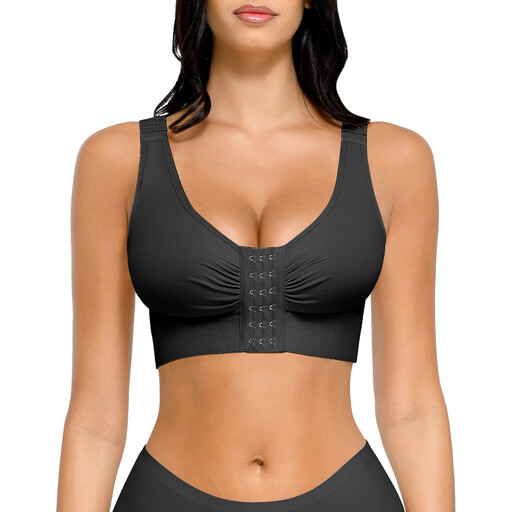
Why it suits this profile: This style combines a black finish, XL size, moulded cups and a front fastening with three rows of hooks. That makes it a straightforward option for anyone looking for a post-operative bra for the first time.
The adjustable front fastening means you’re not limited to one fixed fastening position. However, check beforehand that XL is right for your band and cup measurements.
53% nylon and 47% spandex, 3D-moulded cups, three rows of hooks and hand-wash care instructions.
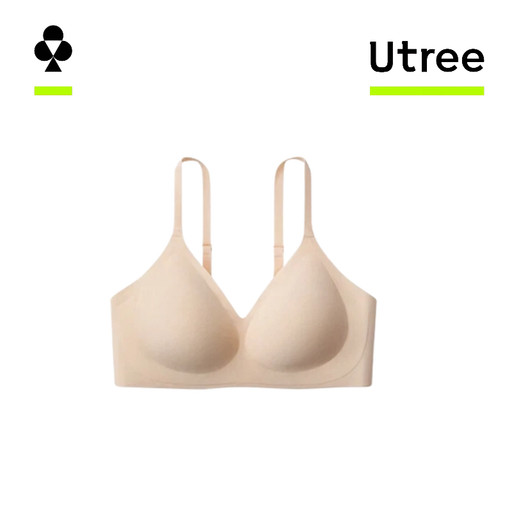
Why it suits this profile: For everyday wear after your recovery period, this wire-free style has fixed cups, wide side panels and a wide elasticated underband.
The description doesn’t mention post-operative compression. This makes it clearer that the bra is an everyday alternative, not automatically a medical recovery bra.
Wire-free design, fixed cups, wide side panels and sizes M to XL according to the product information.
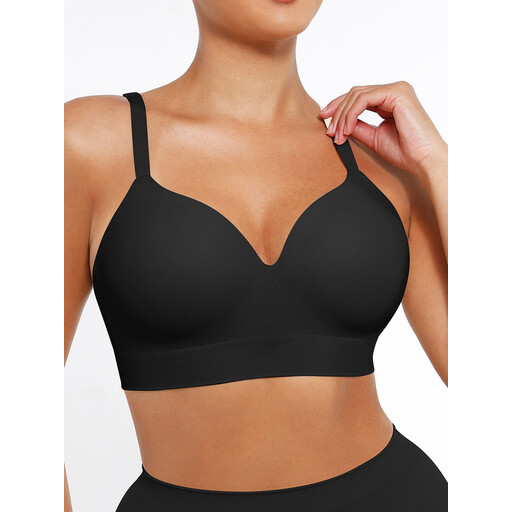
Why it suits this profile: This style is designed for everyday wear, travel and relaxing at home. It may suit anyone looking for light shaping without underwires after recovery.
The product information describes light shaping, not medical compression. So don’t use this style as a replacement for a prescribed recovery bra.
Seamless design, integrated foam cups, adjustable shoulder straps and a three-row back fastening.
We’ve put together a complete, up-to-date list of products that meet these strict selection criteria and the applicable European safety regulations.
First, follow the instructions from your doctor or clinic. Put the bra on gently, check that the fastening isn’t pressing on a wound or sensitive area, and make sure the underband isn’t rolling up. Increasing pain, numbness, discolouration or severe irritation are reasons to seek medical advice.
It depends on how often you wear it, how you wash it and how elastic the material is. A bra worn every day may lose its stretch more quickly than one worn in rotation. Hand washing, drying it flat and avoiding heat can help it keep its original shape for longer, but you should still check it for signs of wear.
Not automatically. A regular push-up bra, bralette or anti-sagging bra often has a different purpose and compression level. Only wear one once your healthcare professional says it’s suitable. When shopping, always check the product description, sizing and actual construction rather than relying on terms such as “comfort” or “support”.
